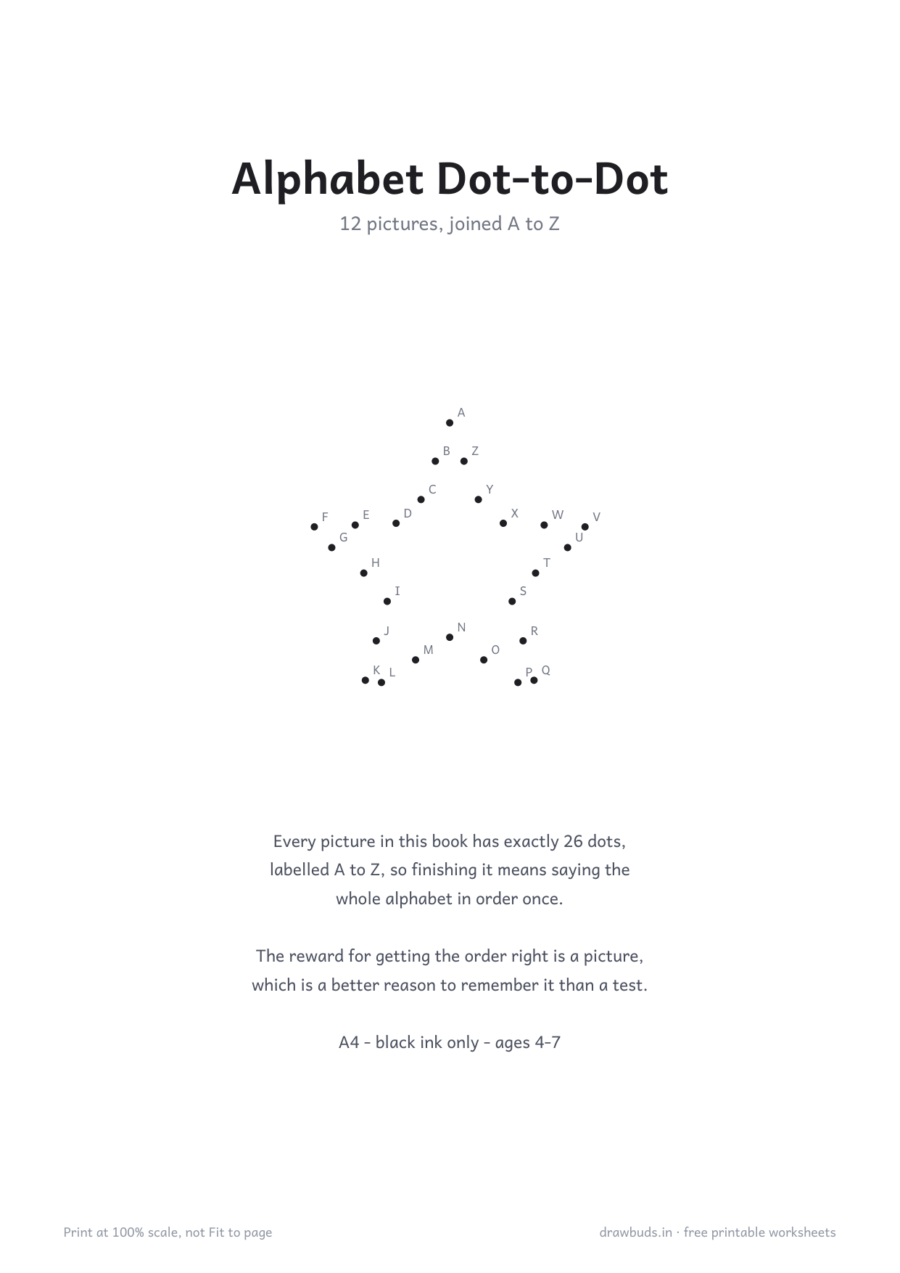
Alphabet Dot-to-Dot A-Z
13 printable pages. Twelve pictures, each with exactly 26 dots labelled A to Z, so finishing one means going through the whole alphabet in order.
- Pages
- 13
- Ages
- 4-7
- Paper size
- A4
- Black ink only
Free to print at home, at school, and in a classroom of thirty.
Twelve pictures, exactly 26 dots each, labelled A to Z
Every picture in this book has exactly twenty-six dots, labelled A to Z. To finish one, a child has to say the alphabet in order all the way through — and the reward for getting it right is a picture, which is a better reason to remember the order than being asked to recite it.
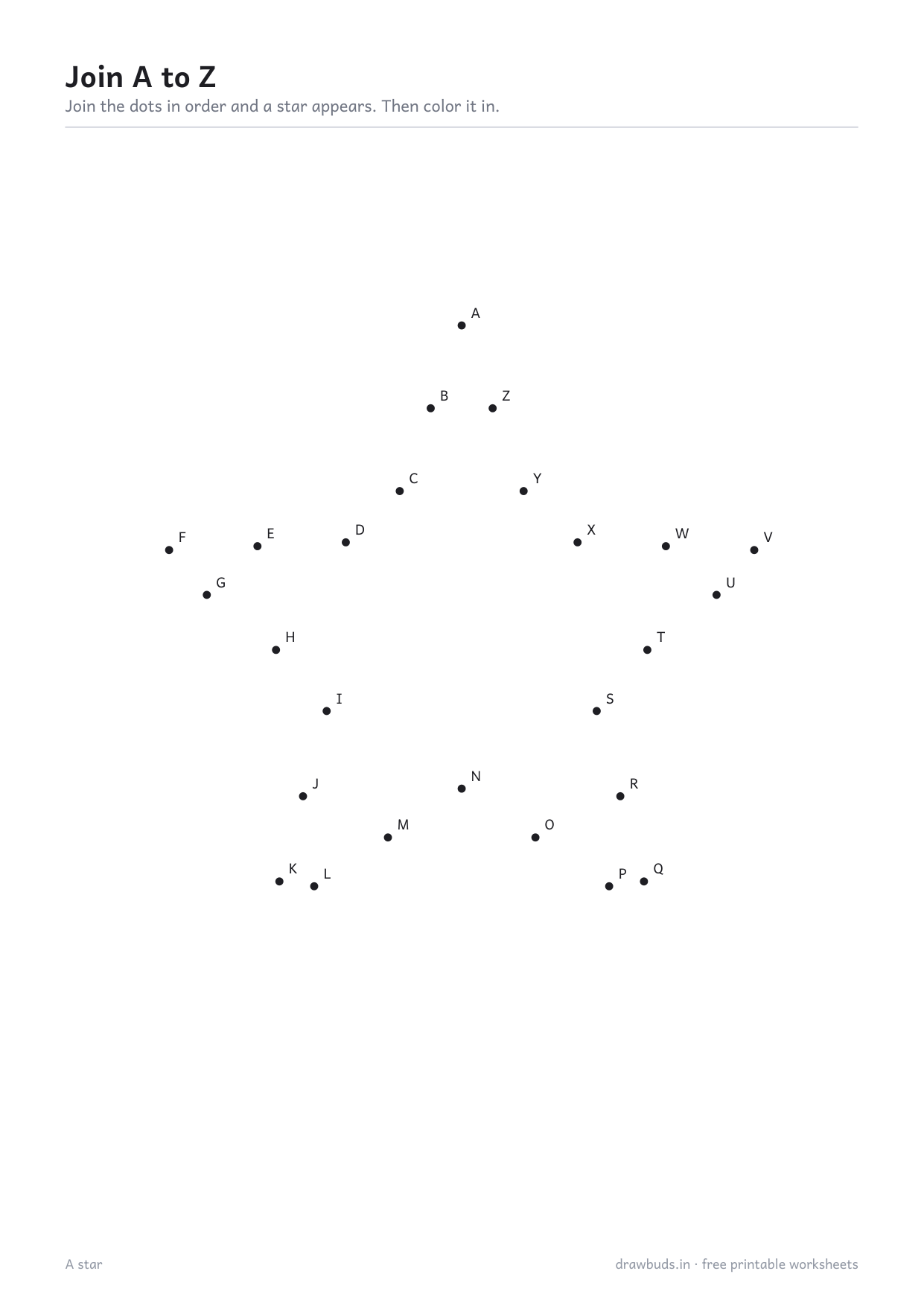
The twelve pictures
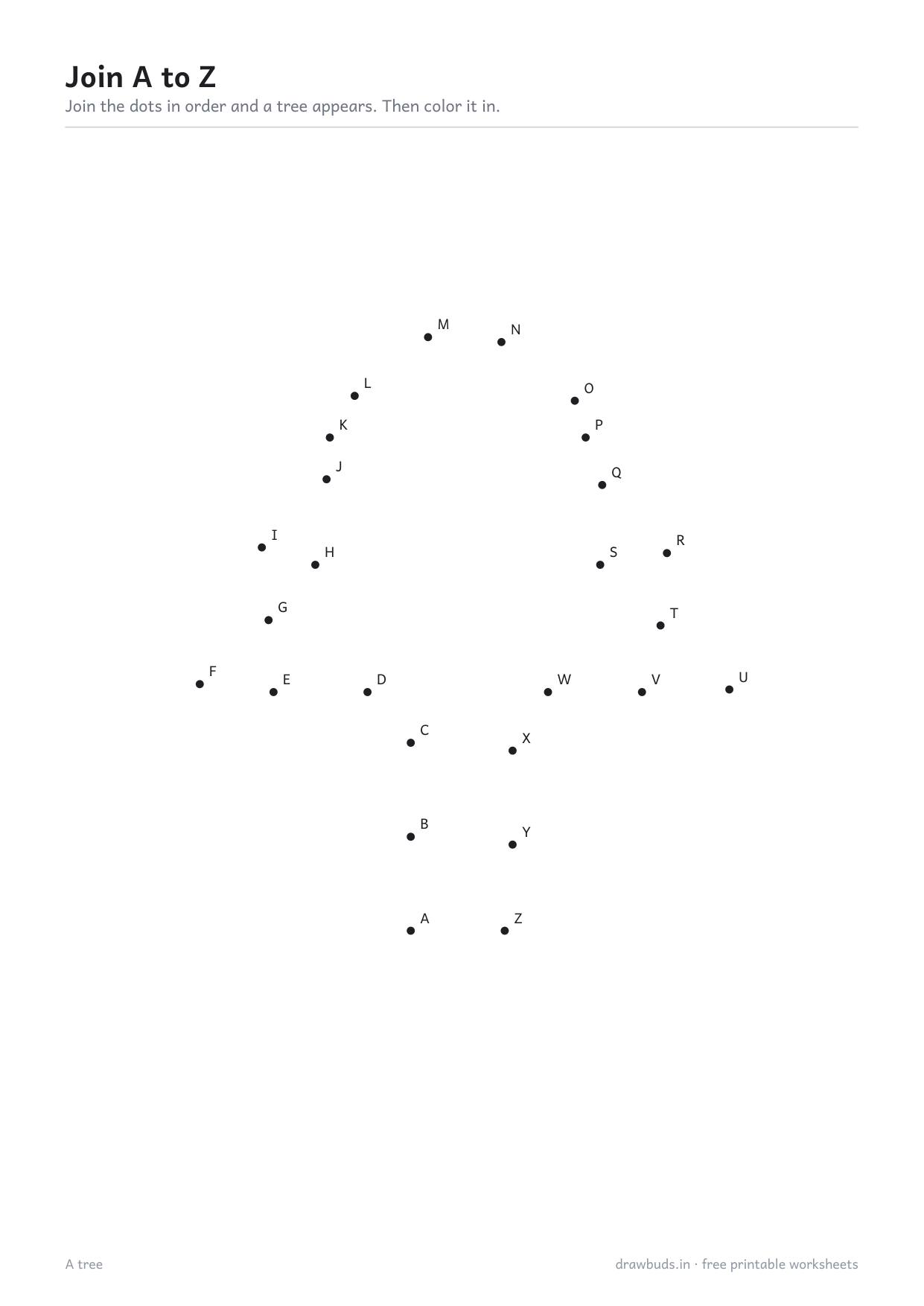
A star, a heart, a house, an apple, a moon, a tree, a rocket, a kite, a crown, an arrow, an ice cream and a diamond.
Why these shapes and not a butterfly
Twenty-six dots is not many. An outline with fine detail — a butterfly’s wings, a six-petal flower — needs several times that number, and joining twenty-six dots around one produces a scribble that looks nothing like the picture promised in the title. Every outline here was chosen because it still reads correctly from twenty-six points: mostly straight edges, or one smooth curve.
Recognising letters out of order
Reciting the alphabet and finding a particular letter are different skills. A child hunting for the next dot has to recognise Q on sight, without running up from A to get there, and that is the skill that reading actually needs. Expect the middle of the alphabet — J to Q — to be slowest, because that is the part of the song most children mumble.
After the dots
Each finished picture is a plain outline, so color it in. That turns a two-minute puzzle into a twenty-minute activity and makes the page worth printing.
What comes next
Number Dot-to-Dot 1-20 is the same twelve outlines with twenty numbered dots instead of twenty-six lettered ones.
Printing this one correctly
In your printer dialog set Scale to 100% or Actual size, not Fit to page. Fit to page shrinks the tracing letters and they stop matching the size a child's hand is learning.
Plain paper is fine for crayons and pencils. If your child uses felt pens, 100 gsm paper stops the ink bleeding to the next sheet.