Reading Log with Summary: Free Printable
Reading log with summary: a worked example, daily and weekly logs with parent signature, and five summary frames for kids. Free PDF.
- Pages
- 10
- Ages
- 6-10
- Paper size
- A4 and US Letter
- Black ink only
Same worksheets, two paper sizes. Free to print at home, at school, and in a classroom of thirty.
9 pages: how to write a summary with a worked example, daily and weekly logs with summary space and grown-up signature, somebody-wanted-but-so-then, beginning-middle-end, five W's, main idea, chapter by chapter, one sentence summary
This reading log with summary asks a child to write what happened, as well as the title and the minutes. Most reading logs stop at the title and a star rating. That proves a child sat with a book. It says nothing about whether they followed it. Writing two lines about the chapter fixes that, and it is also the part teachers usually ask for.
Page 1 starts with a short example. Ben’s kite string snaps in the middle of a race. He ties it back together, keeps going and finishes second. Underneath, the story is summed up two ways: in five parts (somebody, wanted, but, so, then) and in one sentence. A child can look back at it whenever they get stuck on their own summary.
The daily and weekly logs
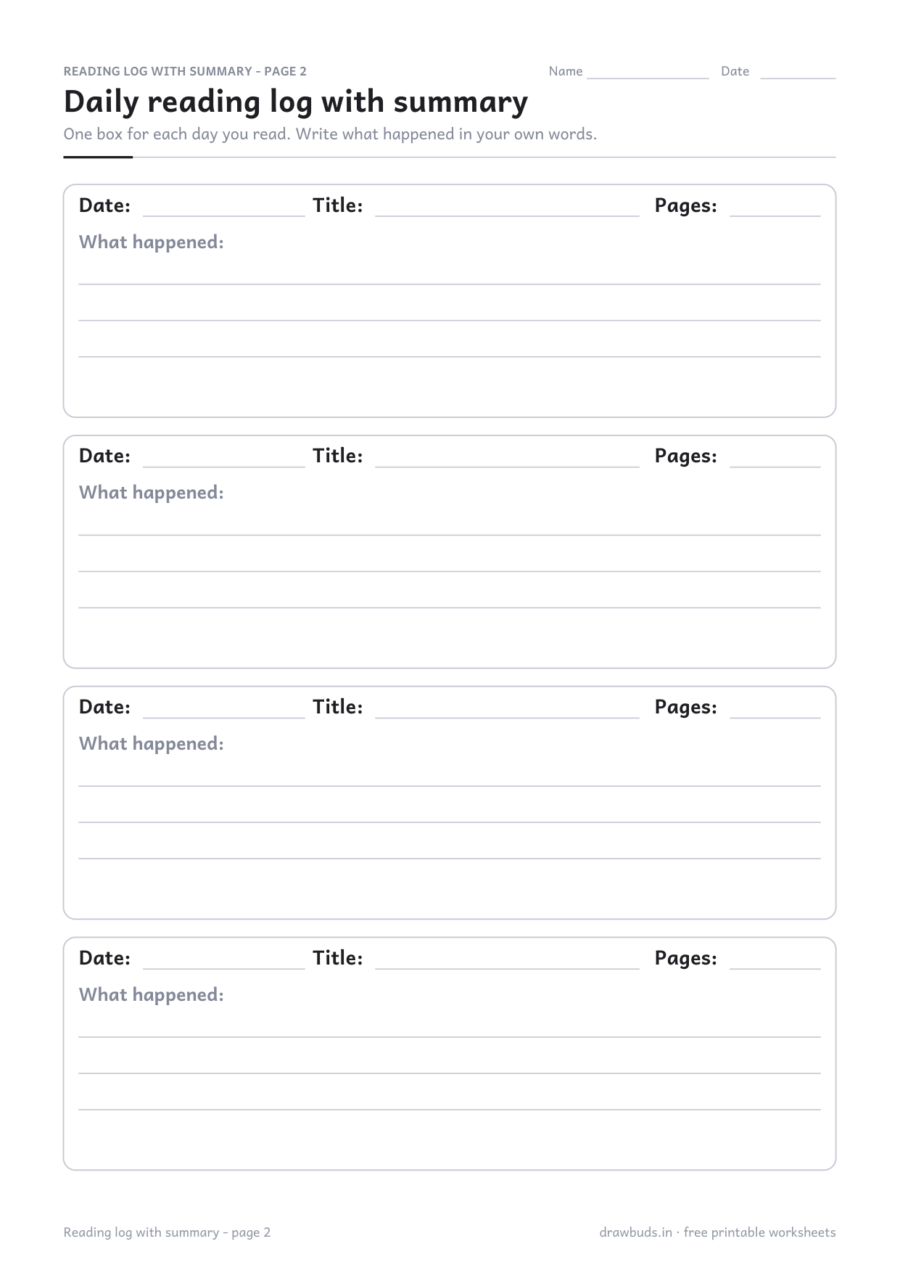
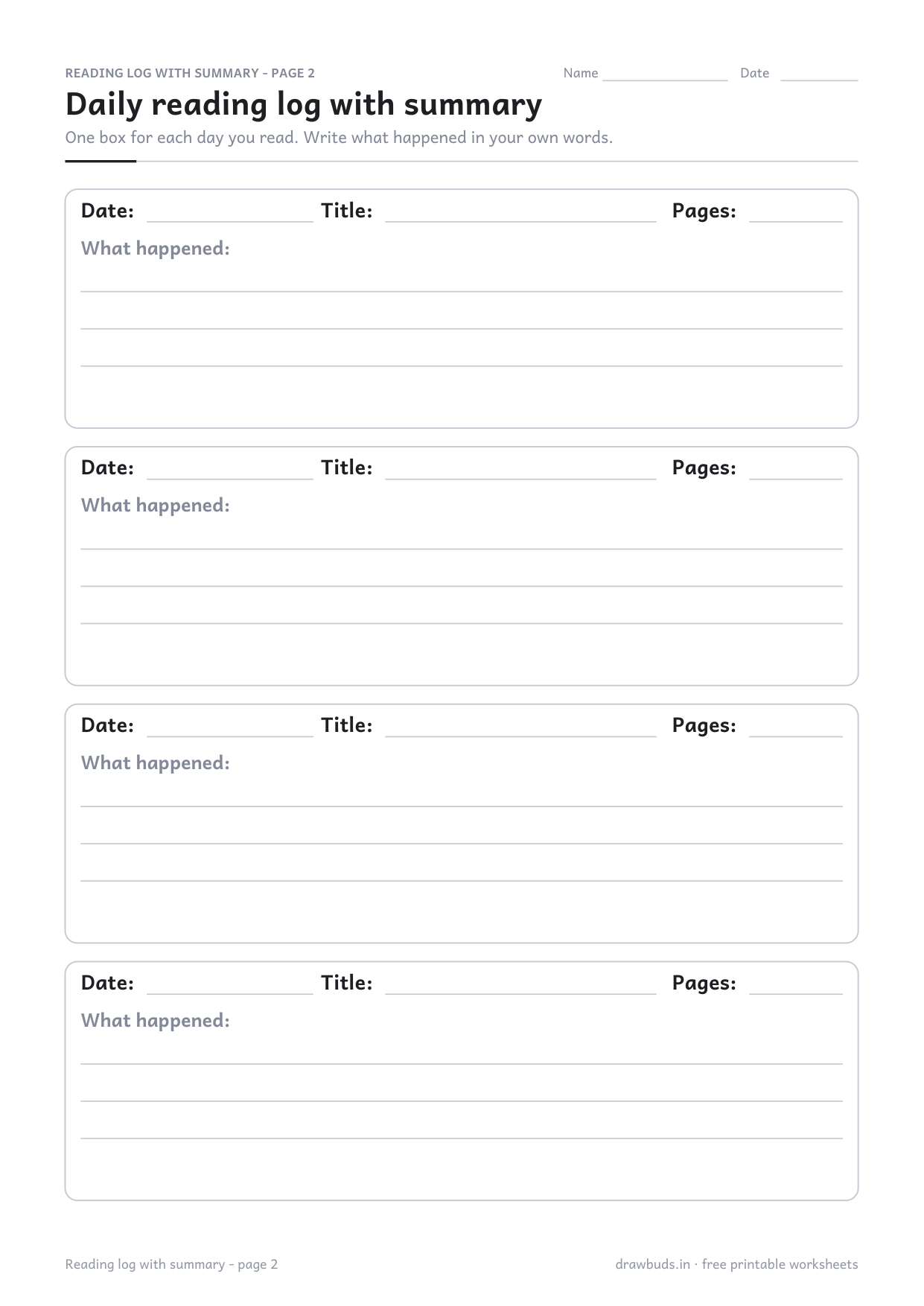
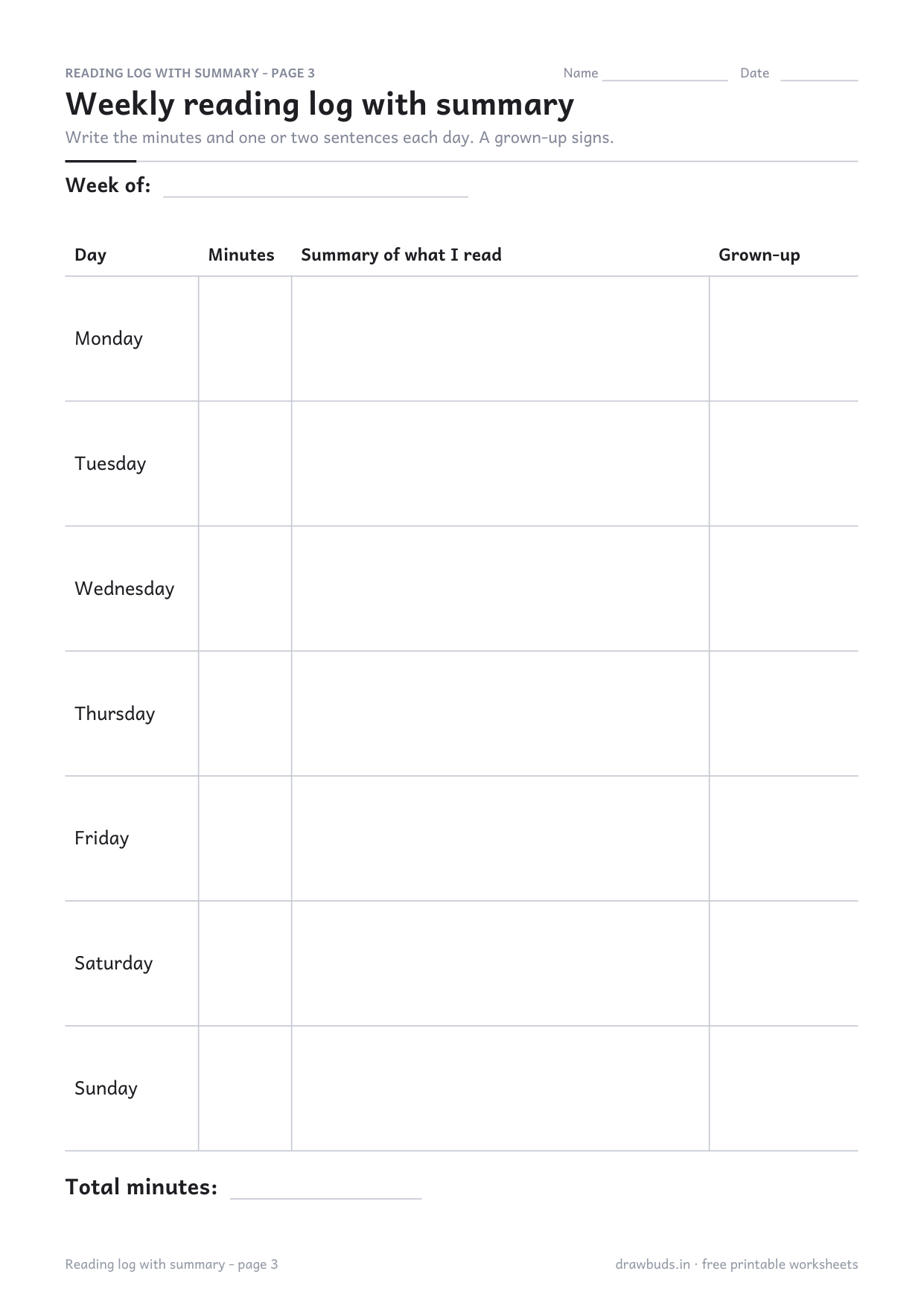
The daily log has four boxes to a page. Each one has a date, a title, the pages read and writing lines headed What happened. The weekly log fits a whole week on one sheet: one row per day for minutes and a sentence or two of summary, a column for a grown-up’s signature and a total at the bottom. If your school wants a reading log with a parent signature, that is the page to send.
Six frames for writing a summary
Starting a summary on a blank line is hard, even for adults. Pages 4 to 9 give a child something to fill in instead:
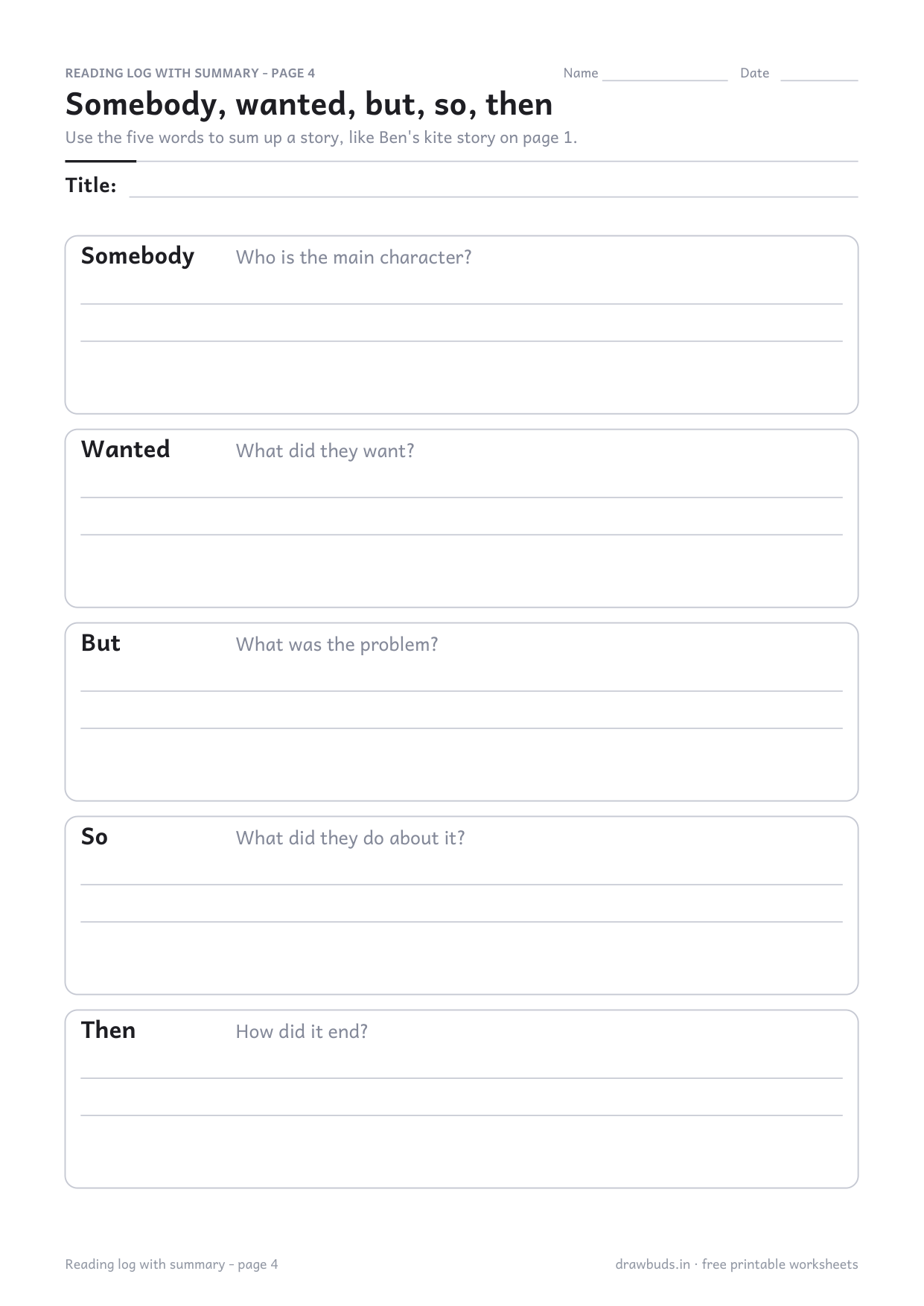
- Somebody, wanted, but, so, then for stories, one box per word, with a question beside each.
- Beginning, middle and end with a box to draw each part next to the writing lines.
- The five W’s: who, what, where, when and why, then a space to join them into a summary.
- Main idea and details for true books, with three detail boxes and a line for something new learned.
- Chapter by chapter for longer books, with ten numbered rows.
- One sentence summary, three books to a page, each with a rating and a line the child liked.
Which page to use
Younger readers in grades 1 and 2 do best with beginning, middle and end, because they can draw before they write. The five-word frame suits grades 2 and 3 once stories have a clear problem. Older children reading chapter books can use the chapter page through the book and finish with the one sentence summary. To track minutes, stars and reading bingo as well, add our printable reading log for kids. For short passages to practice summing up, try the 2nd grade reading comprehension worksheets.
The book is 10 pages, black ink only, and comes as both an A4 PDF and a US Letter PDF. Print it at 100% scale and print the page you use most as many times as you need.
Printing this one correctly
In your printer dialog set Scale to 100% or Actual size, not Fit to page. Fit to page shrinks the tracing letters and they stop matching the size a child's hand is learning.
Plain paper is fine for crayons and pencils. If your child uses felt pens, 100 gsm paper stops the ink bleeding to the next sheet.