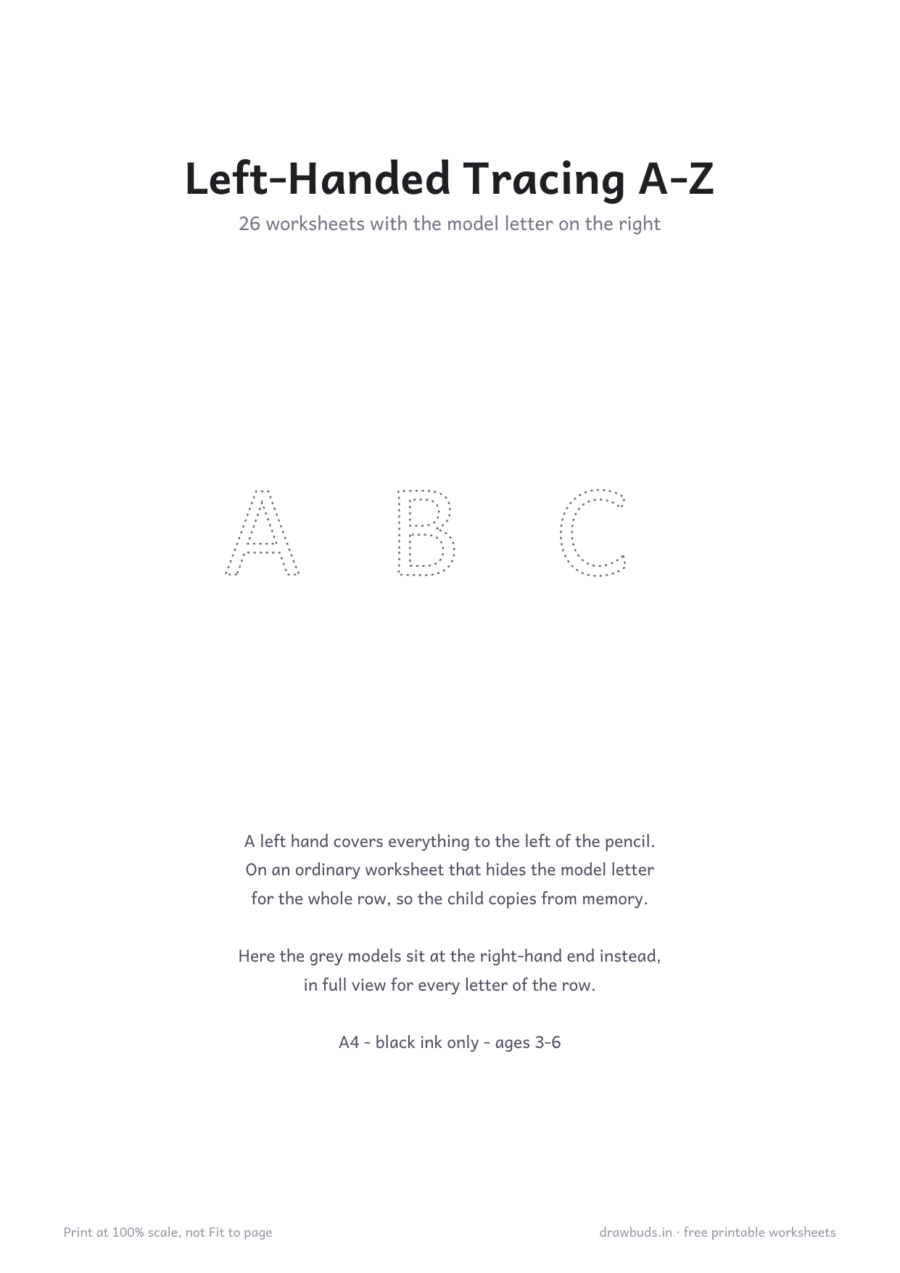
Left-Handed Alphabet Tracing A-Z
27 printable pages with the model letter on the right of every row, where a left hand does not cover it. Ordinary tracing sheets hide the model from about 10% of children.
- Pages
- 27
- Ages
- 3-6
- Paper size
- A4
- Black ink only
Free to print at home, at school, and in a classroom of thirty.
Model letters printed on the right, where a left hand does not cover them
Put a pencil in your left hand and write across a page. Your hand covers everything to the left of the nib. On an ordinary tracing worksheet, that is exactly where the grey model letters are — so after the first repeat, a left-handed child is copying from memory for the rest of the row.
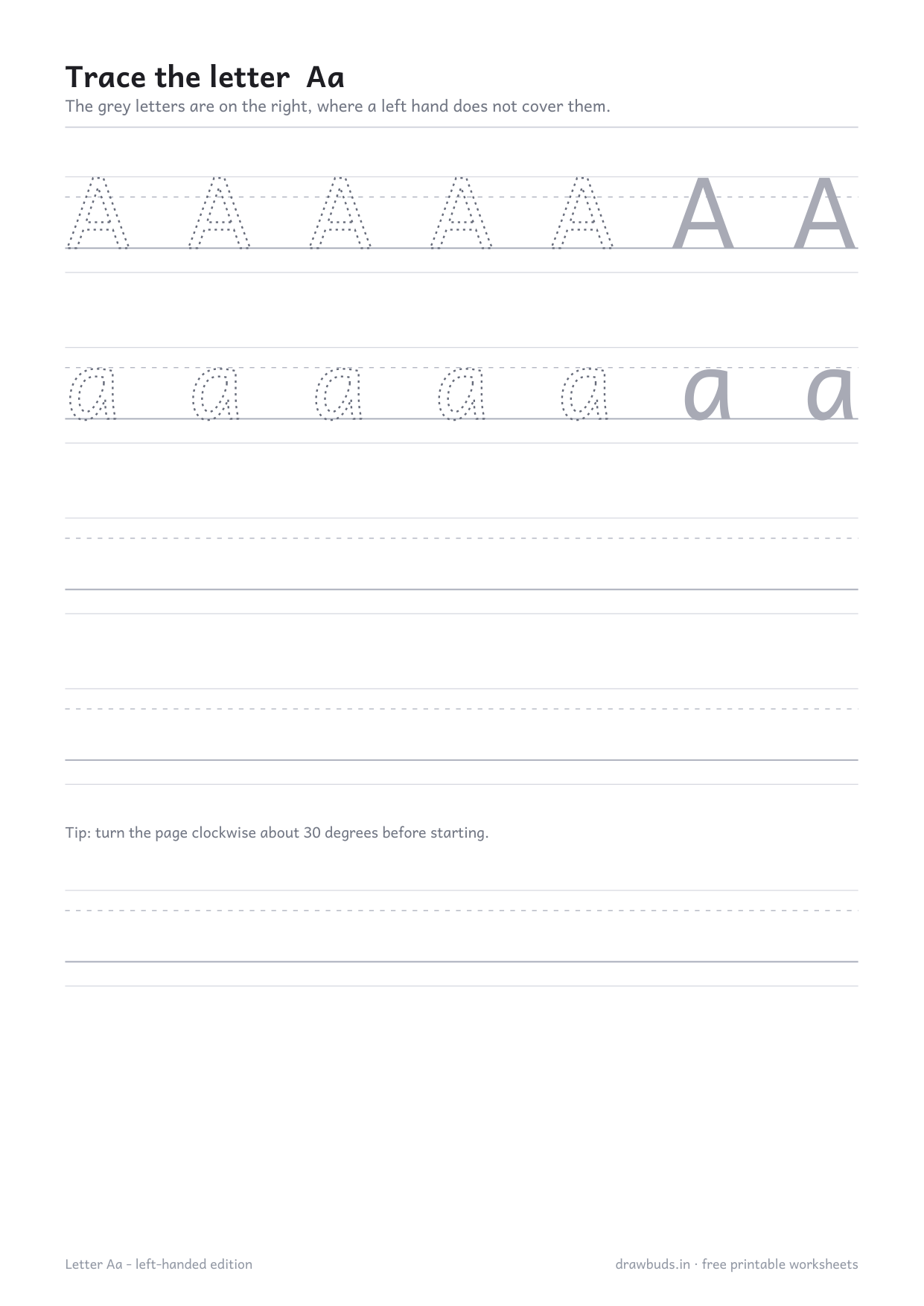
This book moves them. Every row has its model letters at the right-hand end, in full view for the whole row.
What is on each page
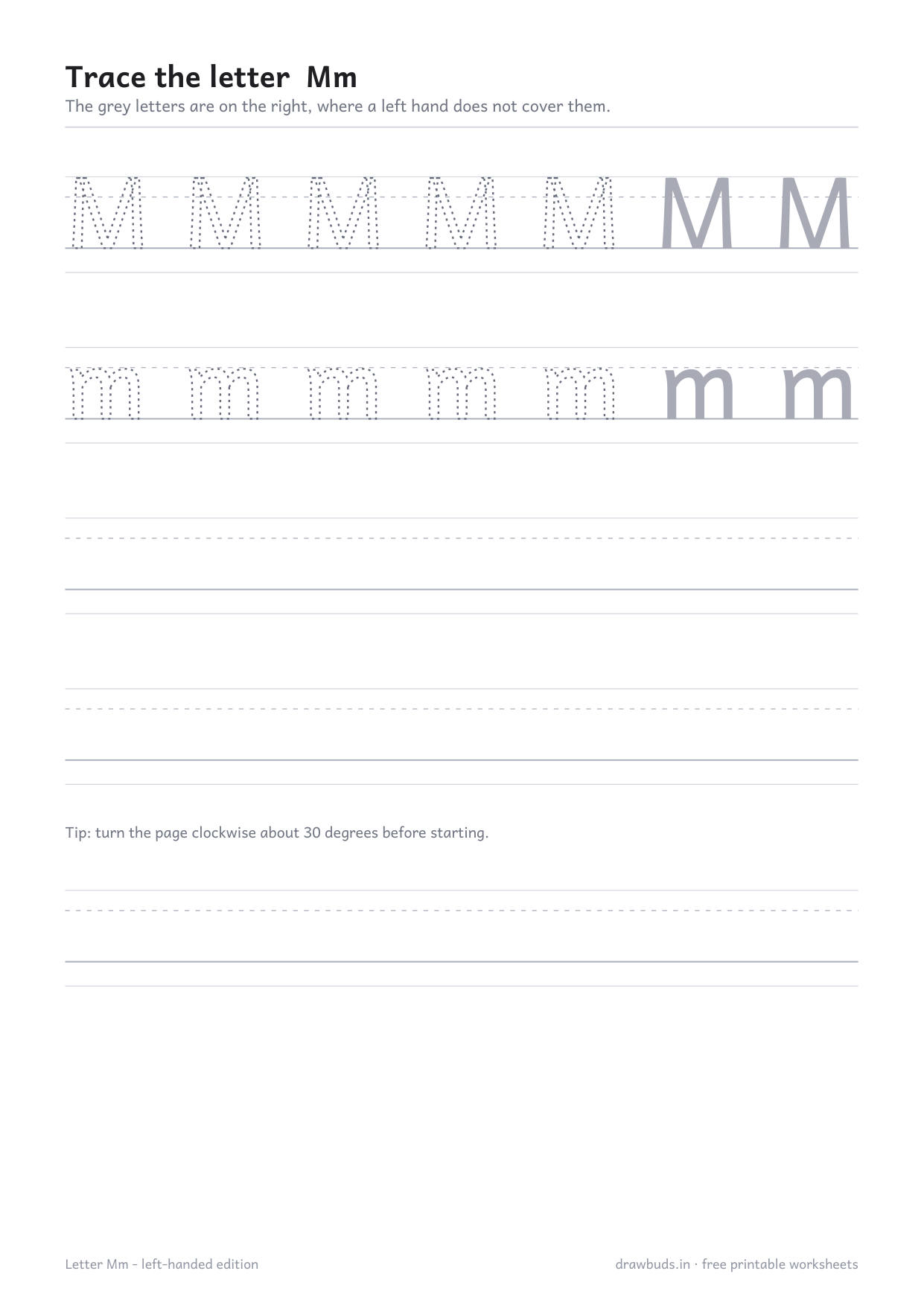
- A capital row and a lowercase row, dotted letters first and two grey models at the right.
- Three empty ruled rows.
- The paper-angle tip, printed on every page rather than in a foreword nobody reads.
The three things that matter more than the worksheet
Turn the paper. A right-handed child tilts the page anticlockwise, about 20 to 30 degrees. A left-handed child needs the opposite tilt, clockwise, so the forearm can sweep across the body instead of pushing away from it. Most children are never told this and simply hook their wrist instead.
Hold the pencil further back. A left-handed grip that pinches close to the tip has to hook the wrist to see what has been written. About 2 cm up the barrel is enough to see past the fingers.
Sit on the left. Two children sharing a table will knock elbows all lesson if the left-hander is on the right.
Smudging
Left-handed writing drags the hand through wet ink. Pencil is fine; a gel pen is not. If a school insists on pen, a quick-drying ballpoint smudges least, and nothing beats simply not asking a five-year-old to use ink at all.
The same content, the other way round
The words and letters here are the same as in Alphabet Tracing A-Z. Only the layout differs, so a class with one left-handed child can work through both together, page for page.
Printing this one correctly
In your printer dialog set Scale to 100% or Actual size, not Fit to page. Fit to page shrinks the tracing letters and they stop matching the size a child's hand is learning.
Plain paper is fine for crayons and pencils. If your child uses felt pens, 100 gsm paper stops the ink bleeding to the next sheet.