Phonics Worksheets for Kindergarten: Short Vowels and Sound Boxes
12 printable phonics worksheets for kindergarten: short a, e, i, o, u, beginning sounds, blending, word families, sound boxes and a read-and-draw page.
- Pages
- 12
- Ages
- 5-6
- Paper size
- A4 and US Letter
- Black ink only
Same worksheets, two paper sizes. Free to print at home, at school, and in a classroom of thirty.
Five short vowels, then blending, word families and sound boxes
Twelve pages that move a kindergartener from one vowel sound to reading a sentence. Five short-vowel pages first, then the skills that use them – hearing a first sound, blending three sounds into a word, spotting a word family, and writing one sound per box.
The twelve units, in order
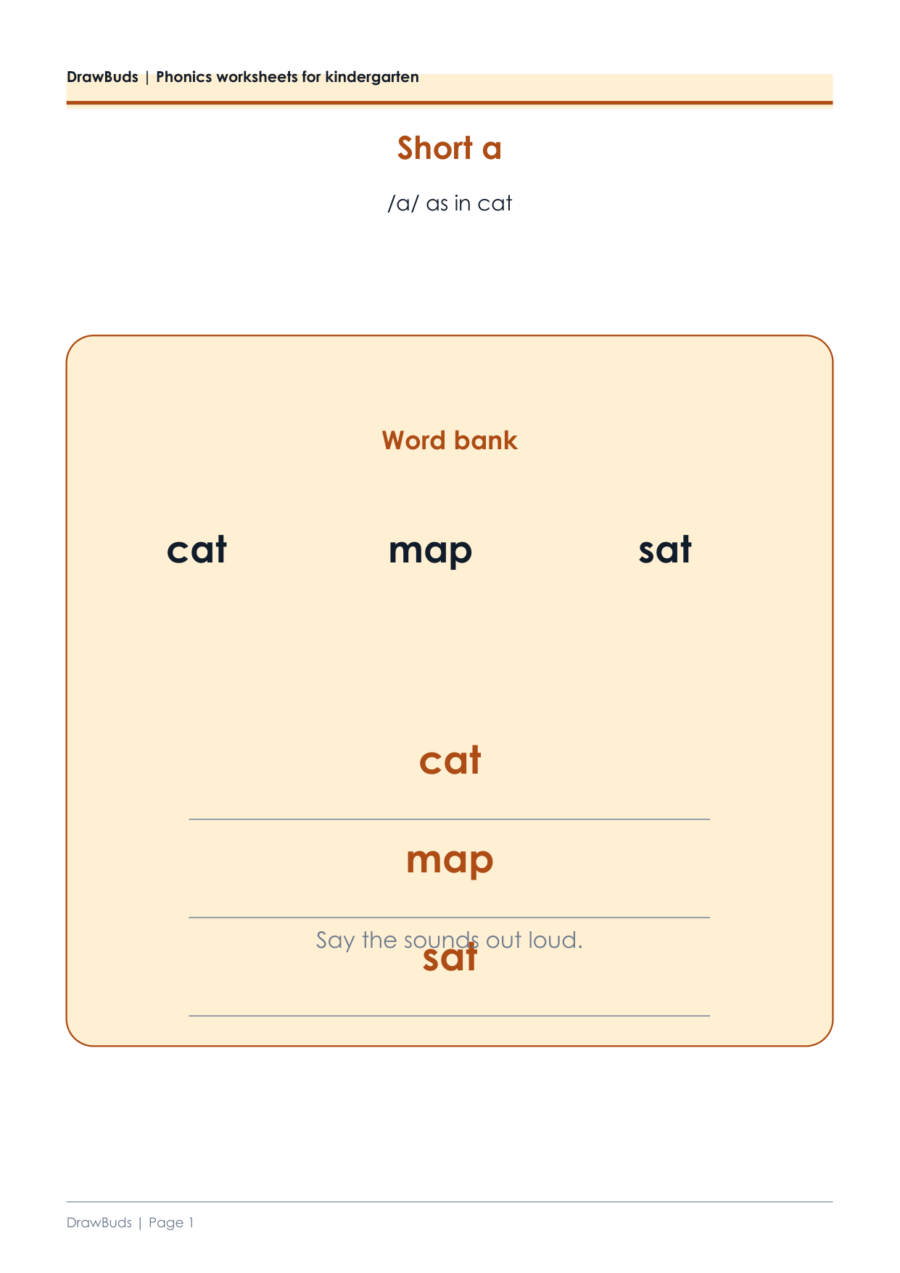
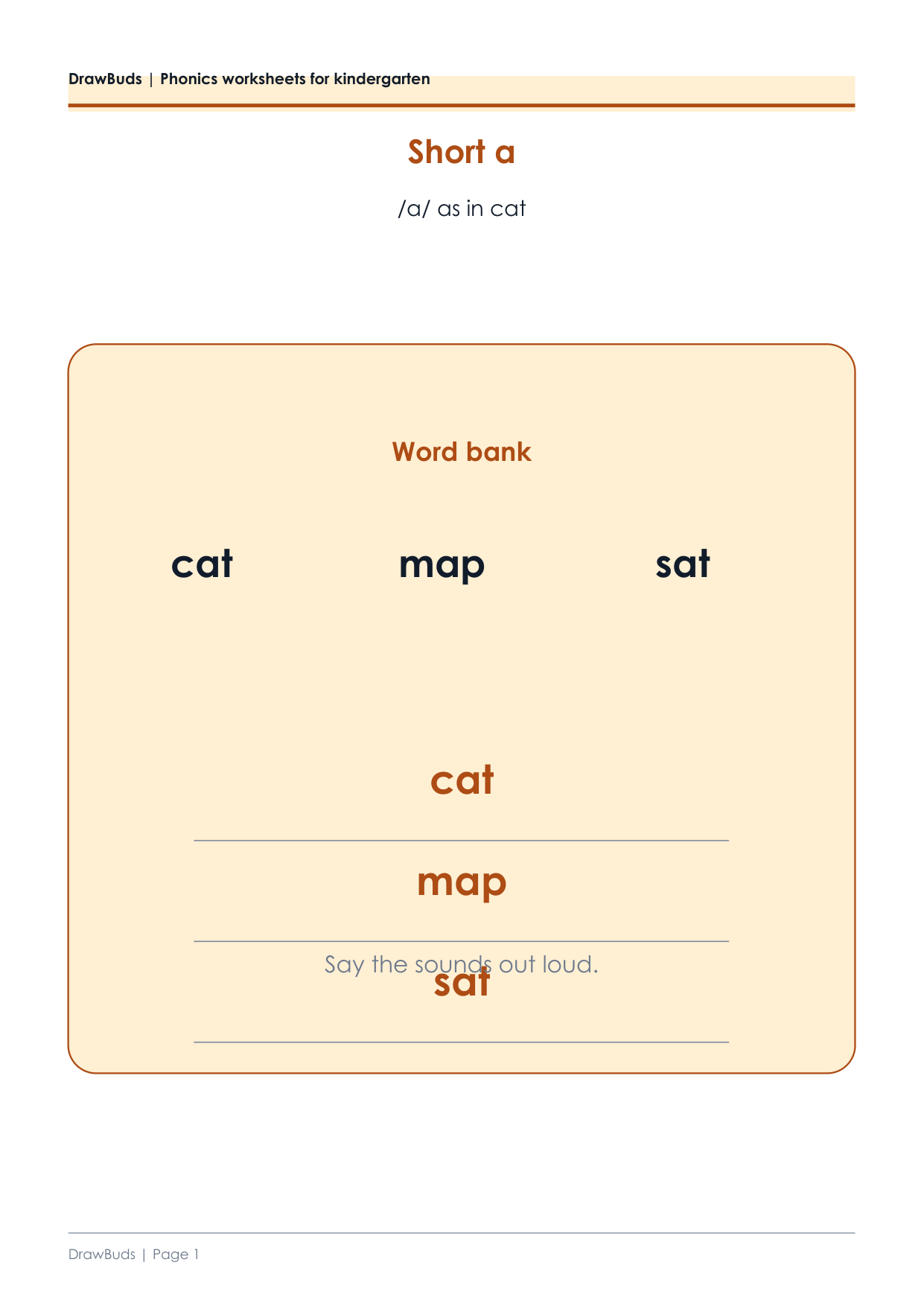
- Short a – /a/ as in cat: cat, map, sat.
- Short e – /e/ as in hen: hen, red, bed.
- Short i – /i/ as in pig: pig, sit, fin.
- Short o – /o/ as in dog: dog, hot, log.
- Short u – /u/ as in sun: sun, cup, run.
- Beginning sounds – mop, sun, cat, fish.
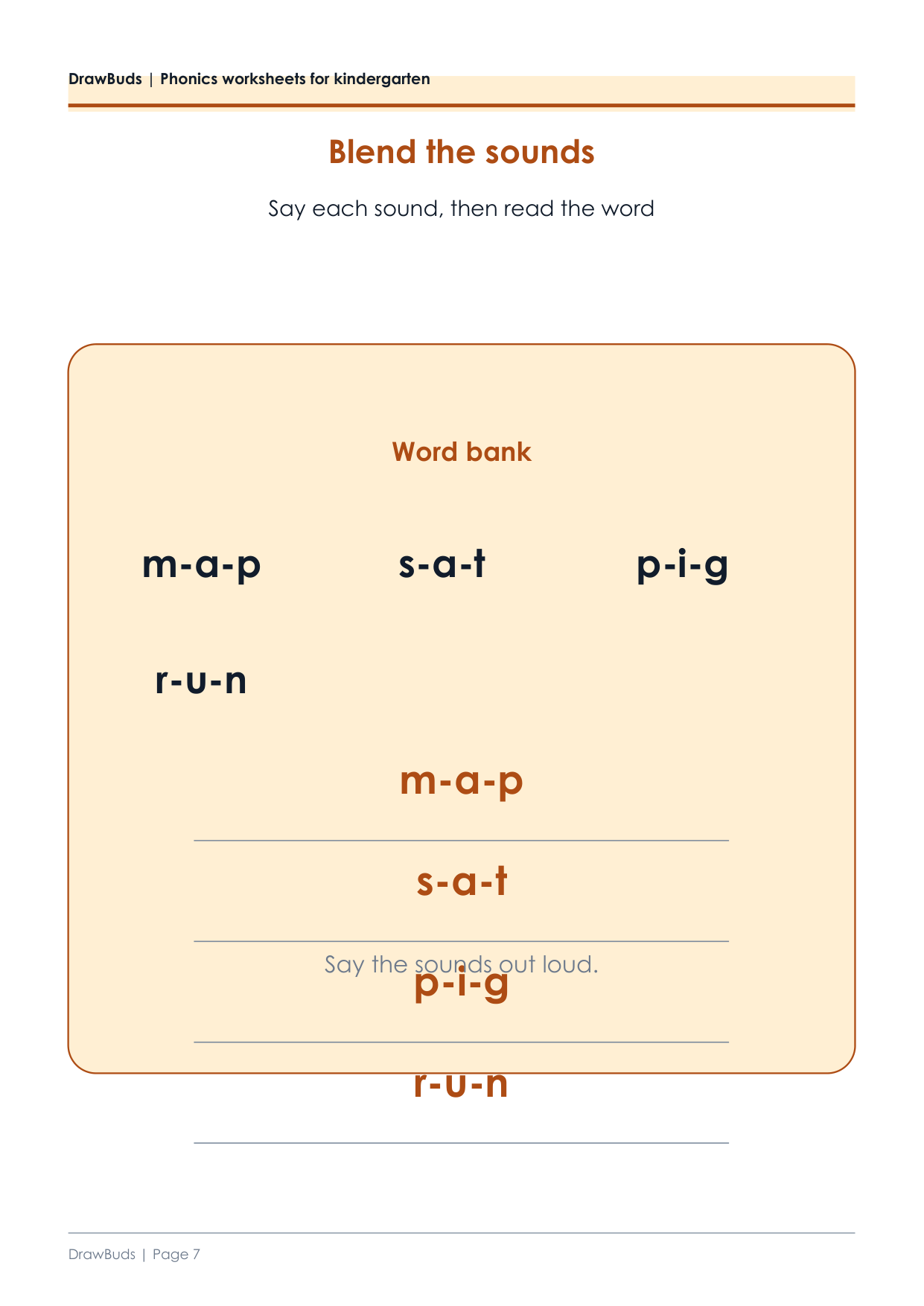
- Blend the sounds – m-a-p, s-a-t, p-i-g, r-u-n.
- Word families – -at, -an, -ig, -op.
- Read and choose – cat or cot, hen or pin, sun or sit, dog or dig.
- Read and draw – “A cat can nap”, with a box to draw it in.
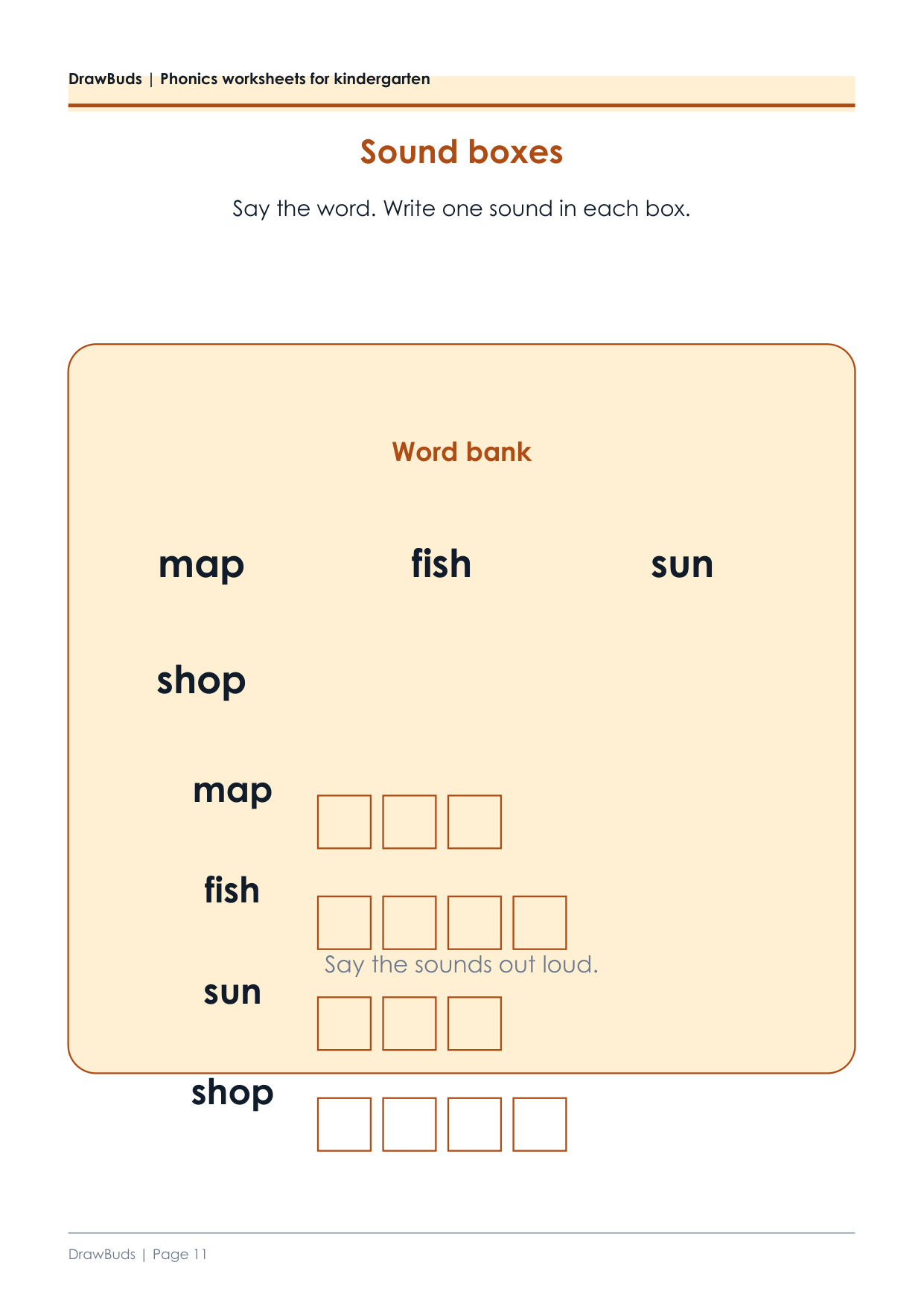
- Sound boxes – map, fish, sun, shop, one sound per box.
- Mixed review – cat, hen, pig, dog, sun.
Two pages worth explaining
Read and choose is a minimal-pair page: cat and cot differ by one vowel and nothing else, so a child who guesses from the first letter gets it wrong. That is the point – it tests the vowel, which is the sound children skip.
Sound boxes has one box per sound, not per letter. Fish gets three boxes because sh is one sound written with two letters, and shop gets three for the same reason. If your child wants four, that is the moment digraphs are worth teaching – which is what the digraph and blends workbook does next.
Say it before writing it
Every page ends with the same line: say the sounds out loud. Blending is an ear skill first; a child who can say m-a-p, map will read it, and a child who cannot will spell it letter by letter without ever hearing a word. Which words to sound out and which to simply memorise is the subject of sight words or phonics.
Where this sits
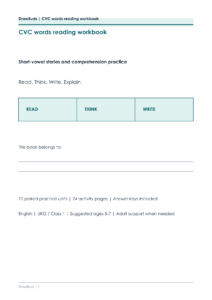
Before this: letter sounds, in find and color the letter. Alongside it: CVC words tracing worksheets for the handwriting half, and rhyming words for word families by ear. After it: the CVC words book, which puts these same words into short stories with questions. The full sequence is on phonics worksheets: the order that works.
Printing
A4, single sided, grayscale prints fine.
Printing this one correctly
In your printer dialog set Scale to 100% or Actual size, not Fit to page. Fit to page shrinks the tracing letters and they stop matching the size a child's hand is learning.
Plain paper is fine for crayons and pencils. If your child uses felt pens, 100 gsm paper stops the ink bleeding to the next sheet.