Digraph Worksheets: Consonant Digraphs and Blends for Grade 1
Digraph worksheets for Grade 1: sh, ch, th, ck and ng plus eleven consonant blends, with clue pages and answer keys. 32 pages, free PDF.
- Pages
- 32
- Ages
- 6-7
- Paper size
- A4 and US Letter
- Black ink only
Same worksheets, two paper sizes. Free to print at home, at school, and in a classroom of thirty.
sh, ch, th, ck, ng and eleven blends, in twelve paired units
The step after CVC is the one where the rules a child just learned stop working. Ship has four letters and three sounds; clap has four letters and four sounds, two of them squashed together at the front. This workbook separates those two cases and teaches them in that order – digraphs first, blends second, then a unit that asks the child to tell them apart.
The twelve units
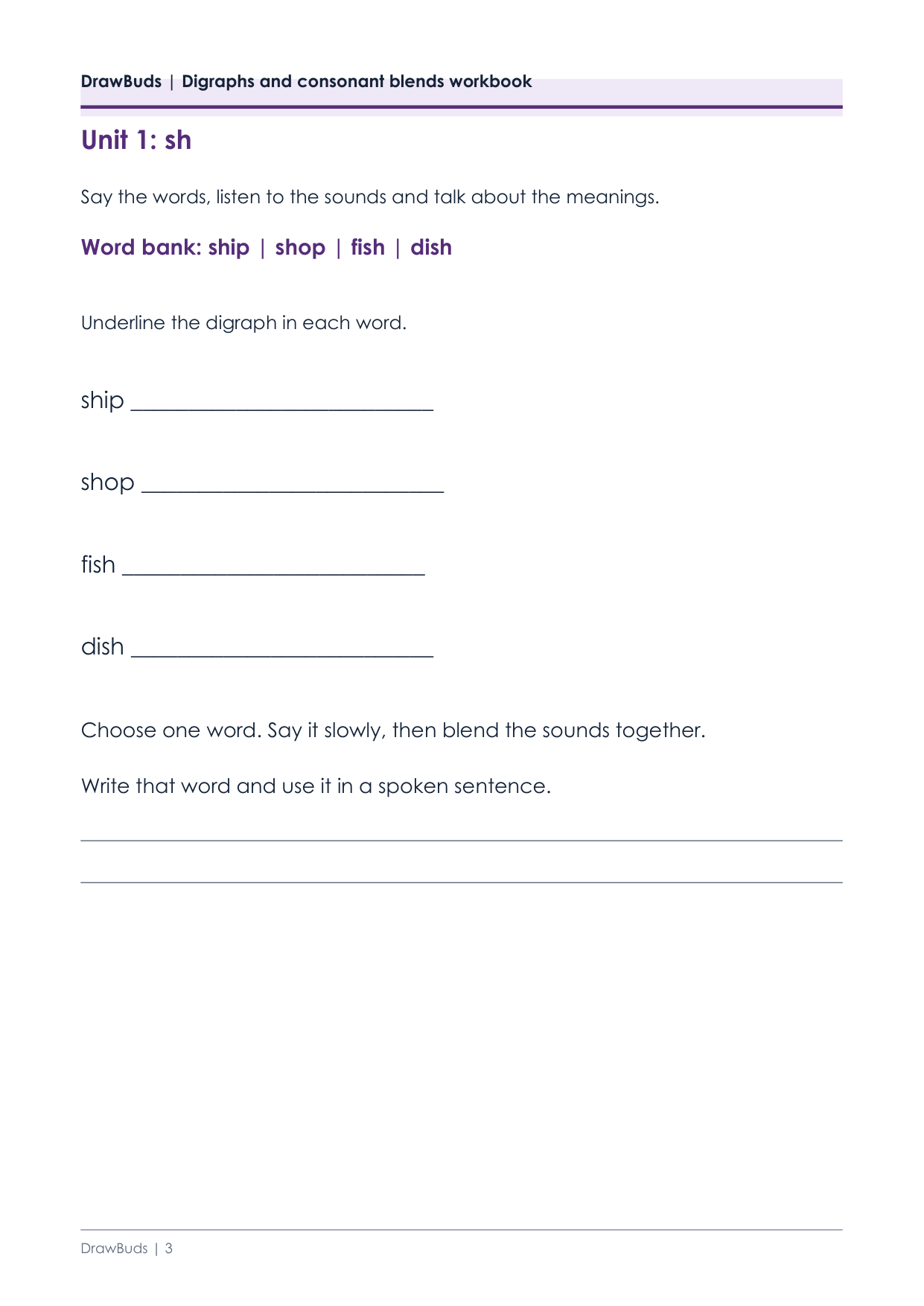
- sh – ship, shop, fish, dish
- ch – chip, chin, chop, chat
- th – thin, thud, moth, bath
- ck – duck, sock, neck, pack
- ng – ring, king, wing, sing
- Mixed digraphs – fish, chin, thin, duck, ring
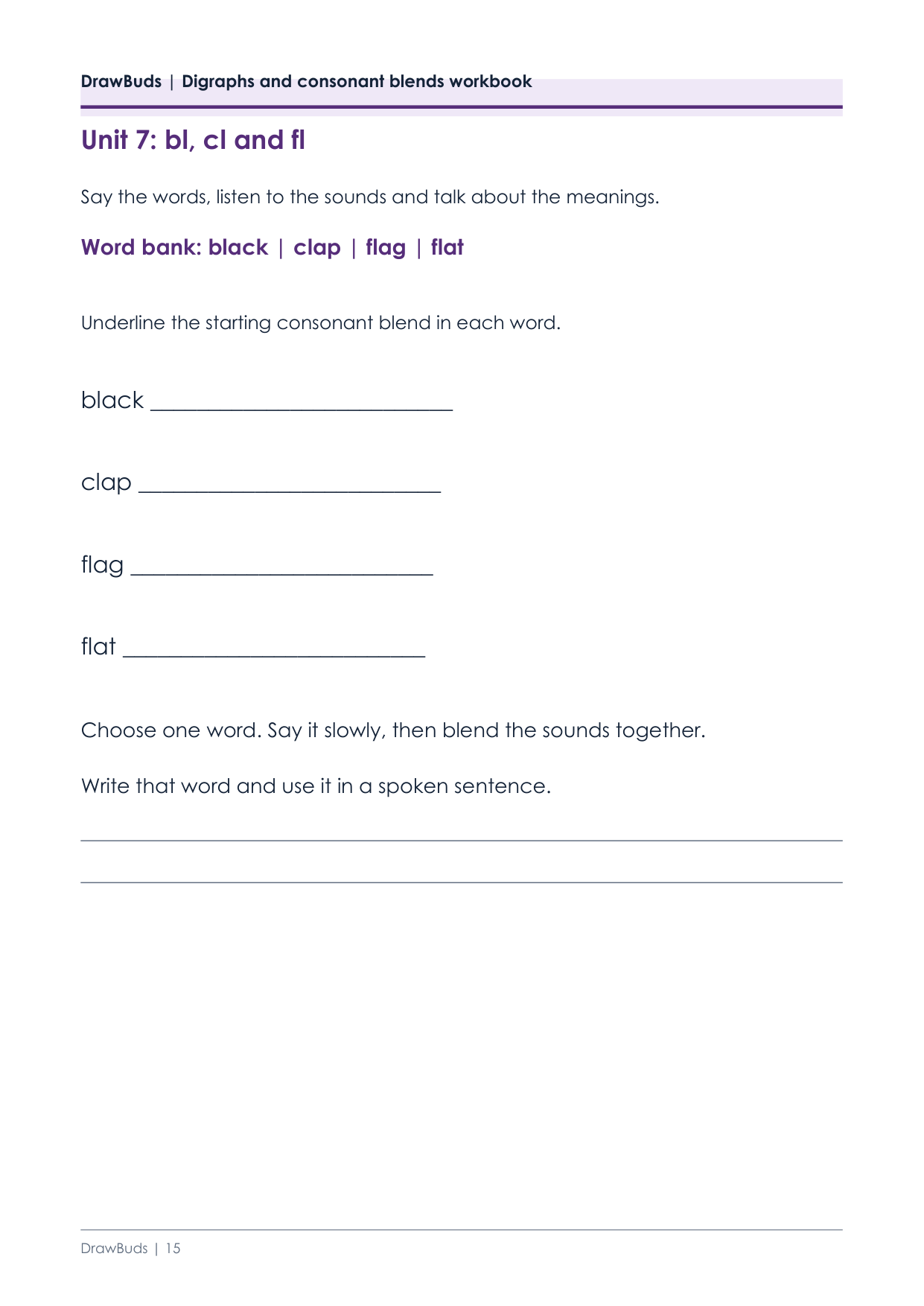
- bl, cl, fl – black, clap, flag, flat
- br, cr, dr – brick, crab, drum, drop
- fr, gr, tr – frog, grin, trip, trap
- sk, sm, sn – skip, smell, snip, snug
- sp, st, sw – spin, stop, swim, step
- Digraph or blend? – ship, clap, fish, frog
How a unit works
The first page of each unit gives a four-word bank and asks the child to underline the letter pair and say why it is there. The second page turns the same four words into clues to solve – an animal with claws, an instrument you hit, to let something fall – so the word has to be read for meaning, not just decoded and forgotten.
The distinction the last unit tests
A digraph is two letters making one sound: sh in ship. A blend is two letters making two sounds that run together: c and l in clap, both audible if you say it slowly. Children who are never asked to tell them apart tend to treat every consonant pair as a digraph and lose the second sound in spelling – which is why unit 12 puts ship, clap, fish and frog on one page and asks for a label.
Why ck and ng sit with sh, ch and th
Both are one sound written with two letters, which makes them digraphs, even though they behave differently in a word – ck only turns up after a short vowel at the end (duck, sock), and ng is a sound English has no single letter for. Teaching them alongside sh and ch keeps the rule simple: two letters, one sound.
At the back
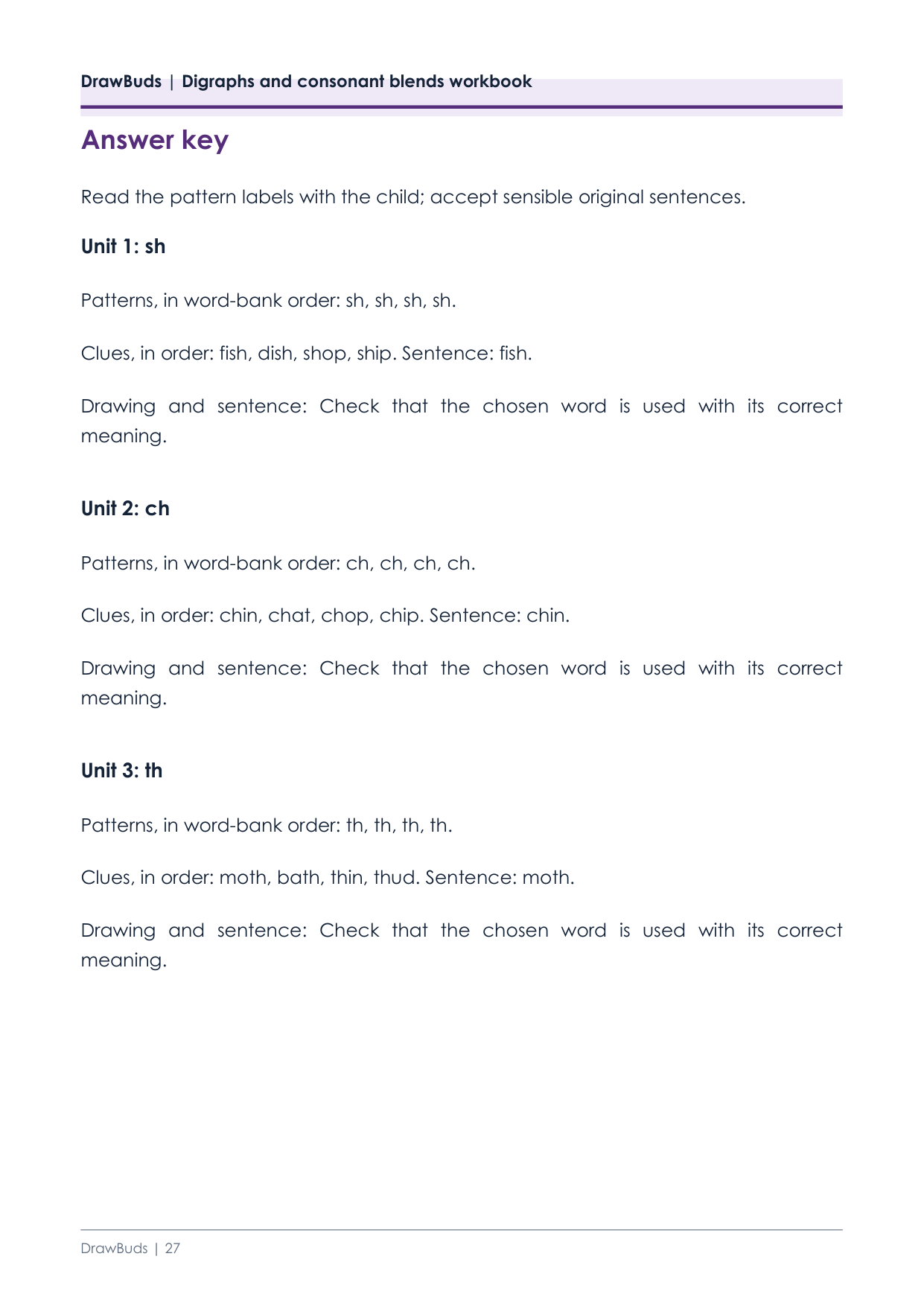
Four answer key pages listing the patterns in word-bank order and the clue answers in order, a practice record with a date line for each of the twelve units, and a closing page. Written sentences are meant to vary; the key says so.
Who it is for and what comes before
Grade 1 / Class 1, roughly ages 6-7, starting after the child can blend simple short-vowel words. The book before it is the CVC words book for kindergarten; the sound-by-sound groundwork is in phonics worksheets for kindergarten. For the words that never follow these rules and simply have to be known, see sight words or phonics and kindergarten sight words tracing.
Printing
32 pages, A4. Units are facing pairs, so double-sided printing keeps each unit on one sheet.
Printing this one correctly
In your printer dialog set Scale to 100% or Actual size, not Fit to page. Fit to page shrinks the tracing letters and they stop matching the size a child's hand is learning.
Plain paper is fine for crayons and pencils. If your child uses felt pens, 100 gsm paper stops the ink bleeding to the next sheet.