Tracing Activities for Preschoolers
12 printable tracing activities for preschoolers: one big dotted picture a page - sun, apple, balloon, flower, fish, car, house, butterfly - and two free rows.
- Pages
- 12
- Ages
- 3-5
- Paper size
- A4 and US Letter
- Black ink only
Same worksheets, two paper sizes. Free to print at home, at school, and in a classroom of thirty.
One large dotted picture per page, plus two free ruled rows
Twelve tracing pages, one picture each, drawn large enough that the whole shape is one continuous movement rather than a series of small corrections. A preschooler tracing a fish is doing the same work as a preschooler tracing rows of curves, but they will finish the fish.
The twelve pictures
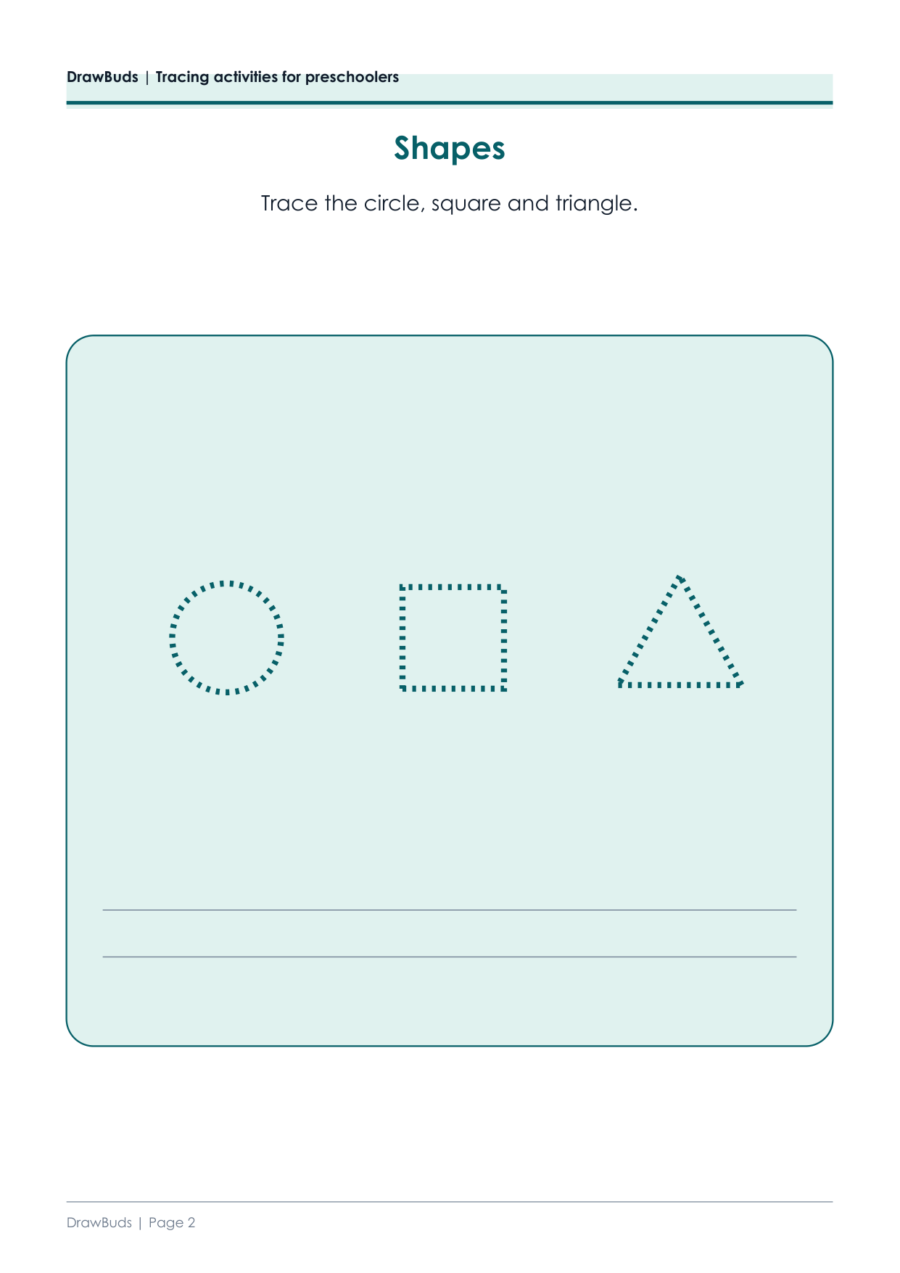
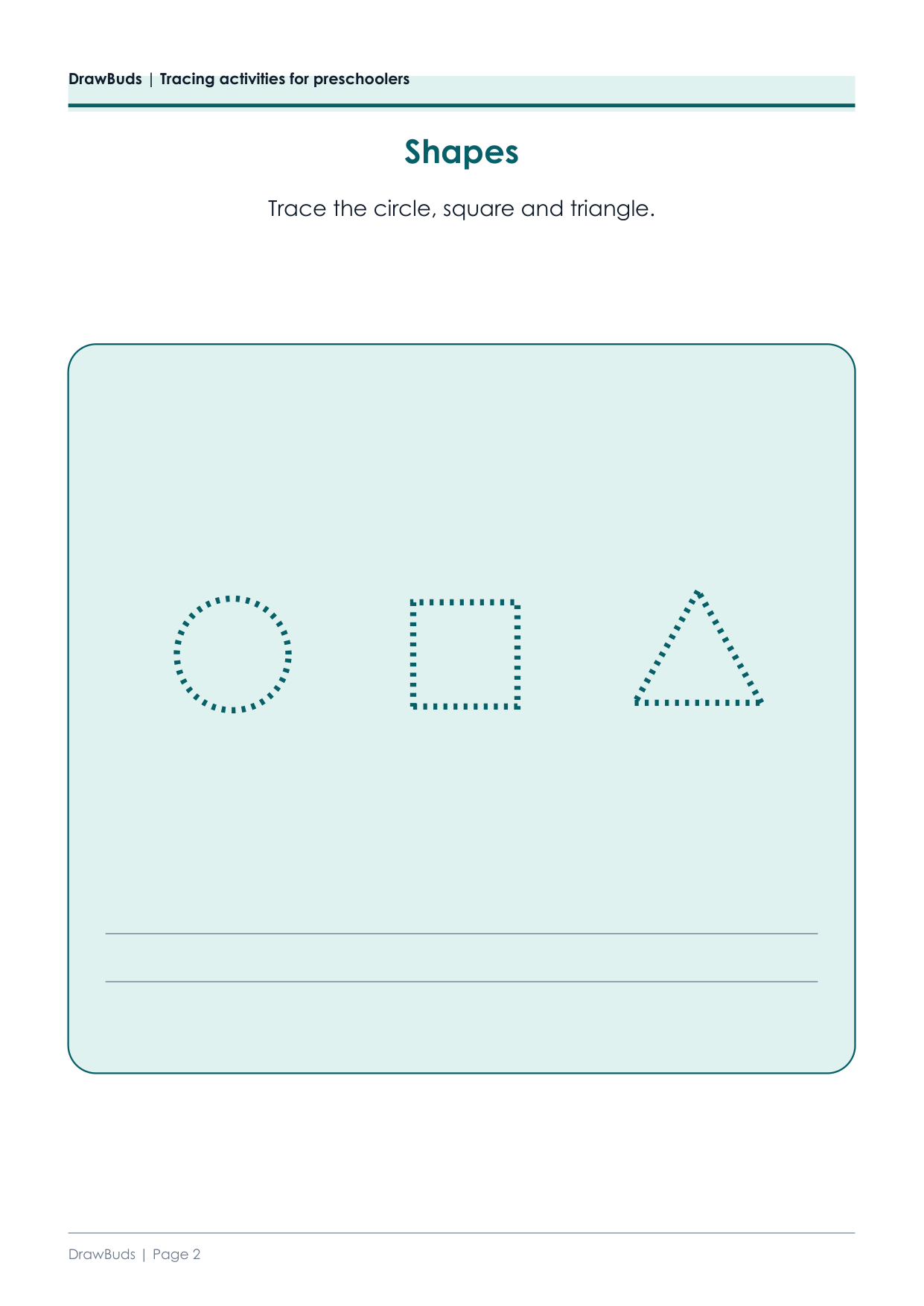
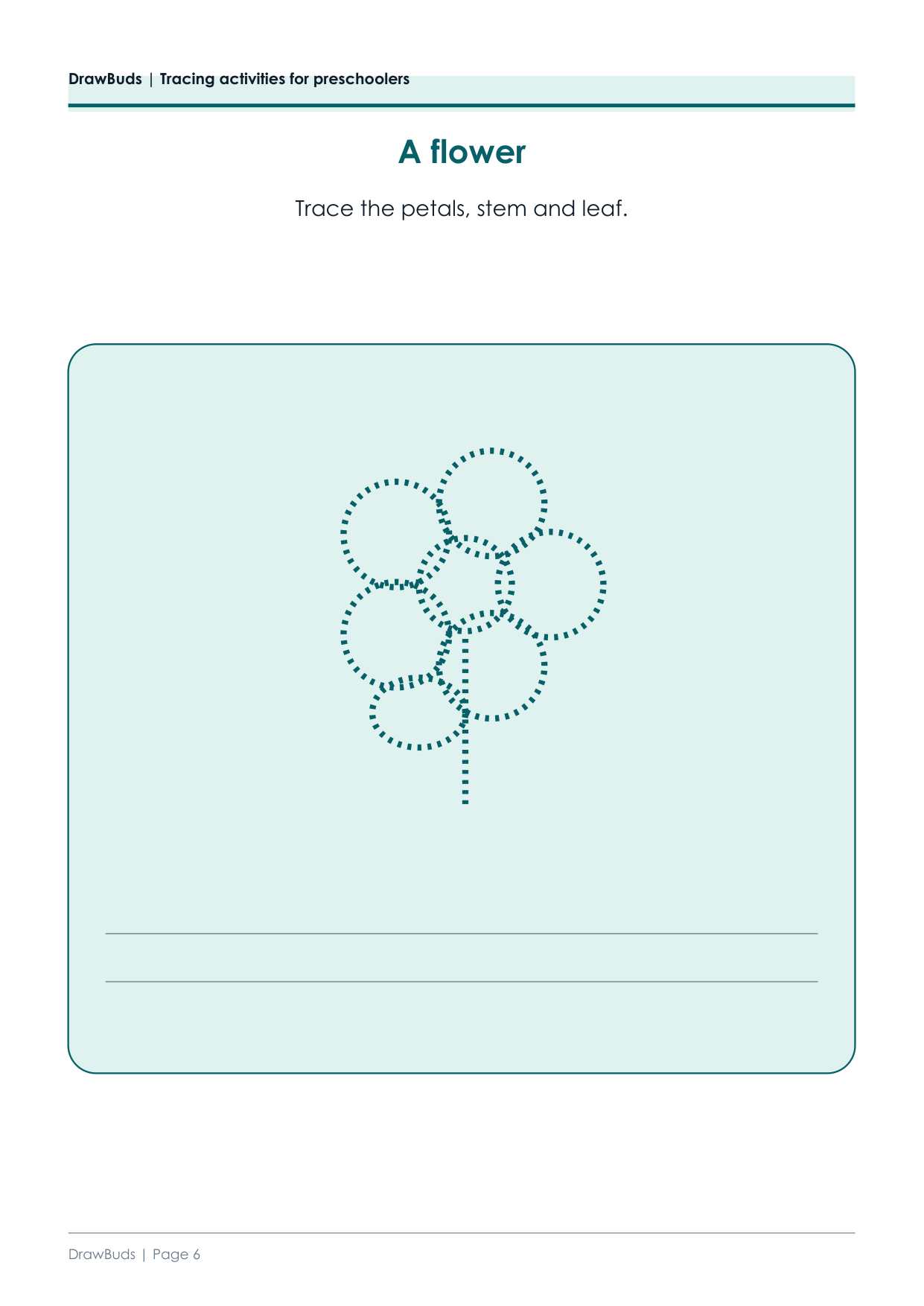
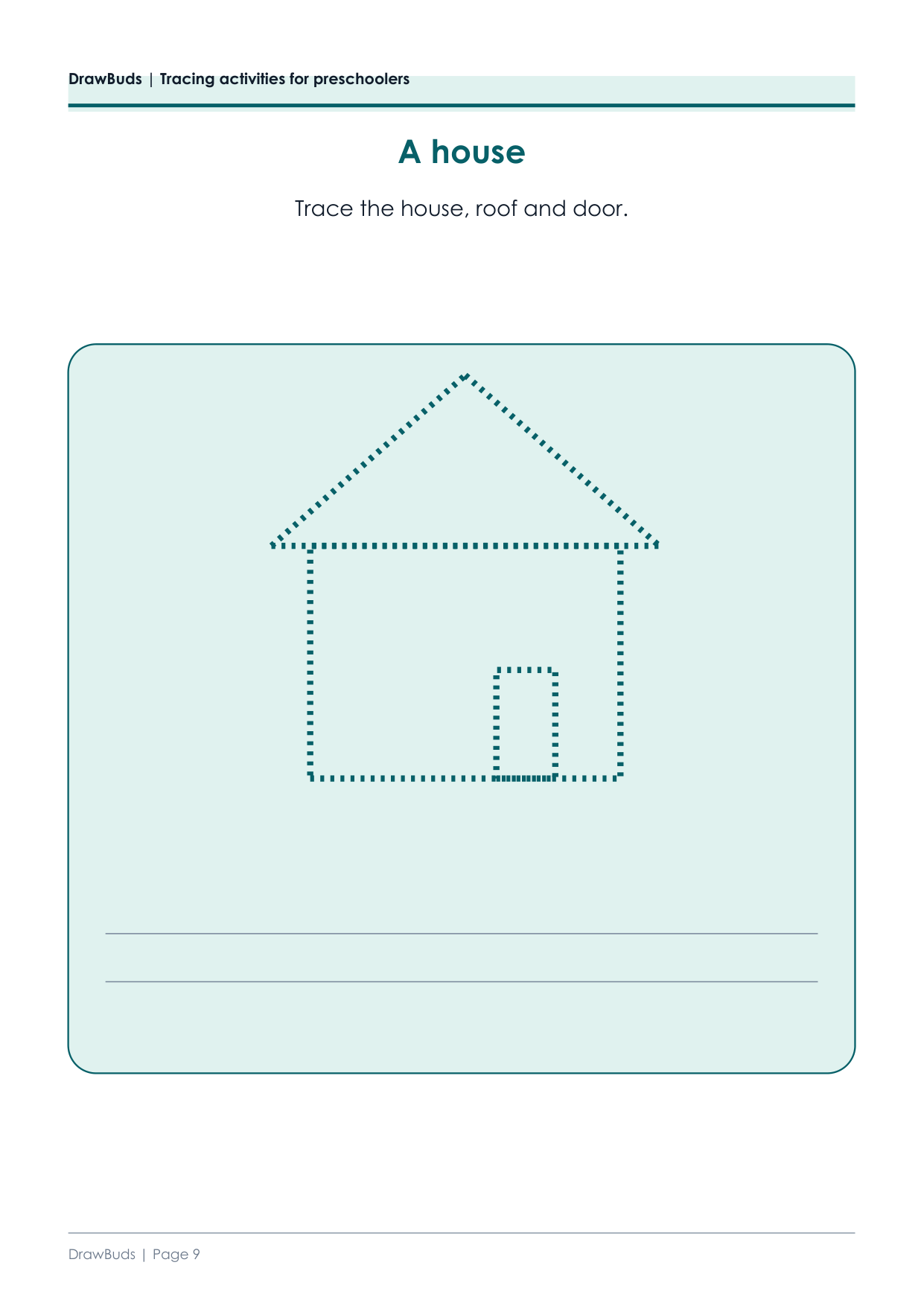
Line roads, shapes (circle, square, triangle), the sun with its rays, an apple, a balloon and string, a flower with petals and a leaf, a fish with a tail fin, a little car with wheels and windows, a house with a roof and door, a butterfly with four wings, a mixed shapes page, and a last page to trace a favourite again.
How the pictures are drawn
- One picture per page, filling the page. Nothing here is small enough to need a pincer grip a four-year-old may not have yet.
- Dashed outlines, thick stroke. The dashes are widely spaced on purpose – a child can see where the line is going next, which is what makes a curve smooth.
- Two ruled rows under every picture. Trace the picture, then use the rows for a free attempt or the first letter of its name.
- Closed shapes before open ones. A circle ends where it started and tells the child they are done; the butterfly, with four separate wings and a body line, is deliberately last.
How it differs from the line-tracing book
Pre-writing line tracing worksheets gives ten strokes with four rows of each – it is the drill. This book gives one picture per page – it is the reason to do the drill. A child who has stopped co-operating with rows usually restarts on pictures. For shapes specifically, shape tracing worksheets goes further than the two shape pages here, with twelve shapes and a drawing box each.
What to say while they trace
Name the direction, not the quality: “start at the top”, “all the way round”, “stop at the corner”. A traced line that wobbles but goes the right way is progress; a neat line drawn backwards has to be untaught later. The same reasoning governs letter direction, which is in the order to teach handwriting.
Printing and reuse
A4, one side, no colour needed. If you want to reuse a page, put it in a plastic sleeve and give the child a dry-wipe pen – the outlines are thick enough to survive it. The rest of this shelf is at tracing books.
Printing this one correctly
In your printer dialog set Scale to 100% or Actual size, not Fit to page. Fit to page shrinks the tracing letters and they stop matching the size a child's hand is learning.
Plain paper is fine for crayons and pencils. If your child uses felt pens, 100 gsm paper stops the ink bleeding to the next sheet.