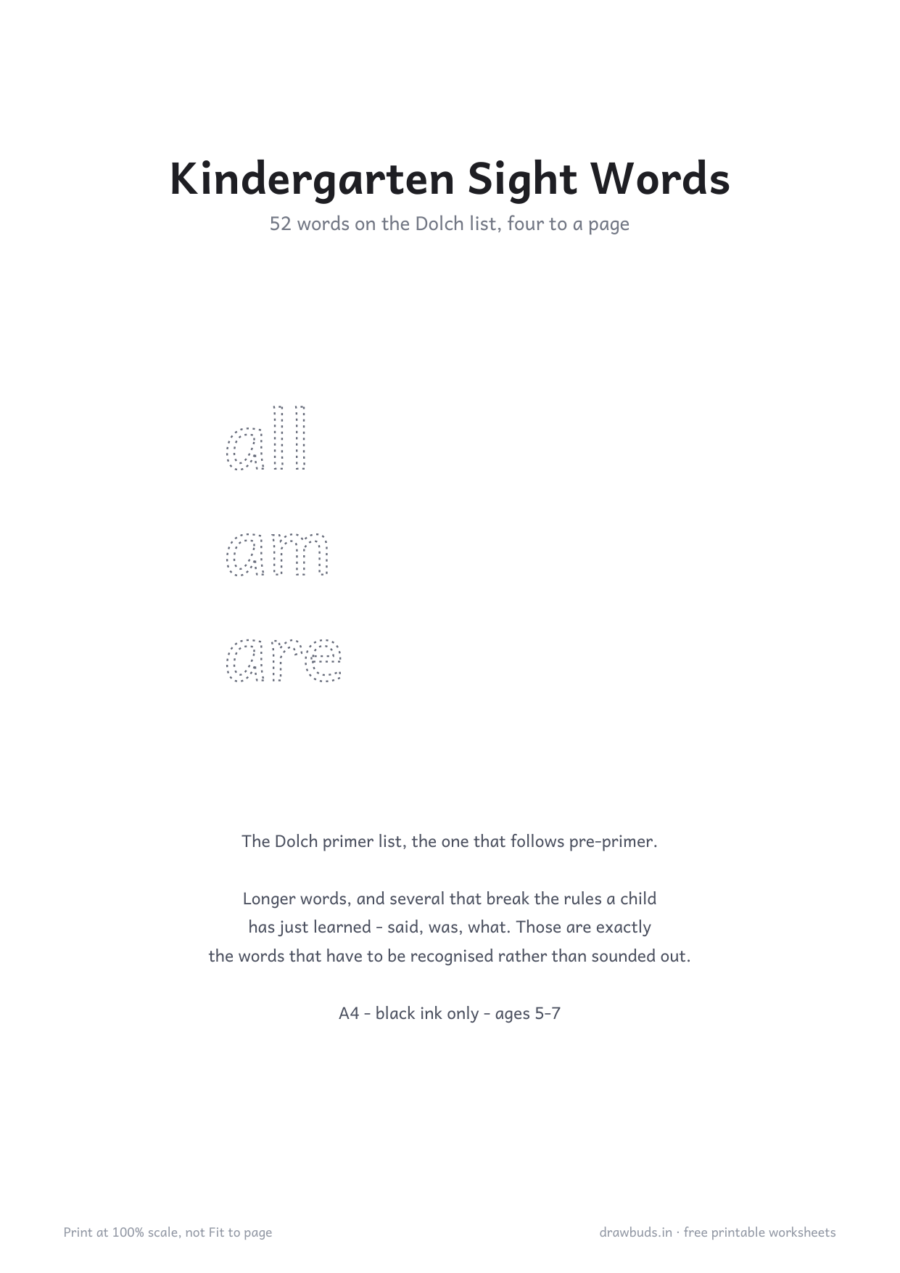
Kindergarten Sight Words Tracing
14 printable pages covering the 52 Dolch primer sight words, four to a page — the list that follows pre-primer, and the one full of words that break the rules.
- Pages
- 14
- Ages
- 5-7
- Paper size
- A4
- Black ink only
Free to print at home, at school, and in a classroom of thirty.
The Dolch primer list, four words to a page
Fifty-two words, and several of them are the reason children lose faith in phonics. Was should rhyme with gas. What should rhyme with hat. Have should have a long a like gave. They do not, and a child who tries to sound them out gets them wrong every time.
The list
This is the Dolch primer list — the second of the five Dolch lists, and the one a child normally meets in kindergarten after finishing pre-primer. It is longer than pre-primer, the words are longer, and it introduces the first real spelling patterns worth noticing: the -ent in went, the wh- in what, when and who.
What is on each page
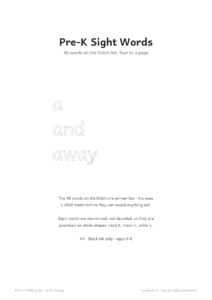
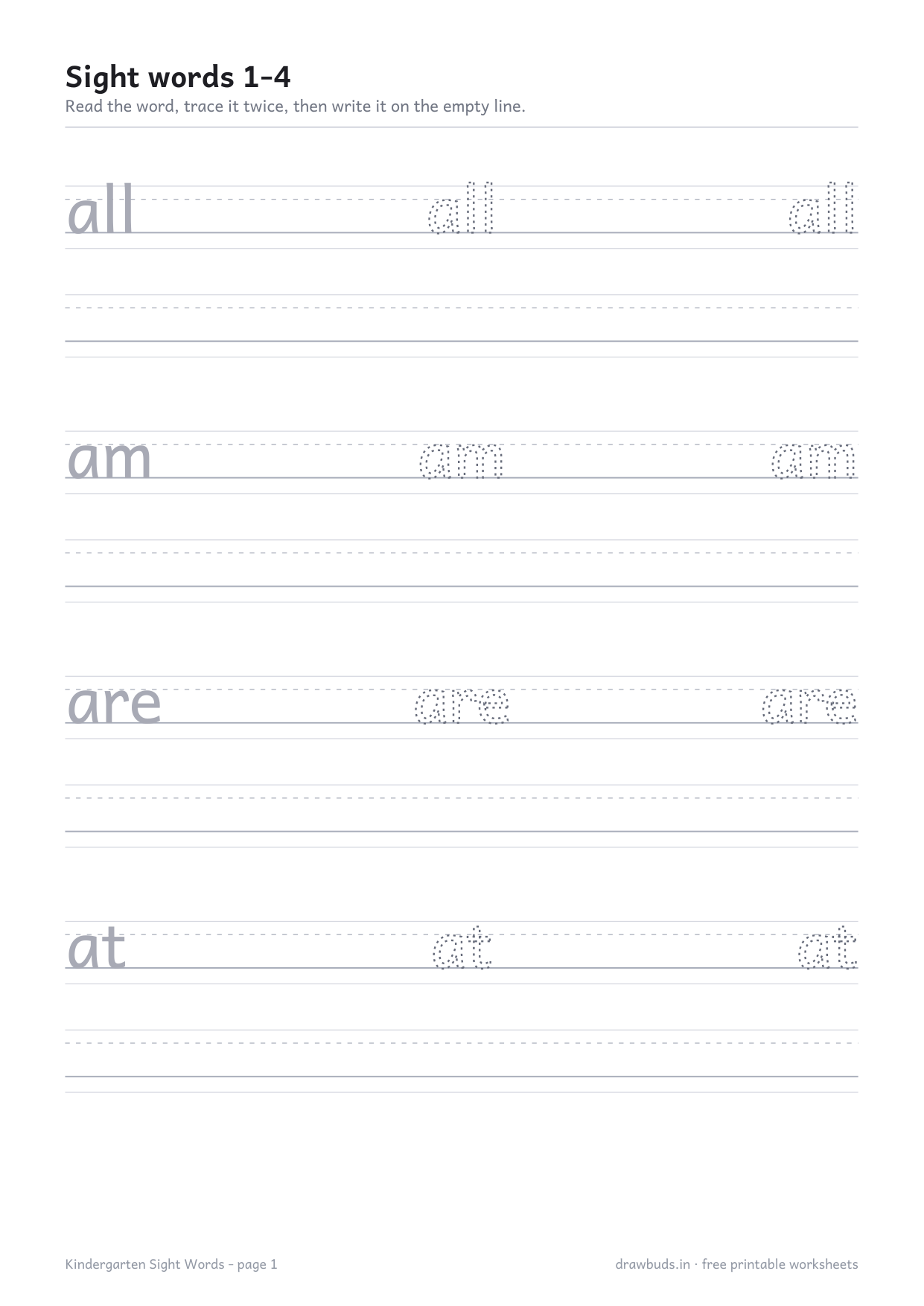
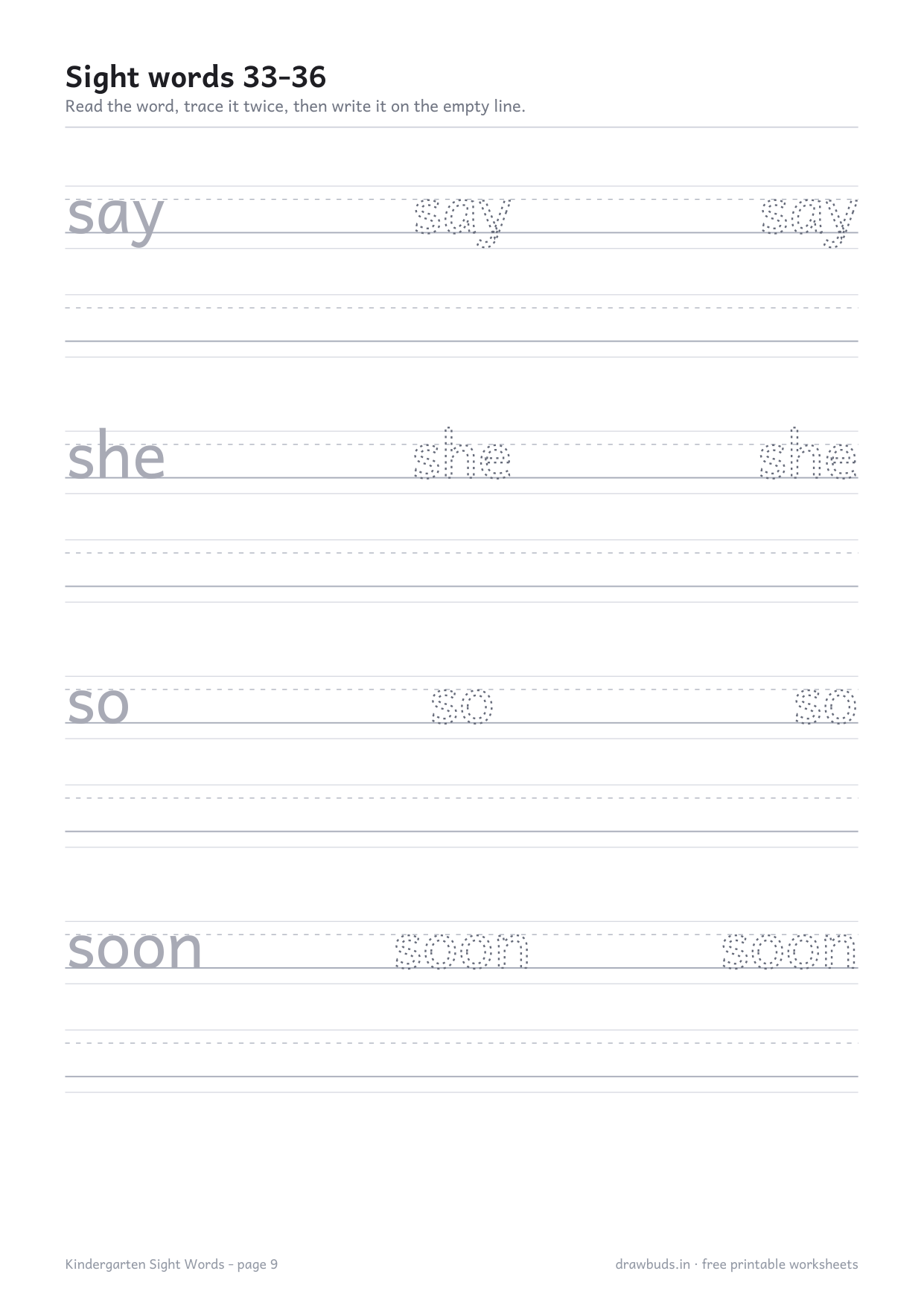
Four words, each with a model row of one grey word and two dotted ones, then an empty ruled row. Thirteen pages of four.
The words to spend longest on
was, what, who, there, they — five words that are irregular, high frequency, and easy to confuse with each other. There and they in particular look almost the same at a glance, and a child who is guessing from the first two letters will read one for the other for months. Practise those two on separate days.
Before this book
If a child is not yet instant on the, and, said, come and the rest of pre-primer, start with Pre-K Sight Words. The primer list assumes those forty are already automatic, and working two lists at once is how both end up half learned.
Printing it
Scale 100%, not Fit to page. If a child is writing these at school on smaller ruled paper, Handwriting Practice Paper has the same four-line rule in four sizes, so the practice at home matches the size in class.
Printing this one correctly
In your printer dialog set Scale to 100% or Actual size, not Fit to page. Fit to page shrinks the tracing letters and they stop matching the size a child's hand is learning.
Plain paper is fine for crayons and pencils. If your child uses felt pens, 100 gsm paper stops the ink bleeding to the next sheet.