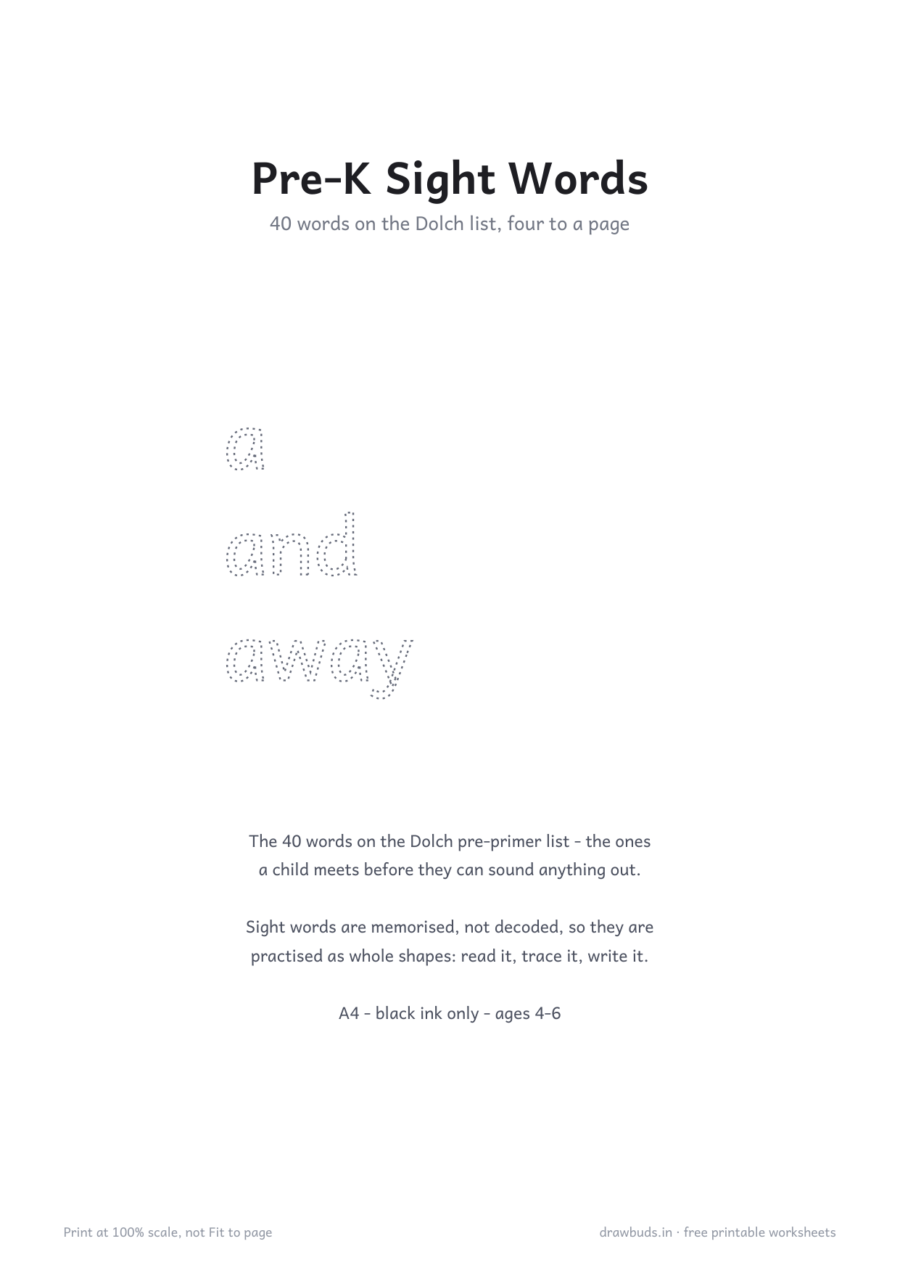
Pre-K Sight Words Tracing
11 printable pages covering the 40 Dolch pre-primer sight words, four to a page. These are the words a child meets before they can sound anything out.
- Pages
- 11
- Ages
- 4-6
- Paper size
- A4
- Black ink only
Free to print at home, at school, and in a classroom of thirty.
The 40 Dolch pre-primer words, four to a page
Forty words. The, and, said, come, you, where. They are about a quarter of everything in an early reading book, and almost none of them can be sounded out — said does not say what its letters say, and neither does come. They have to be recognised as shapes, which means they have to be seen and written often.
The list
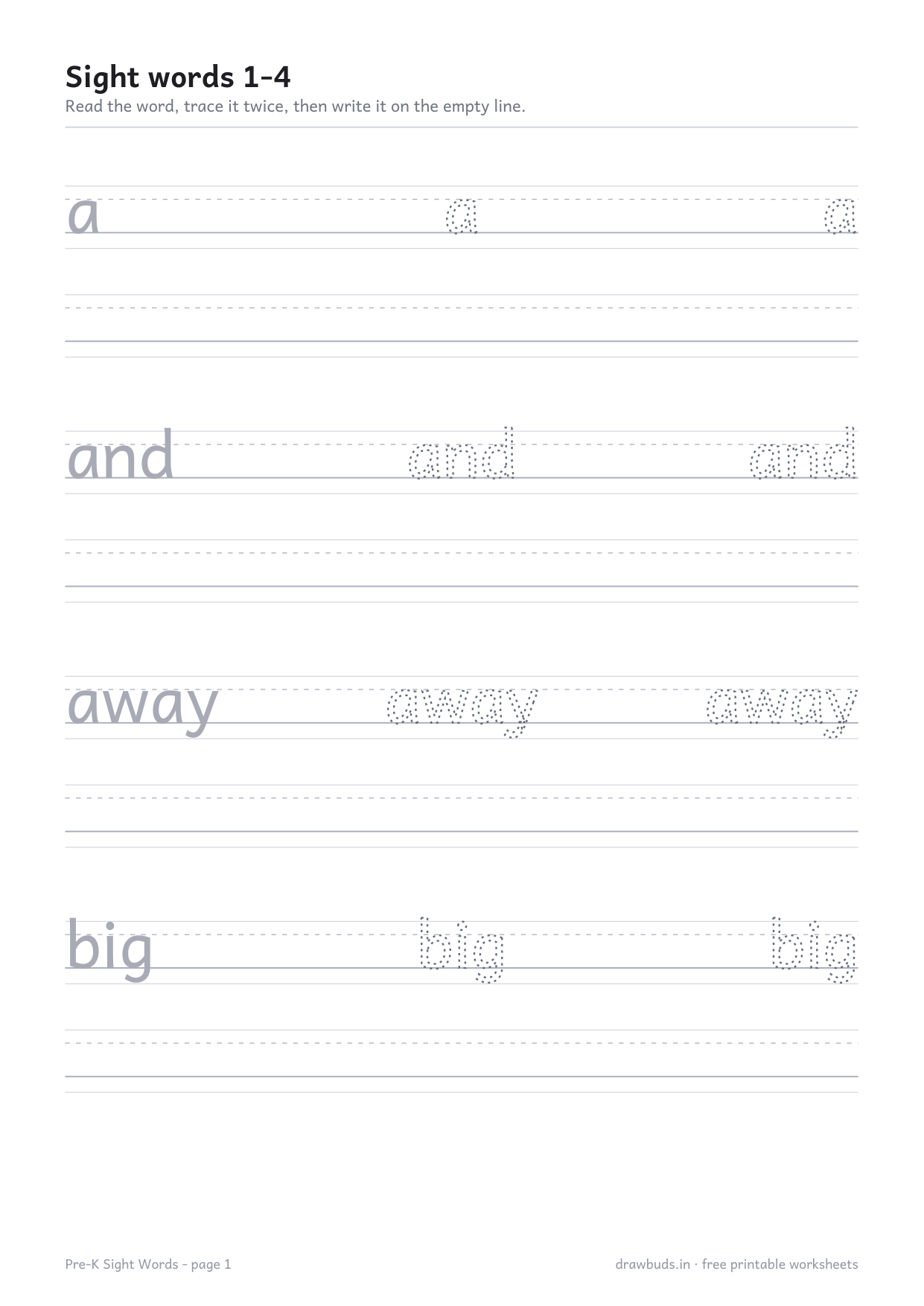
This is the Dolch pre-primer list, compiled by Edward Dolch in the 1930s from the words that appeared most often in children’s books. It is still the list most US kindergartens work through, and the order here is alphabetical rather than by difficulty, so a word is easy to find when a teacher asks for it.
What is on each page
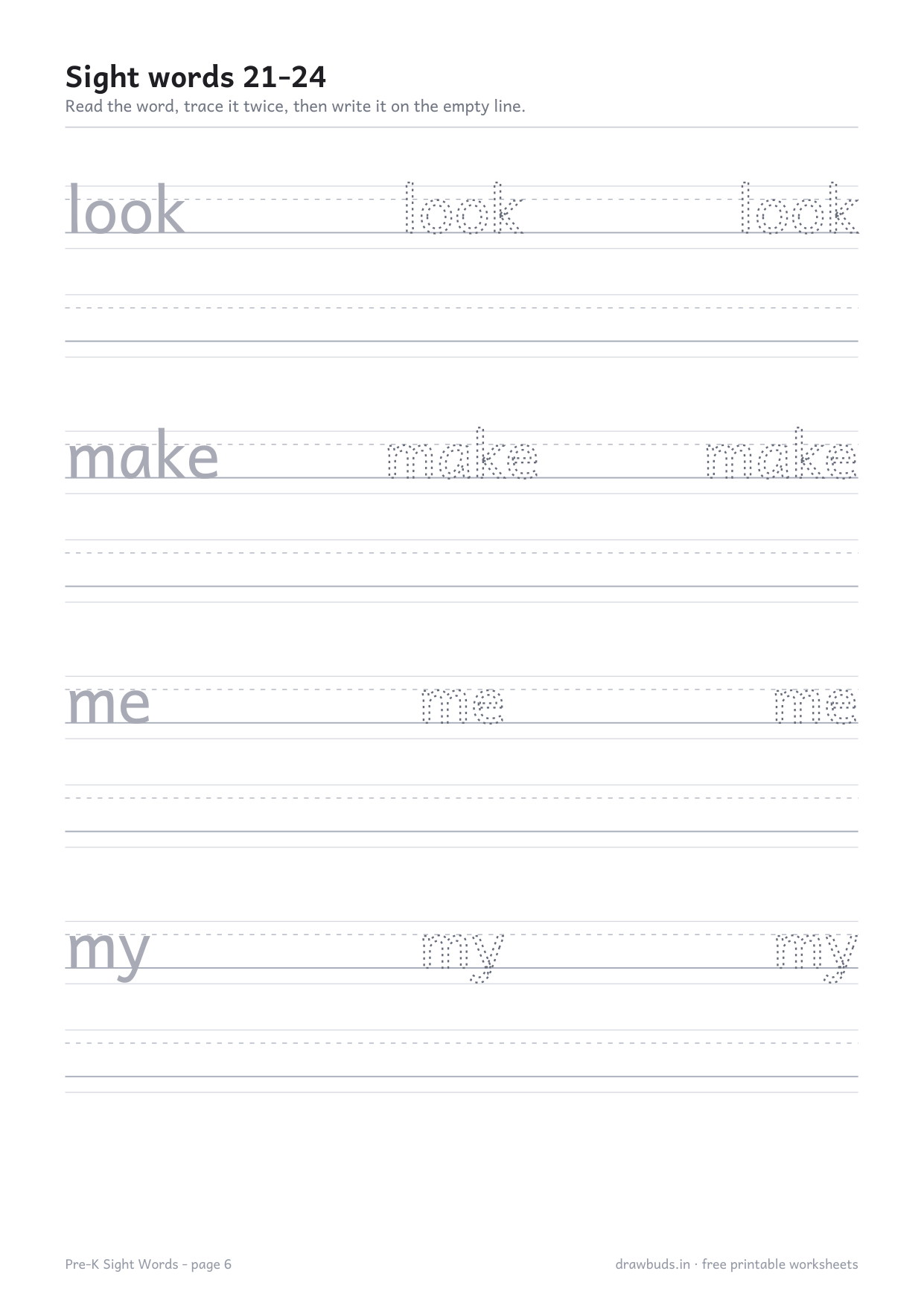
Four words. Each has a model row — one grey word to copy, two dotted ones to trace — and an empty ruled row beneath it. Four is deliberate: a page of ten sight words gets abandoned halfway, and the last six are traced without being read.
How to use it
Read the word aloud, cover it, say it again, then trace. Reading it before writing it is what makes this a sight-word exercise rather than a copying exercise — a child can trace where perfectly without once looking at the whole word.
Four words a session, two or three sessions a week, works through the list in about ten weeks. Go back to any page whose words are not instantly recognised a fortnight later; recognition, not neat handwriting, is the thing being trained.
Sight words and phonics are not rivals
A child needs both. Sight words cover the high-frequency irregulars; phonics covers everything else, which is most of the language. Run this book alongside CVC Words Tracing rather than after it.
What comes next
Kindergarten Sight Words covers the 52 words on the Dolch primer list, which is the one that follows this.
Printing this one correctly
In your printer dialog set Scale to 100% or Actual size, not Fit to page. Fit to page shrinks the tracing letters and they stop matching the size a child's hand is learning.
Plain paper is fine for crayons and pencils. If your child uses felt pens, 100 gsm paper stops the ink bleeding to the next sheet.