Ten Frames Worksheets 1 to 20
13 printable pages. Six sheets reading filled ten frames, six drawing dots into empty ones. Two rows of five is what turns seven from a count into a shape.
- Pages
- 13
- Ages
- 4-6
- Paper size
- A4
- Black ink only
Free to print at home, at school, and in a classroom of thirty.
Six sheets reading filled frames, six filling empty ones
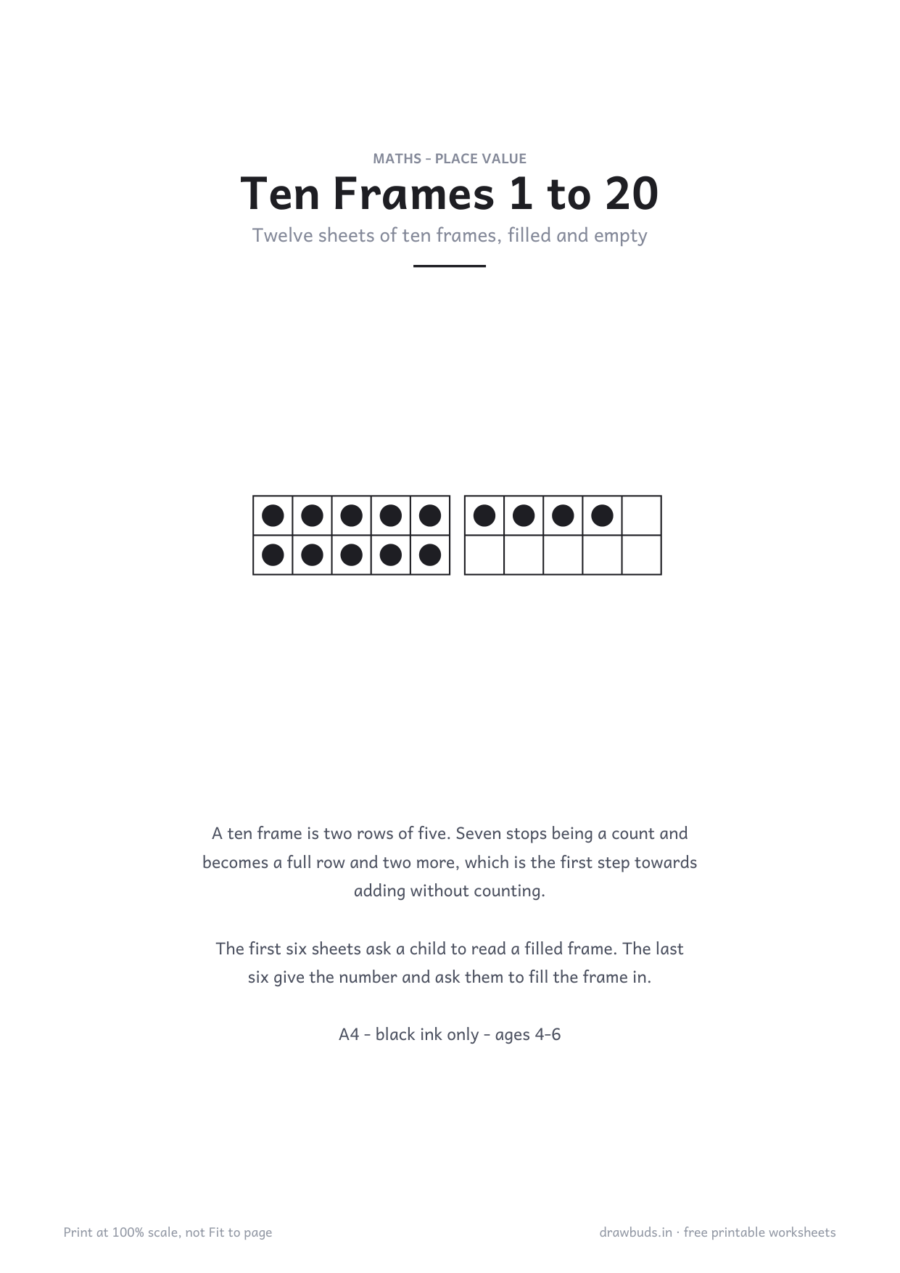
A ten frame is two rows of five squares. Fill seven of them and a child stops counting one at a time and starts seeing a full row and two more. That is called subitising, and it is the step between counting and adding.
What is on each page
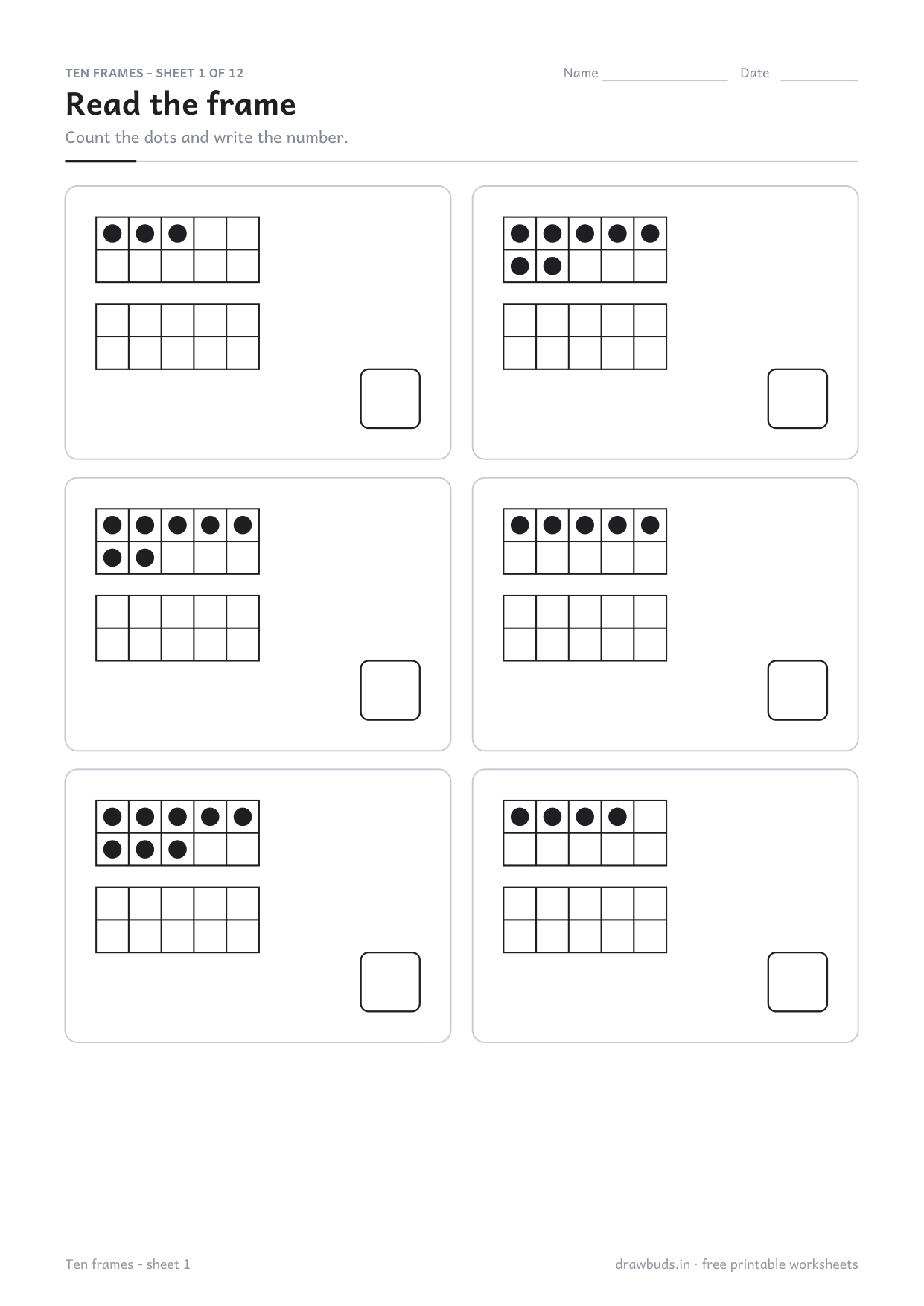
Six cards, each with two ten frames — one for the first ten, one for the second — so numbers up to 20 fit without changing the picture.
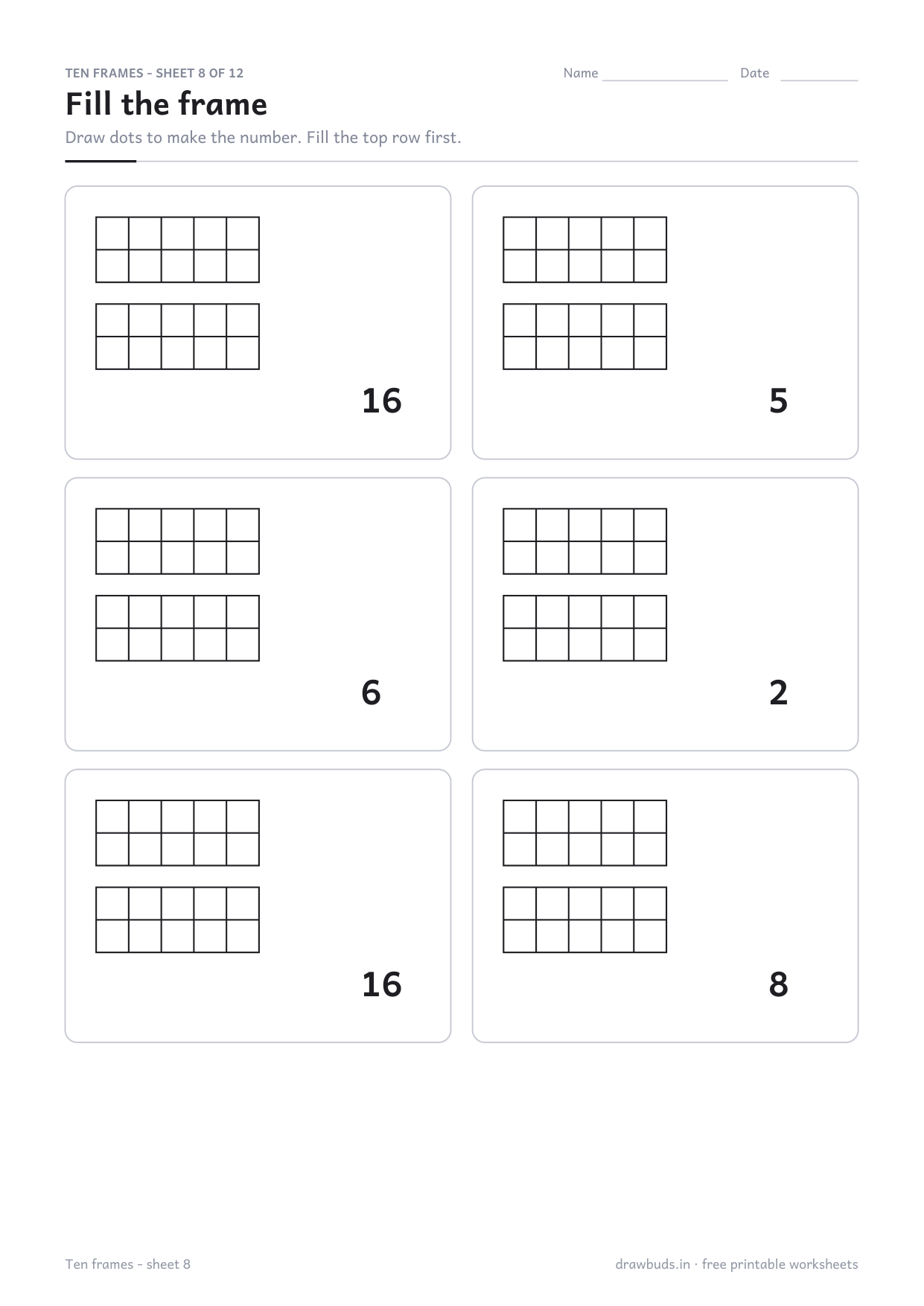
Sheets 1 to 6 show a filled frame and ask for the number. Sheets 7 to 12 give the number and ask the child to draw the dots. The second half is genuinely harder and it is where you find out whether the first half was understood or copied.
Fill the top row first
It matters. A ten frame filled in a random scatter teaches nothing; filled left to right, top row first, it always makes the same recognisable shape for the same number. Six is always a full row and one. Nine is always one gap. Children who have seen nine that way for a term can spot it without counting.
Why the second frame changes everything
Fourteen is a full frame and four. Not “one ten and four units”, which means nothing yet, but a picture of it. Place value is much easier to teach a year later to a child who has already seen every teen number drawn as a full ten and some more.
Using it with counters
Print one frame page, laminate it, and use buttons or coins. Ask for seven, then ask how many more to make ten — the empty squares answer the question before the child does, which is how number bonds start to feel obvious rather than memorised.
What comes next
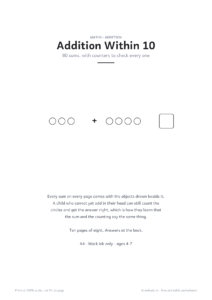
Number Bonds to 10 takes the same idea into a diagram, and Addition Within 10 puts it to work.
Printing this one correctly
In your printer dialog set Scale to 100% or Actual size, not Fit to page. Fit to page shrinks the tracing letters and they stop matching the size a child's hand is learning.
Plain paper is fine for crayons and pencils. If your child uses felt pens, 100 gsm paper stops the ink bleeding to the next sheet.