Mixed Operations Worksheets for All Four Signs
Mixed operations worksheets: one sign a column, then signs mixed, then the missing sign, then word problems where the child picks it. Free PDF.
- Pages
- 28
- Ages
- 7-9
- Paper size
- A4 and US Letter
- Black ink only
Same worksheets, two paper sizes. Free to print at home, at school, and in a classroom of thirty.
24 sheets: one sign a column, mixed signs, missing sign, missing numbers, word problems, answers
These mixed operations worksheets are about reading the sign, which is the one thing a page of pure addition never asks a child to do. Twenty sums that are all plus can be answered on autopilot. The moment plus, minus, times and divide sit in the same column, the child has to look before every single one, and that is a different habit.
What is in the 28 pages
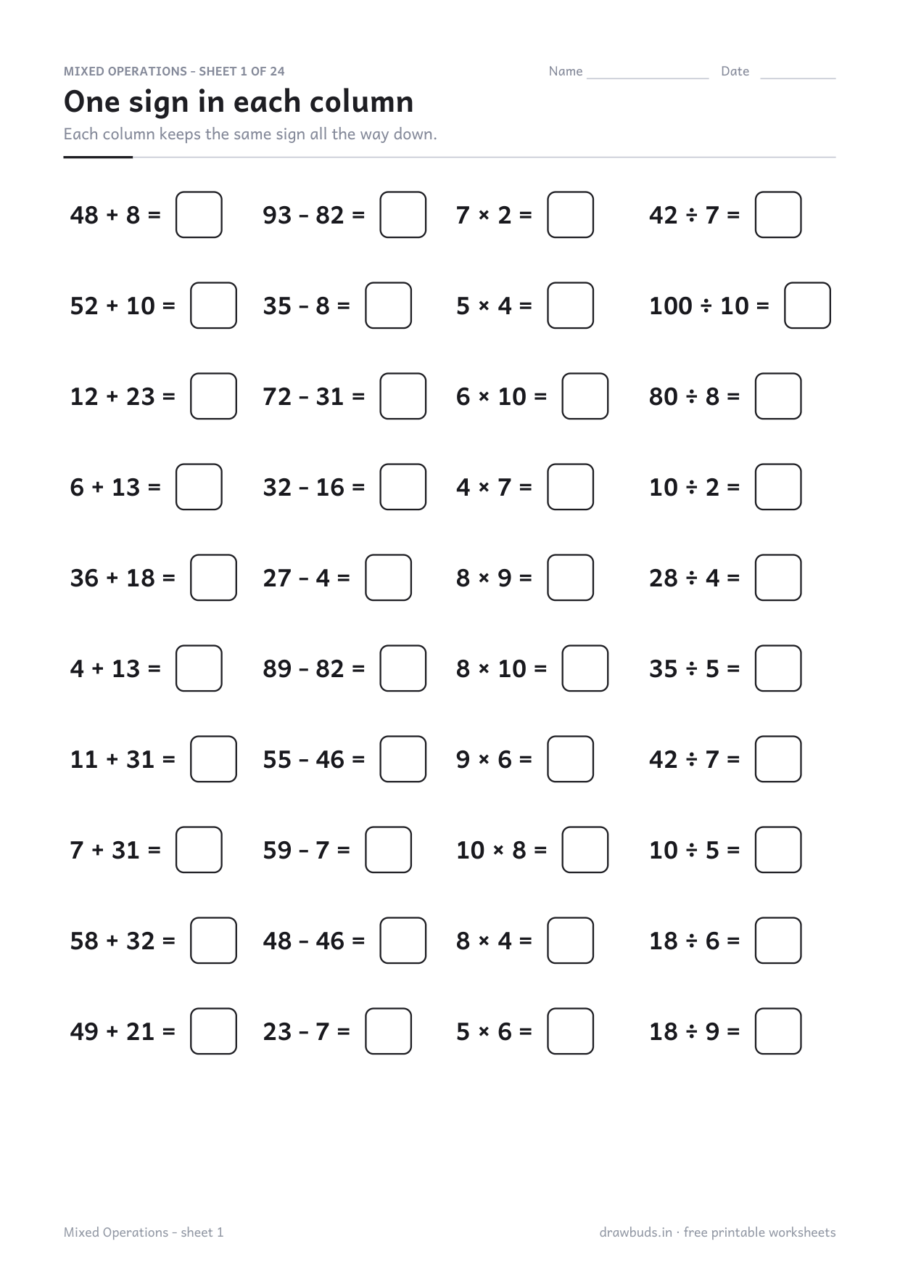
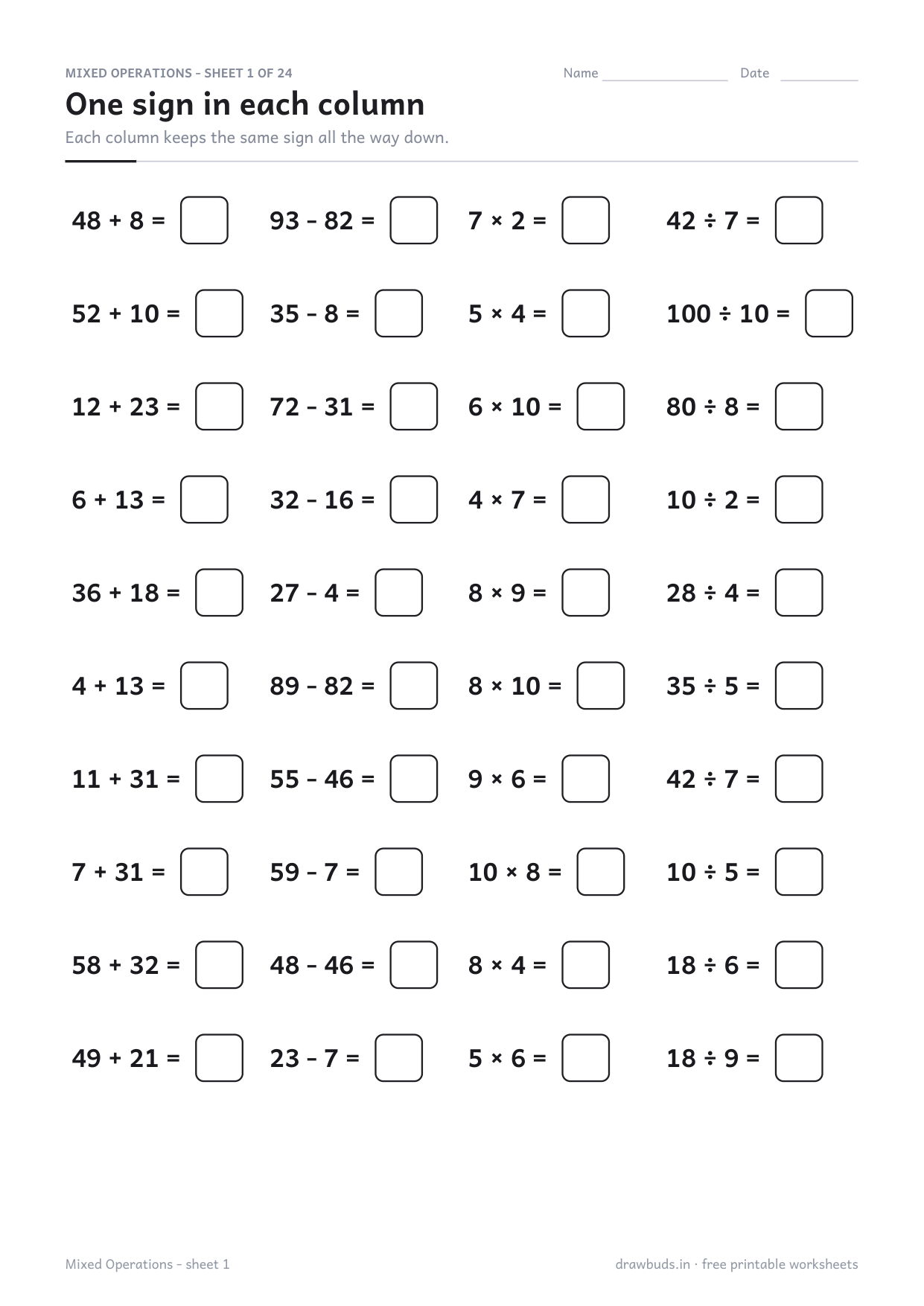
- Sheets 1-4: one sign in each column, so the four operations sit side by side but stay separated.
- Sheets 5-10: signs mixed in every column.
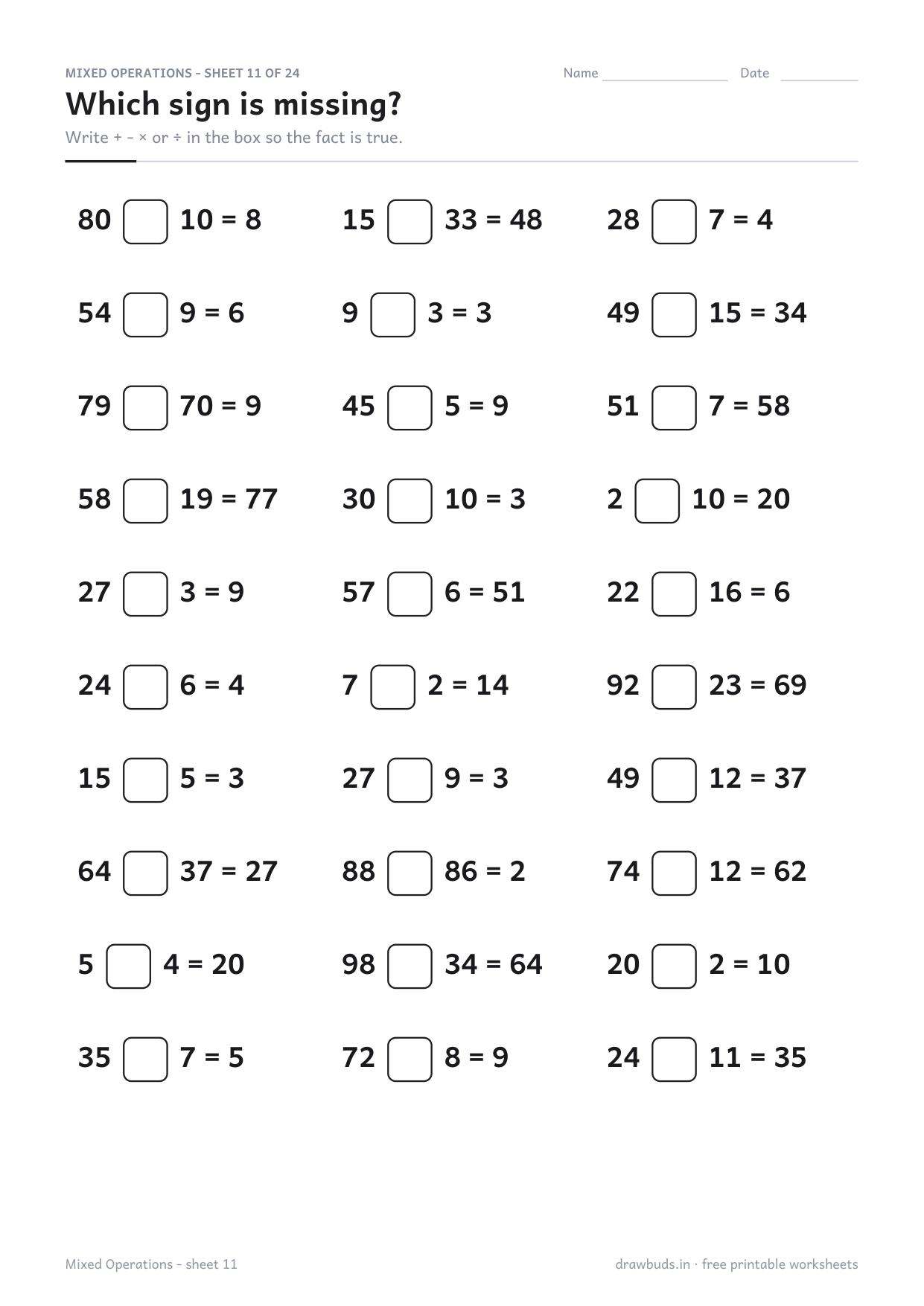
- Sheets 11-14: which sign is missing, given the two numbers and the answer.
- Sheets 15-18: missing numbers across all four signs.
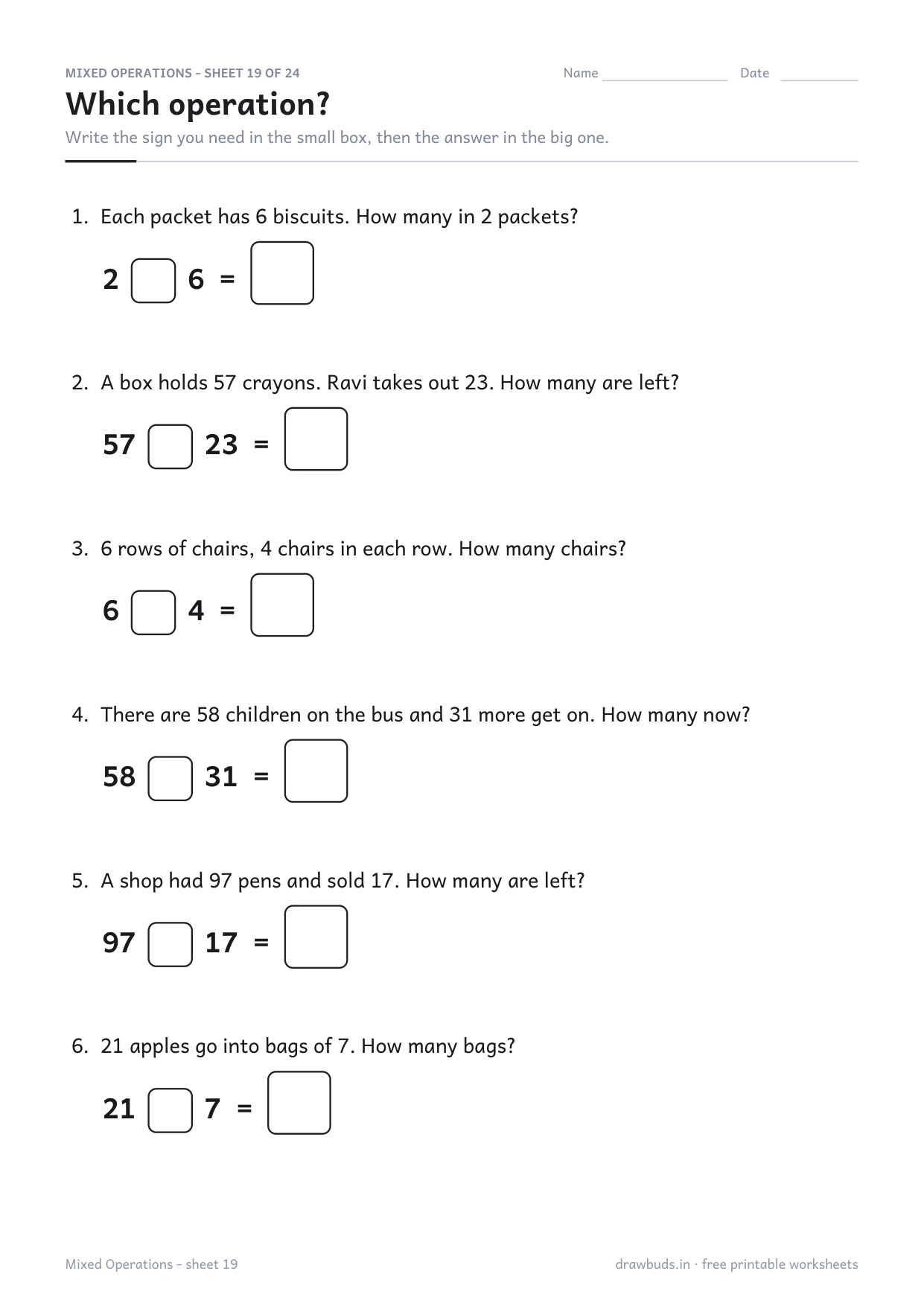
- Sheets 19-24: which operation, as short word problems.
- Last three pages: every answer, sheet by sheet.
Four sheets before the signs mix
Sheets 1-4 keep each operation in its own column. A child can still work down a column on autopilot, which sounds like a wasted sheet, but it puts the four signs on one page where they can be compared, and it catches the child who has quietly forgotten what the division sign means. The mixing starts on sheet 5 and never stops.
The missing sign is the most useful page here
Sheets 11-14 give 6 and 3 and an answer of 18, and ask which sign belongs between them. A child cannot guess their way through this. They have to try the operations and check, which means thinking about what each one does rather than executing it. A child who can do every column on sheets 5-10 but stalls on sheet 11 has been calculating without understanding.
Word problems are a reading task
Sheets 19-24 are short stories with no sign printed anywhere. Picking the operation is the skill, and it is the one that decides whether any of the arithmetic is usable outside a worksheet. Expect these to be slower and harder than the columns, and do not read that as the child going backwards.
Class 3, class 4, or grade 3
This book assumes all four operations are individually known, so it sits after the single-operation books rather than alongside them. If any one of them is shaky, go back to it first: multiplication tables 1 to 10, division worksheets, or addition and subtraction within 20.
Printing this one correctly
In your printer dialog set Scale to 100% or Actual size, not Fit to page. Fit to page shrinks the tracing letters and they stop matching the size a child's hand is learning.
Plain paper is fine for crayons and pencils. If your child uses felt pens, 100 gsm paper stops the ink bleeding to the next sheet.