Matching Shapes Worksheets: Size, Turn, Shadow
Matching shapes worksheets: same shape, big to small, turned round, shape to shadow, shape to name and shape to number of sides. Free PDF.
- Pages
- 19
- Ages
- 3-6
- Paper size
- A4 and US Letter
- Black ink only
Same worksheets, two paper sizes. Free to print at home, at school, and in a classroom of thirty.
18 sheets: same shape, big to small, turned, shadow, shape name, number of sides
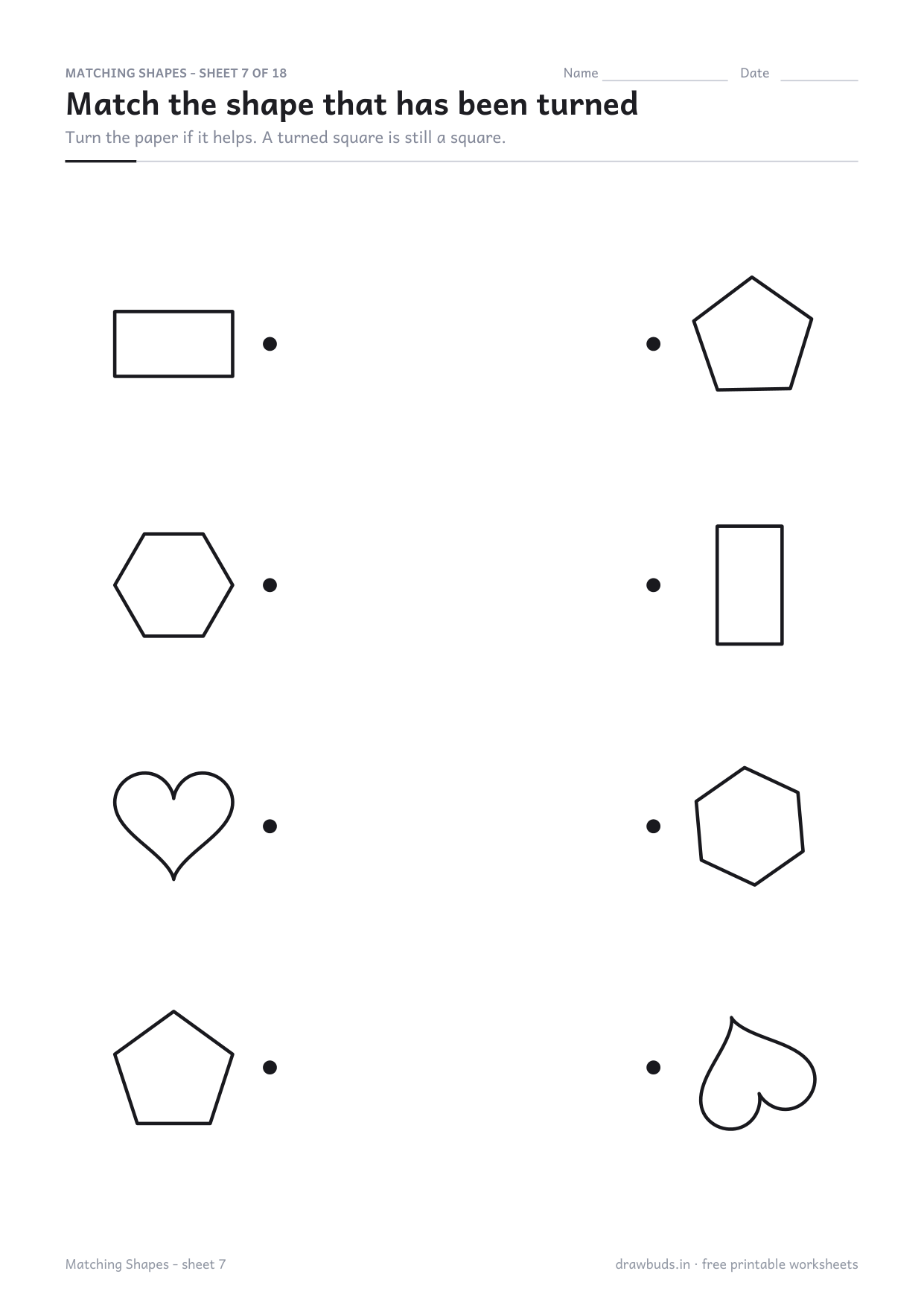
These matching shapes worksheets ask the same question six different ways, and sheet 7 is where it gets interesting. A square turned forty-five degrees stops looking like a square to a young child and starts looking like a diamond. Until they can see past the turn, they have learned the picture of a shape rather than the shape.
What is in the 19 pages
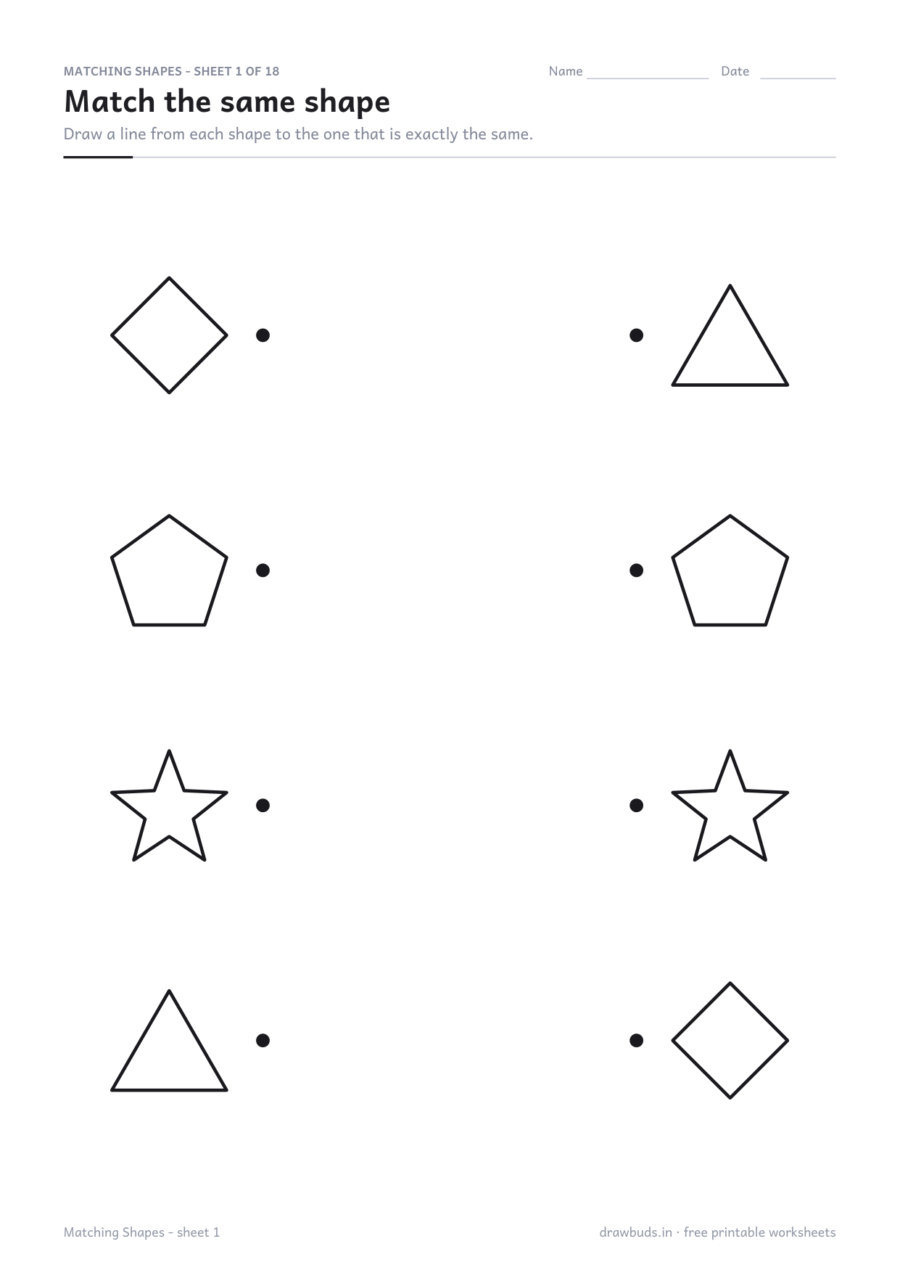
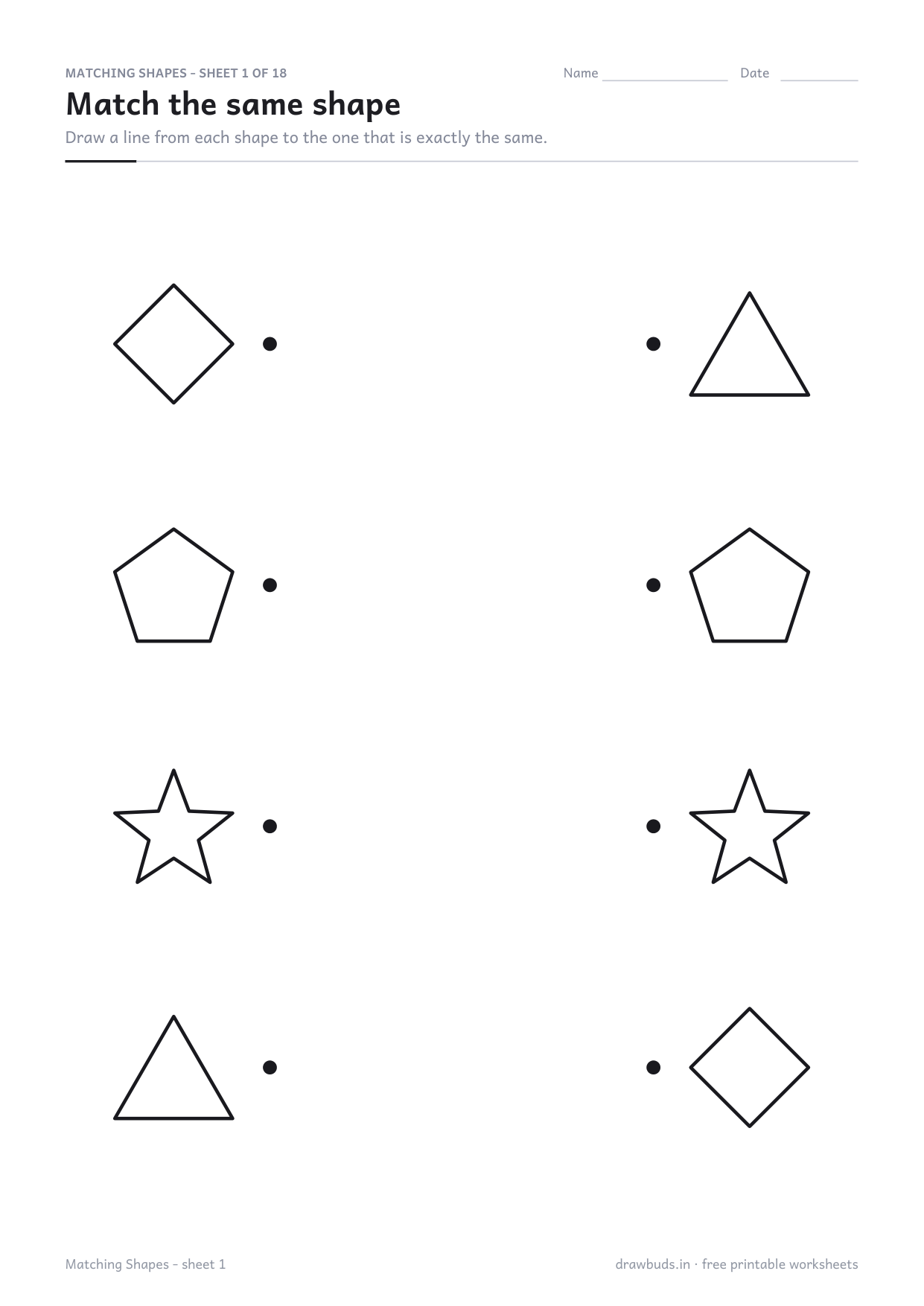
- Sheets 1-3: match the same shape, identical partners.
- Sheets 4-6: match the big shape to the small one.
- Sheets 7-9: match the shape that has been turned.
- Sheets 10-12: match the shape to its shadow.
- Sheets 13-15: match the shape to its name.
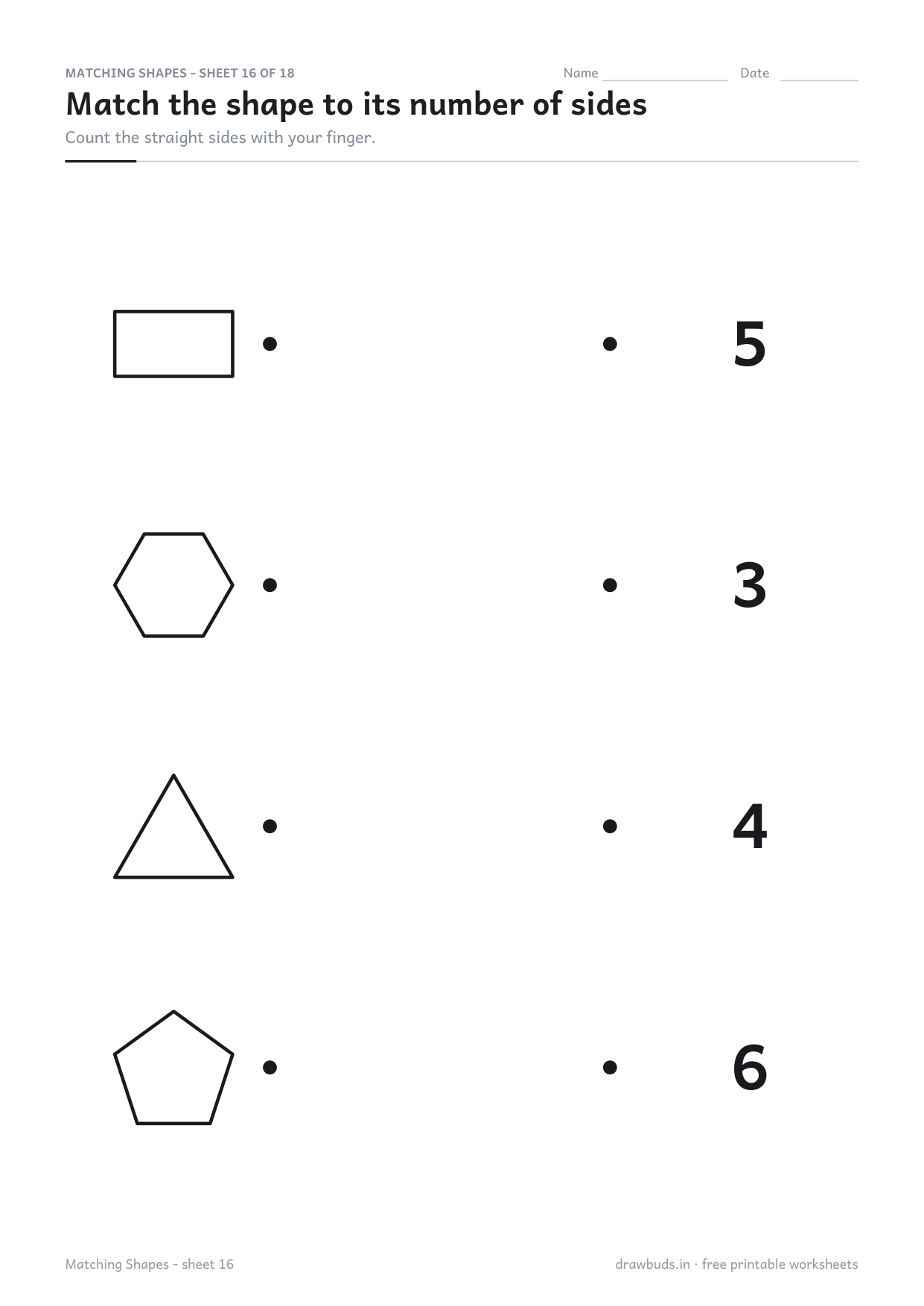
- Sheets 16-18: match the shape to its number of sides.
Eighteen sheets, each one a draw-a-line task with nothing to write, so it works a year before a child can form letters.
Size, then turn, then shadow
The order goes from easiest to hardest and it is deliberate. Changing the size leaves everything else alone. Turning it changes what the shape looks like without changing what it is, which is the real idea. The shadow sheets strip the outline down to a filled silhouette, so color and inside detail stop helping and only the outline is left to go on.
Naming comes after seeing
Sheets 13-15 are the first to use a word, and that is late on purpose. A child who can match a turned pentagon to an upright one understands something. A child who can say pentagon may only have learned a word. Doing the naming sheets last means the name attaches to a shape the child already recognises in any position.
Counting the sides
The last three sheets match each shape to a number of straight sides, which quietly turns a sorting task into a counting one and gives the names a reason to stick. A hexagon is not a word to remember, it is the one with six.
Ages 3 to 6, and what comes next
There is nothing to write here, so this works from about three. Once the shapes are named confidently, 2D and 3D shapes worksheets take the same shapes into solids, and shape tracing worksheets are where a child starts drawing them rather than matching them. For more line-drawing practice of this kind, see matching worksheets for nursery.
Printing this one correctly
In your printer dialog set Scale to 100% or Actual size, not Fit to page. Fit to page shrinks the tracing letters and they stop matching the size a child's hand is learning.
Plain paper is fine for crayons and pencils. If your child uses felt pens, 100 gsm paper stops the ink bleeding to the next sheet.