Handwriting Practice Paper
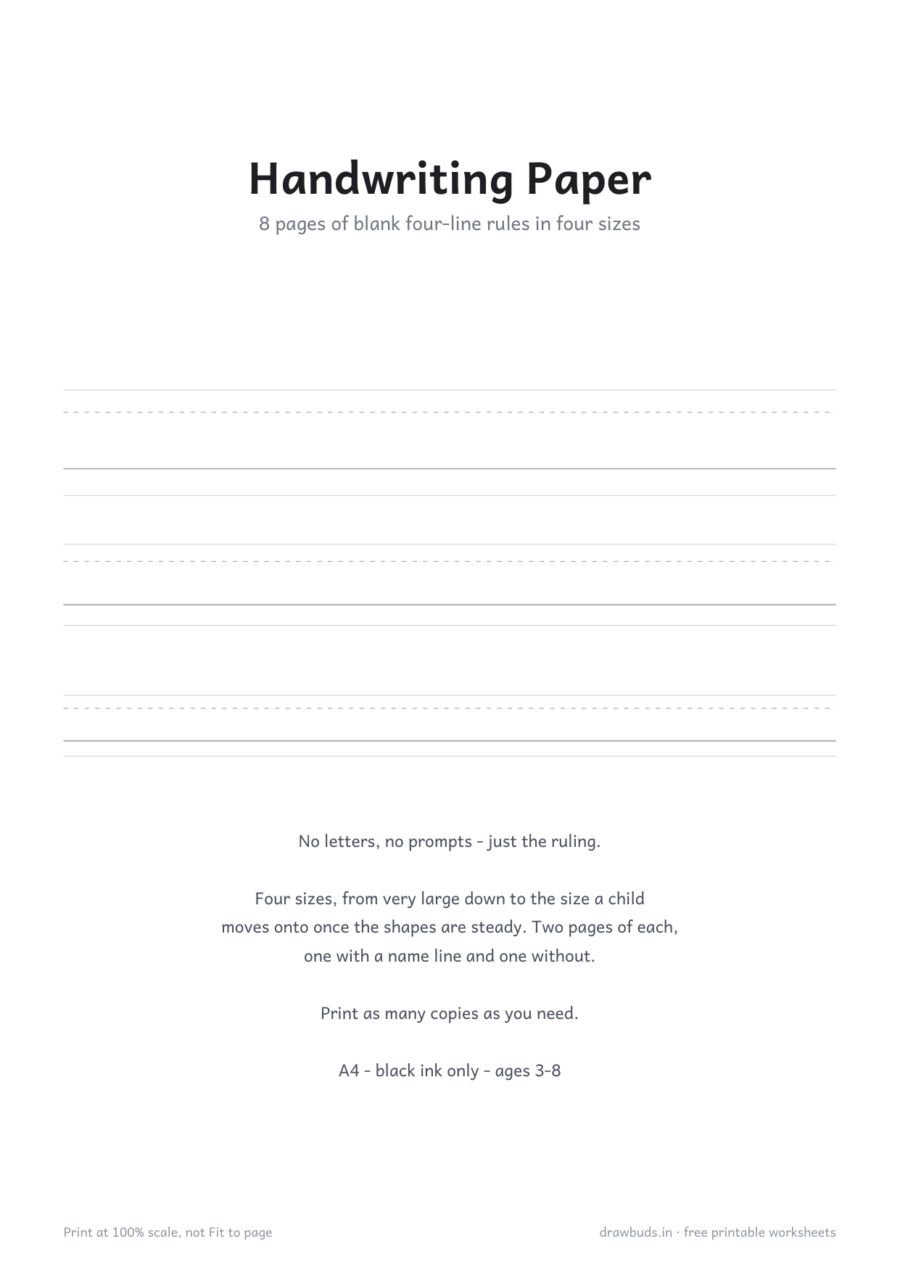
9 printable pages of blank four-line handwriting rules in four sizes, each with and without a name line. No letters, no prompts — print as many as you need.
- Pages
- 9
- Ages
- 3-8
- Paper size
- A4
- Black ink only
Free to print at home, at school, and in a classroom of thirty.
Four rule sizes, each with and without a name line
Sometimes what is needed is not a worksheet but paper. This is nine pages of blank four-line handwriting rules: no letters, no instructions, no pictures. Print it as often as you like.
The four sizes
| Size | Cap height | Suits |
|---|---|---|
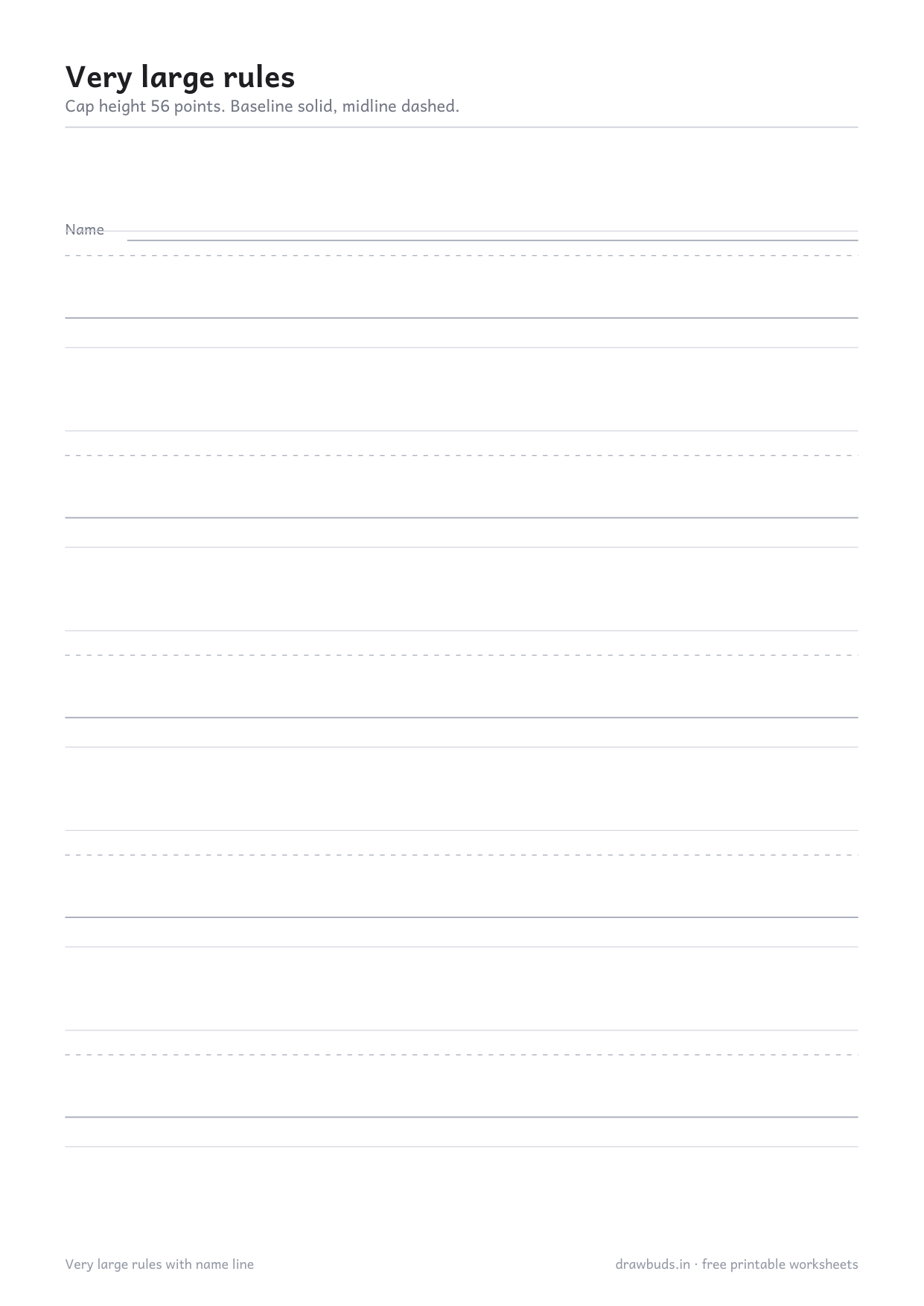
| Very large | 56 pt | First attempts, ages 3-4 |
| Large | 44 pt | Ages 4-5, most preschool work |
| Medium | 34 pt | Ages 5-6, once shapes are steady |
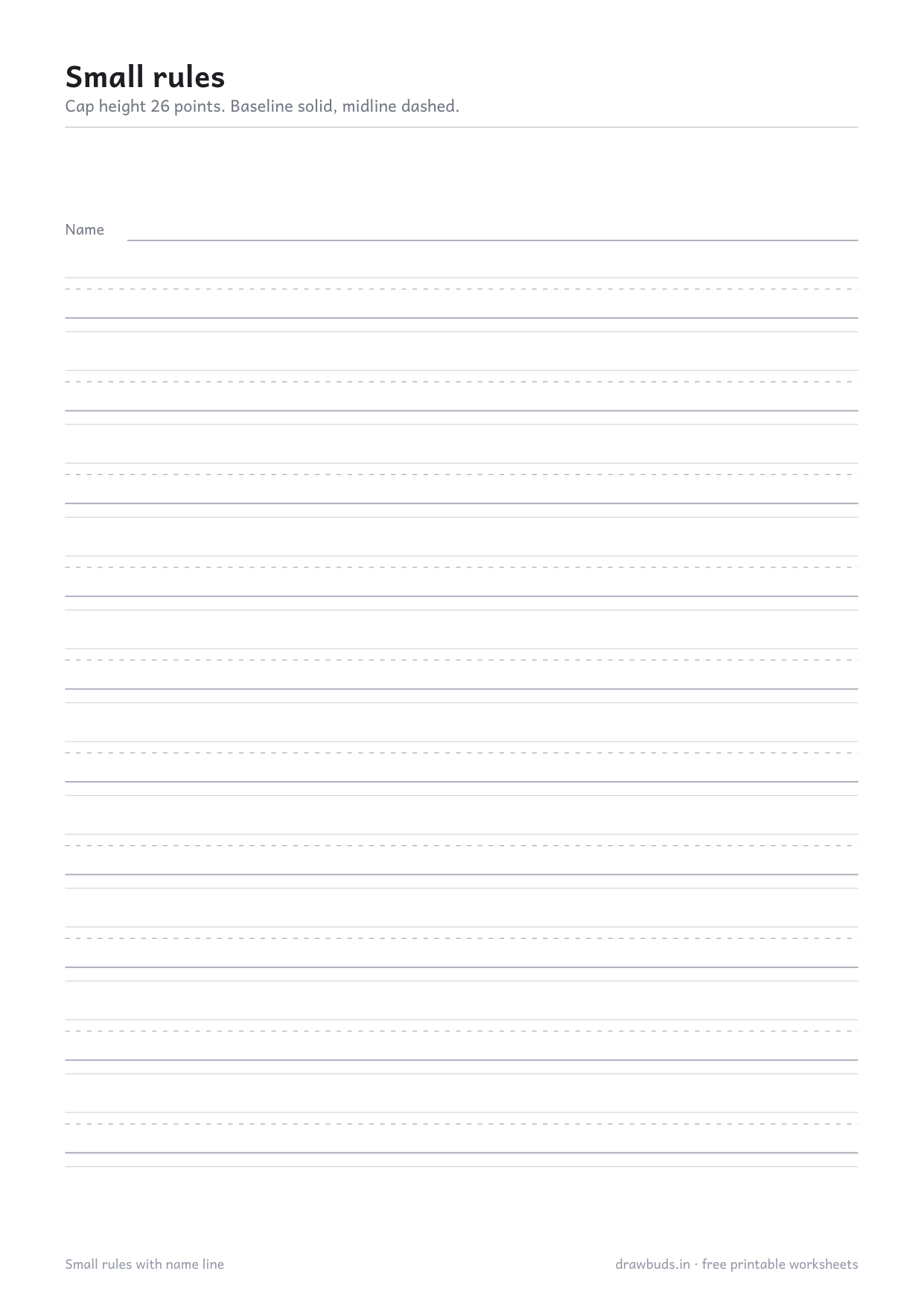
| Small | 26 pt | Ages 6-8, closer to school exercise books |
Each size comes twice: once with a name line at the top, once without.
What the four lines mean
The solid line is the baseline, and everything sits on it. The dashed line is the x-height, where o, a and c stop. The two faint lines are the ascender and descender lines, for the top of h and the tail of g. Single-line paper cannot teach any of that, which is why letters written on it drift in size for years.
Choosing the size
Too small is the common mistake. If a child’s letters are wobbly, going up a size fixes more than any amount of extra practice — a large letter is drawn with the whole arm, a small one with the fingers, and finger control comes last. Move down a size only when the letters sit on the line without being told to.
Matching what school uses
Most UK and Indian school exercise books use something close to the medium rule; US kindergarten paper is usually closer to large. Print one of each and hold them against the child’s school book before choosing.
What to write on it
Whatever is being practised. The letters from Lowercase Tracing a-z, the words from Pre-K Sight Words, or a name — a name is the single most motivating thing a young child ever writes.
Printing this one correctly
In your printer dialog set Scale to 100% or Actual size, not Fit to page. Fit to page shrinks the tracing letters and they stop matching the size a child's hand is learning.
Plain paper is fine for crayons and pencils. If your child uses felt pens, 100 gsm paper stops the ink bleeding to the next sheet.