Number Line Addition and Subtraction Worksheets
Number line addition and subtraction worksheets: read the hops, draw the hops, lines to 20, then work out which sum made them. Free PDF.
- Pages
- 22
- Ages
- 5-7
- Paper size
- A4 and US Letter
- Black ink only
Same worksheets, two paper sizes. Free to print at home, at school, and in a classroom of thirty.
20 sheets: read the hops, draw the hops, lines to 20, partly labelled lines, hops to sums, answers
These number line addition and subtraction worksheets are where one particular mistake gets caught. Asked to add 3, a child counts the number they are standing on as the first hop and lands one short. On paper that looks like a careless slip. On a number line you can see it happening, because the hop that went nowhere is drawn.
What is in the 22 pages
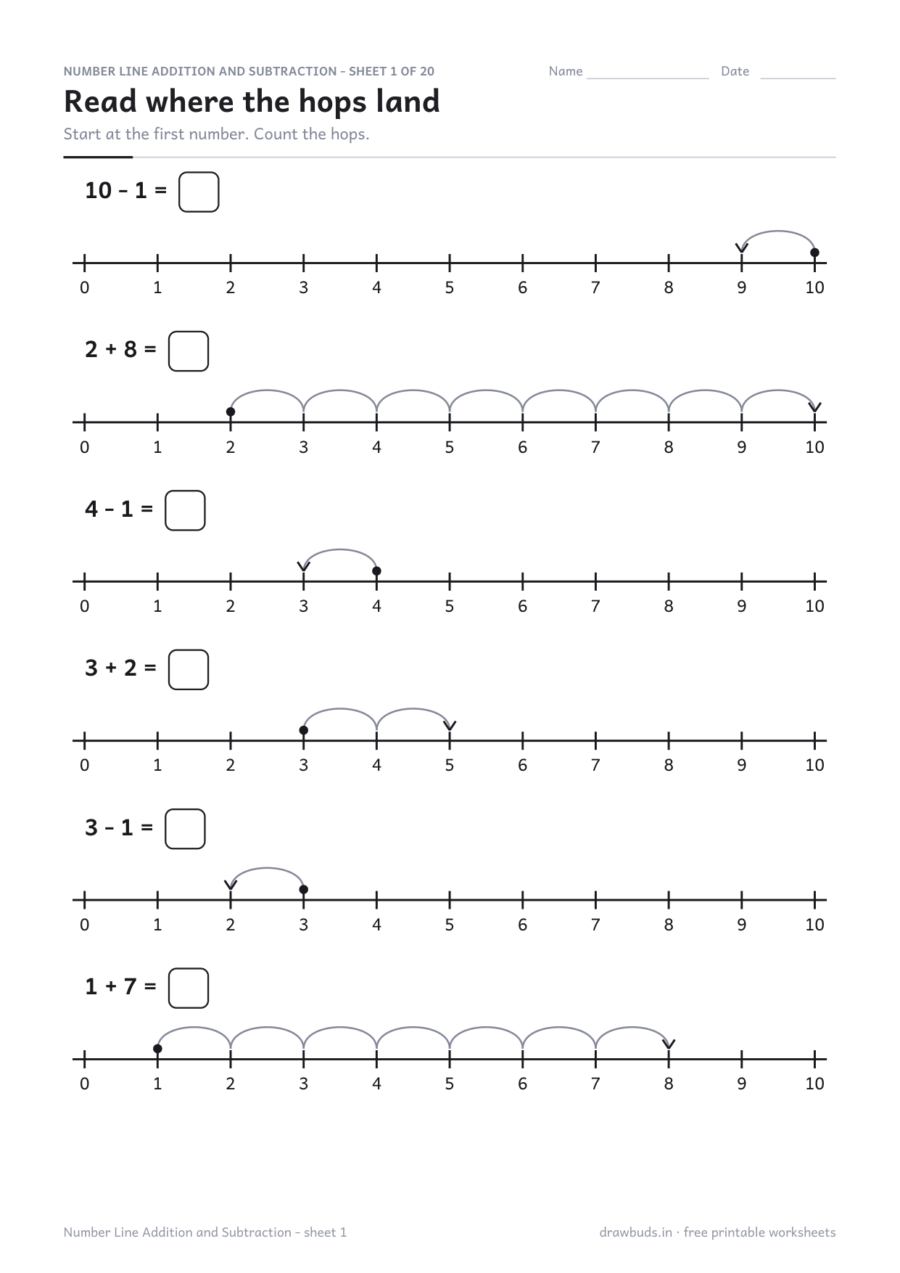
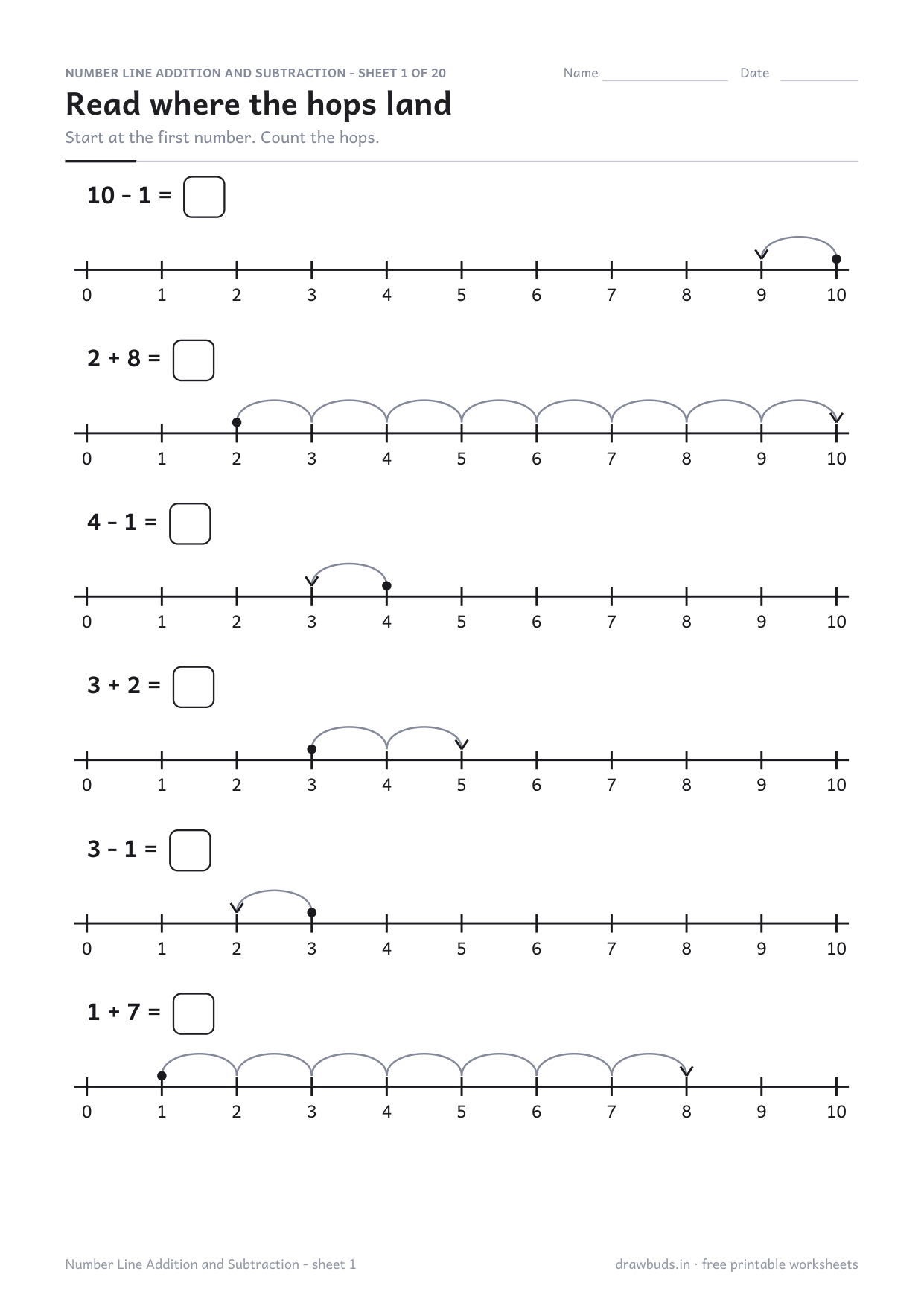
- Sheets 1-4: the hops are already drawn, read where they land.
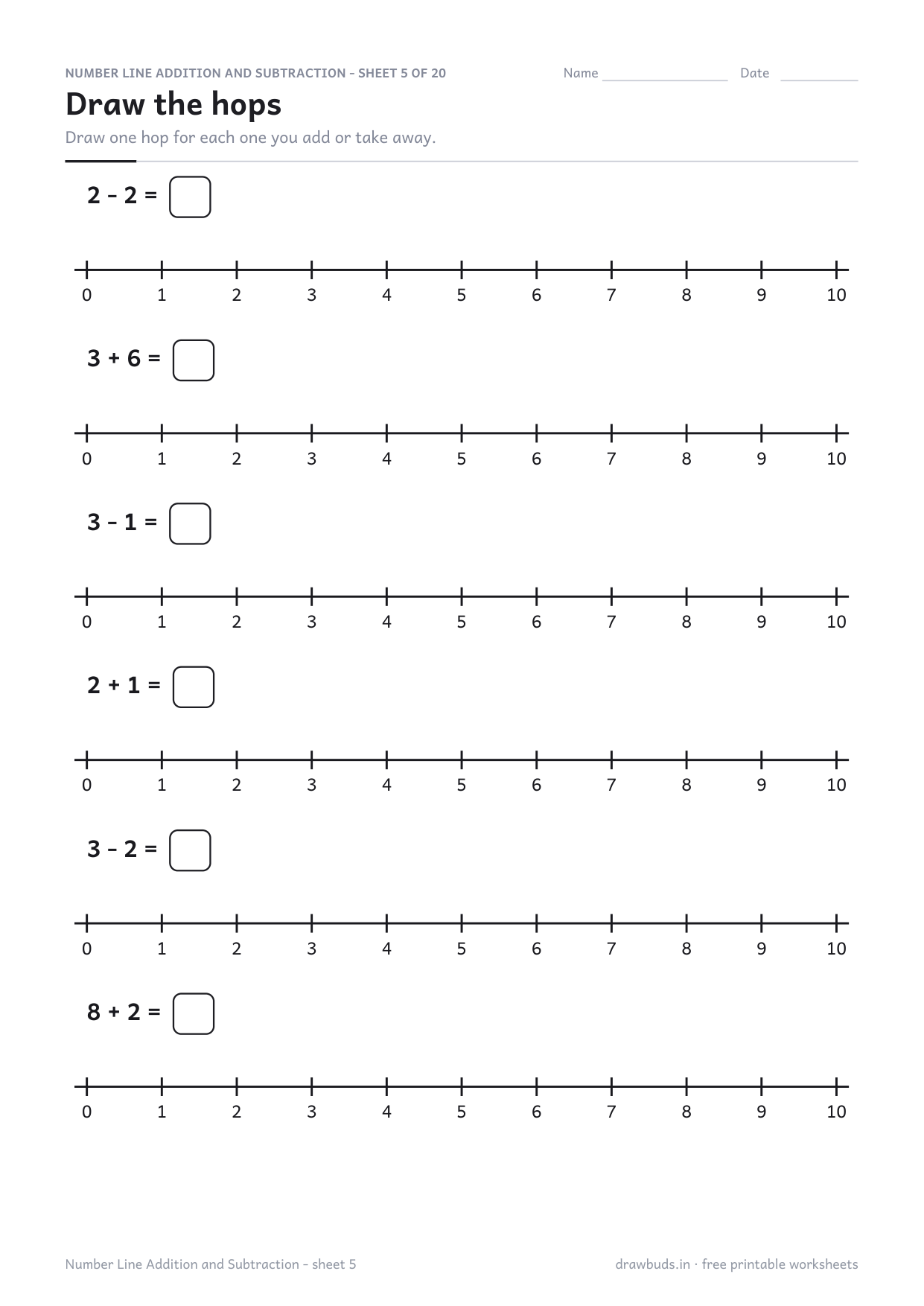
- Sheets 5-10: draw one hop for each number added or taken away.
- Sheets 11-14: hops on a line to 20.
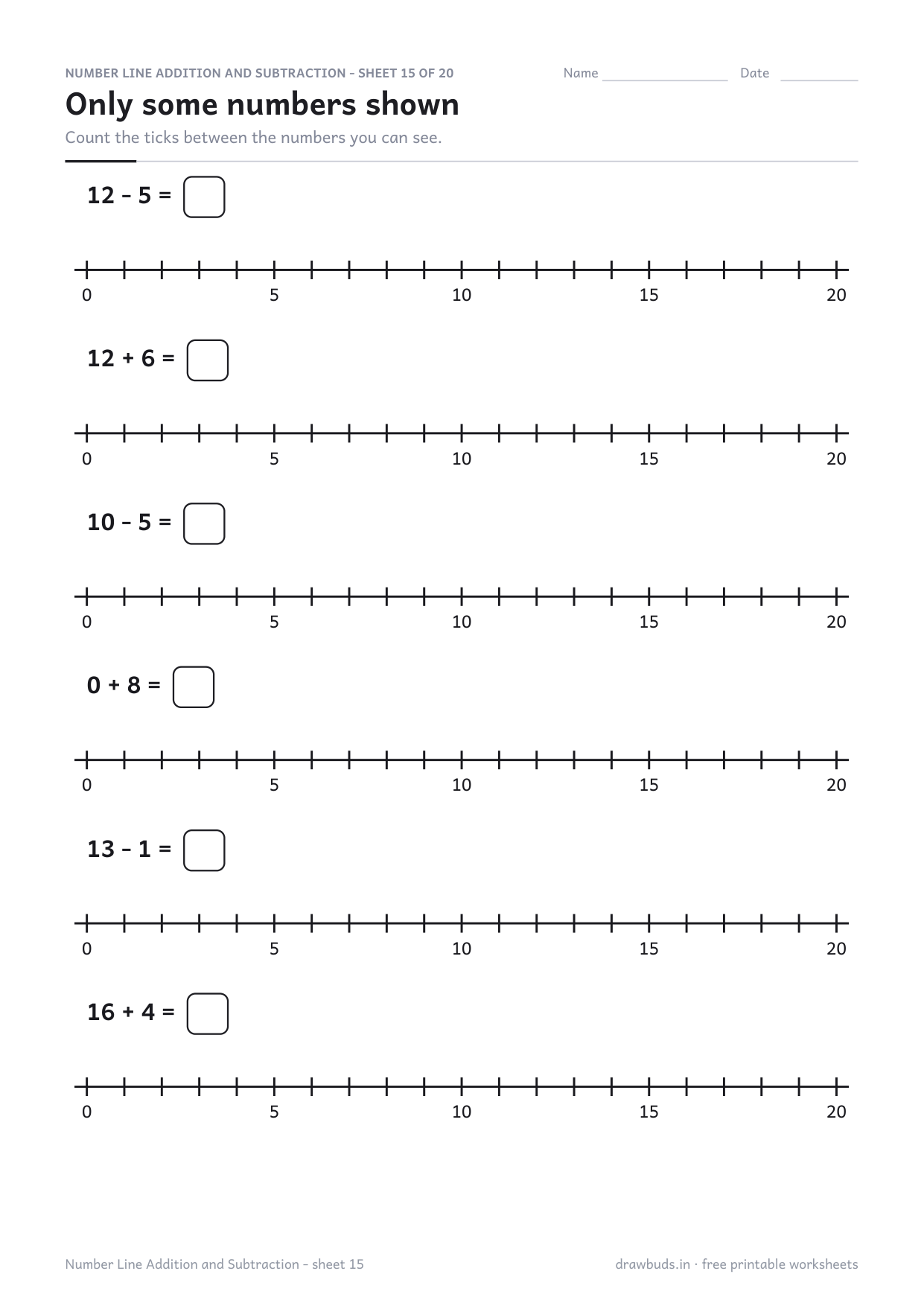
- Sheets 15-18: only some numbers shown, every fifth one.
- Sheets 19-20: what sum made these hops.
- Last page: every answer, sheet by sheet.
Reading hops before drawing them
The first four sheets ask for nothing but the landing number. That sounds too easy to be worth four sheets, and it is the part that makes the rest work. A child who draws hops before they can read them is copying a picture. Once reading is automatic, drawing becomes a way of thinking rather than another thing to get right.
Taking the numbers away
Sheets 15-18 label only every fifth mark. A child who has been counting ticks one at a time now has to work out where 13 is from where 10 is, which is the whole point of a number line and the thing a fully labelled one hides. If this is where the sheets fall apart, the earlier ones were being read off rather than understood.
Backwards, on the last two sheets
Sheets 19 and 20 show the hops and ask which sum produced them. It is the only point in the book where the child works from the picture to the arithmetic instead of the other way round, and it is the page that tells you whether the line has become a tool or stayed a drawing exercise.
Class 1, class 2, or grade 1
Number lines come in alongside sums within 20, usually class 1 into class 2. Use this book next to addition and subtraction within 20 rather than before or after it: the line is what makes bridging through ten visible. For counting the line itself, missing numbers 1 to 100 covers the order.
Printing this one correctly
In your printer dialog set Scale to 100% or Actual size, not Fit to page. Fit to page shrinks the tracing letters and they stop matching the size a child's hand is learning.
Plain paper is fine for crayons and pencils. If your child uses felt pens, 100 gsm paper stops the ink bleeding to the next sheet.