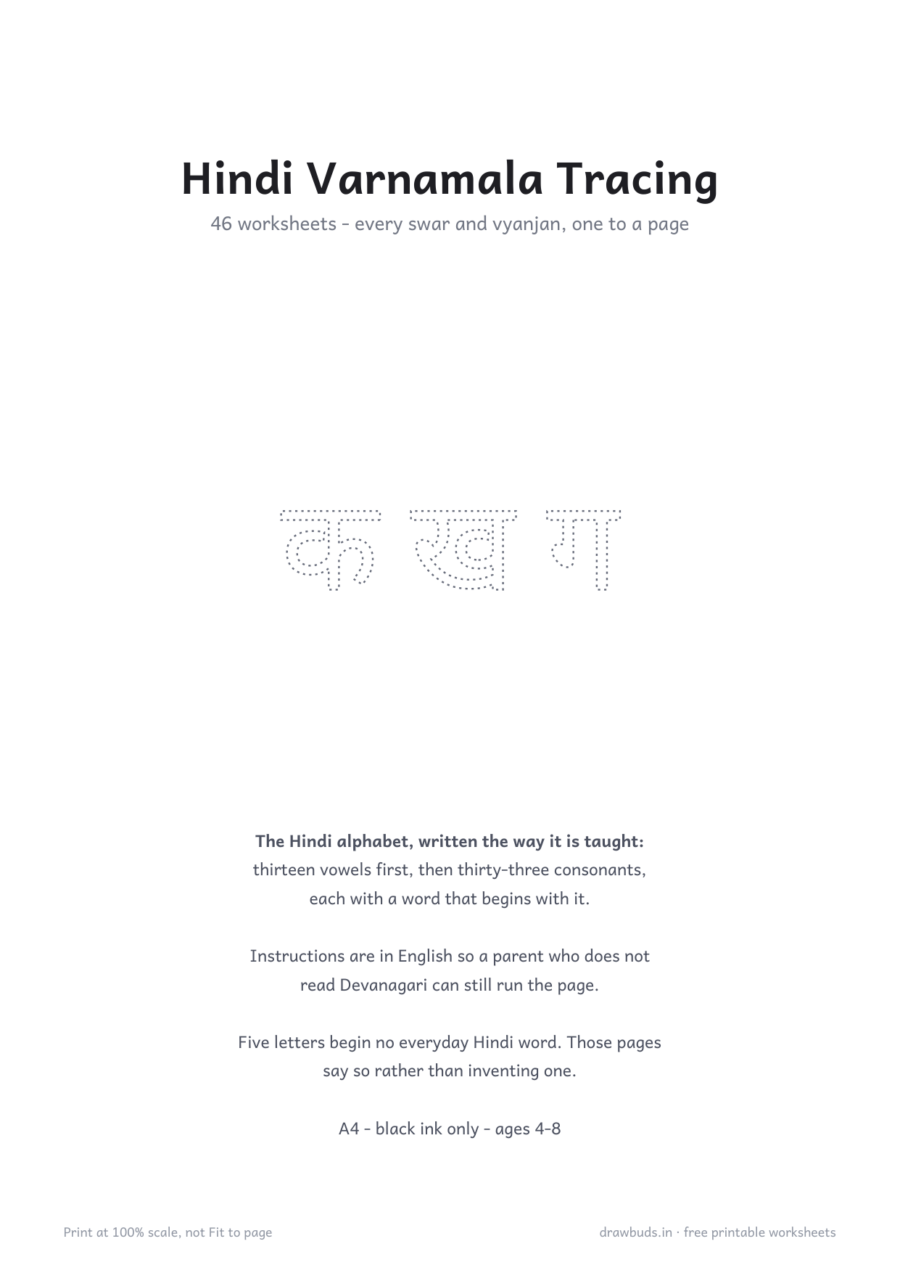
Hindi Varnamala Tracing
47 printable pages covering every swar and vyanjan, one letter to a page, with a Hindi word to trace and instructions in English.
- Pages
- 47
- Ages
- 4-8
- Paper size
- A4
- Black ink only
Free to print at home, at school, and in a classroom of thirty.
Every swar and vyanjan on its own page, with a word and English instructions
The Hindi varnamala in the order it is actually taught: thirteen swar first, then thirty-three vyanjan, each on its own page with a word that begins with it. The letters are Devanagari; every instruction is in English, so a parent who speaks Hindi but does not read it can still run the page.
What is on each page
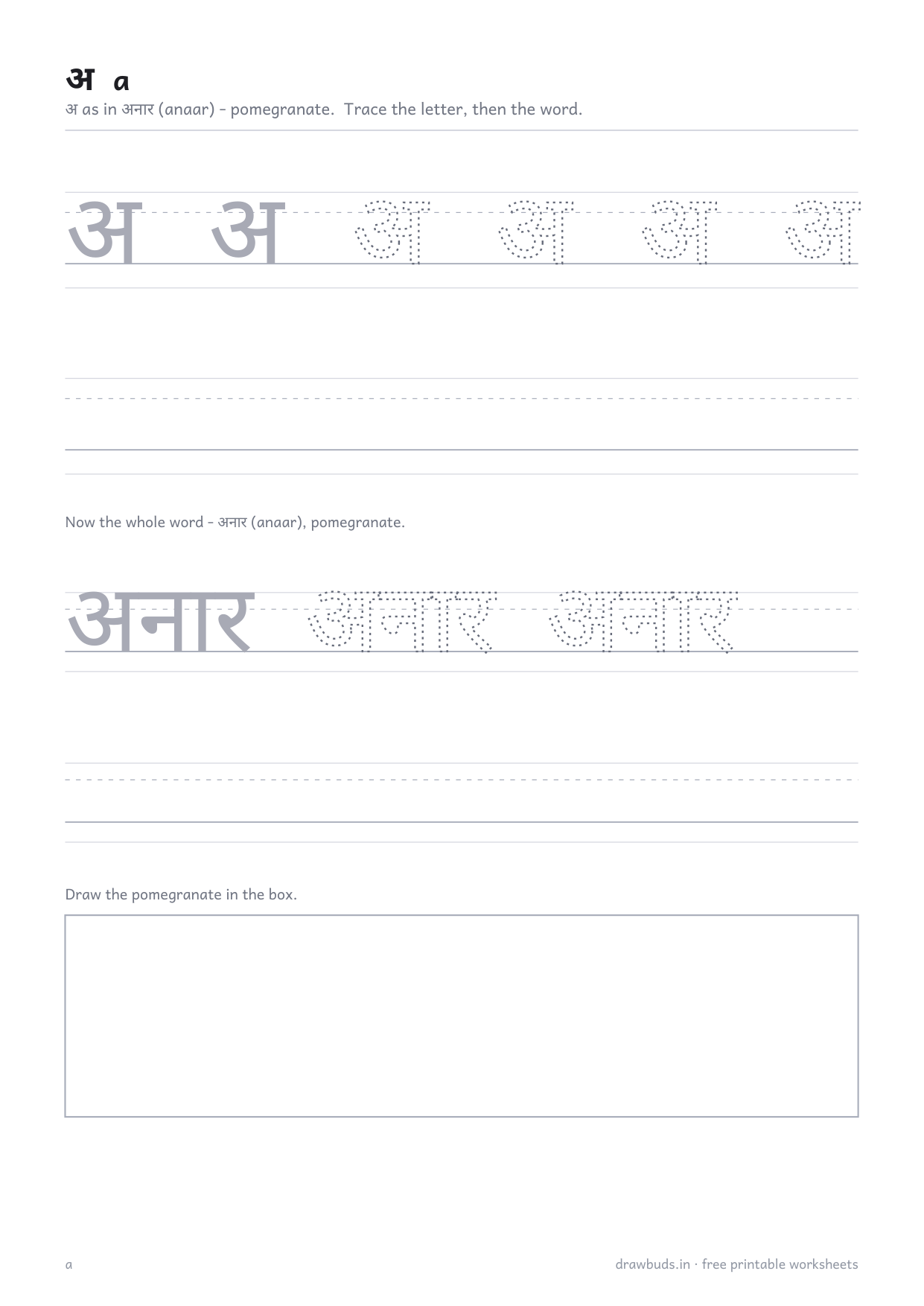
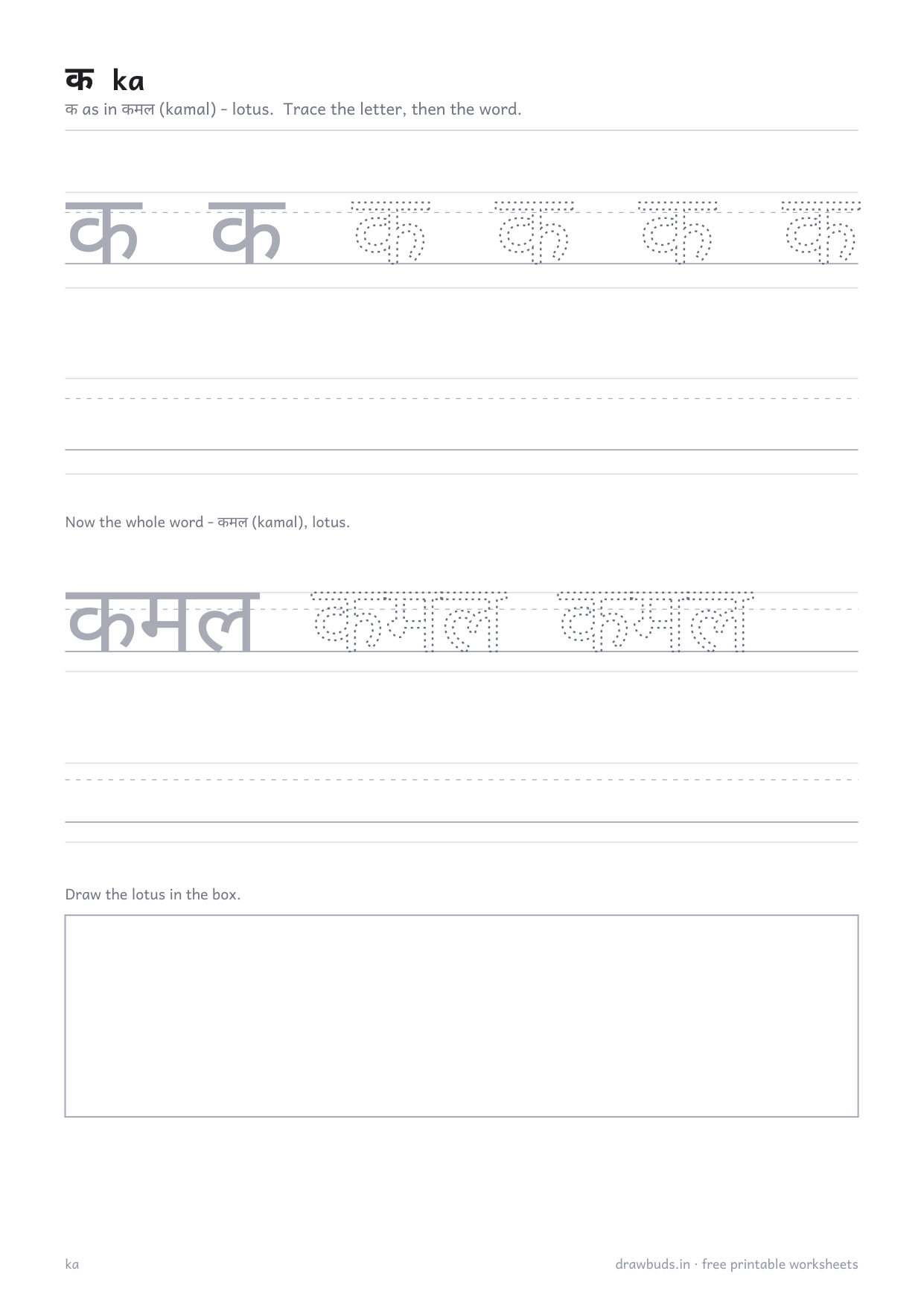
- The letter, large. Two grey copies to read and four dotted ones to trace, sitting on ruled lines with the shirorekha – the headline every Devanagari letter hangs from – falling where it should.
- An empty ruled row to write the letter unaided.
- A word that begins with the letter, traced whole rather than letter by letter: क as in कमल, ग as in गमला, म as in मोर.
- A box to draw the thing in. A child who draws a lotus after writing कमल remembers the word; one who has only traced it remembers a shape.
Five letters that begin no word
ङ, ञ, ण and ष do not start an everyday Hindi word, and neither does the visarga अः. Most varnamala charts either skip them or attach a word no child will ever meet. These pages say plainly that the letter lives inside words rather than at the front of them, and give extra ruled lines instead of a word row. It is a smaller lie to tell a child nothing than to teach them ङ as in something they will never hear.
What is deliberately not here
No conjuncts – क्ष, त्र and ज्ञ are missing on purpose. They are three letters joined, they are taught after the varnamala is secure, and putting them on a first tracing sheet teaches a child to draw a shape they cannot yet take apart.
Who it is for
Ages four to eight, and equally for a child learning Hindi as a second language abroad. The English glosses mean the book works without a Hindi-reading adult in the room, which is the situation most families outside India are actually in.
Printing this one correctly
In your printer dialog set Scale to 100% or Actual size, not Fit to page. Fit to page shrinks the tracing letters and they stop matching the size a child's hand is learning.
Plain paper is fine for crayons and pencils. If your child uses felt pens, 100 gsm paper stops the ink bleeding to the next sheet.