Find and Color the Letter
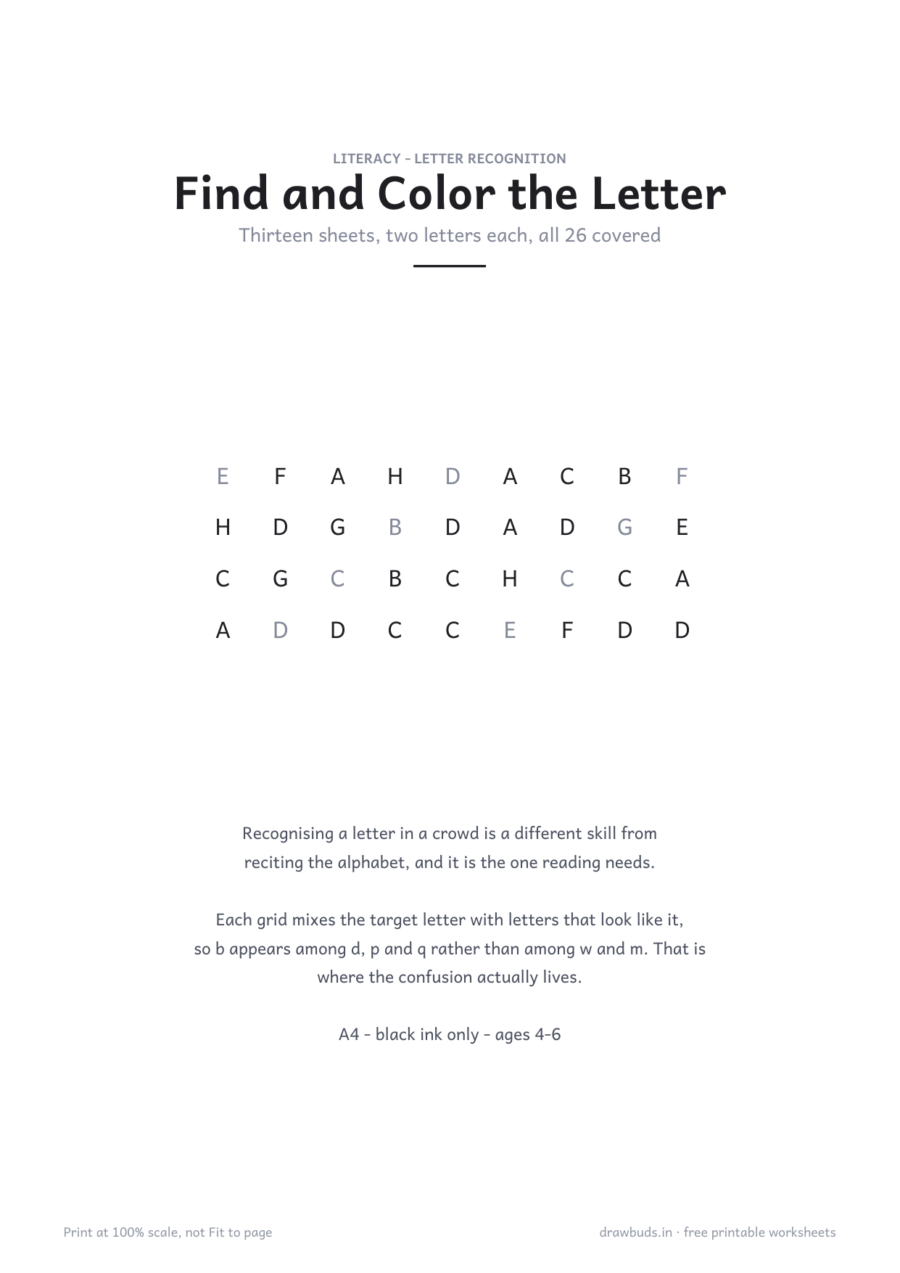
14 printable pages. Letter search grids where each target letter is hidden among the letters it actually gets confused with — b among d, p and q, not among w and m.
- Pages
- 14
- Ages
- 4-6
- Paper size
- A4
- Black ink only
Free to print at home, at school, and in a classroom of thirty.
Each grid mixes the target letter with the letters it is confused with
Reciting the alphabet and finding a particular letter in a crowd are different skills, and only the second one is any use for reading. This book is entirely the second.
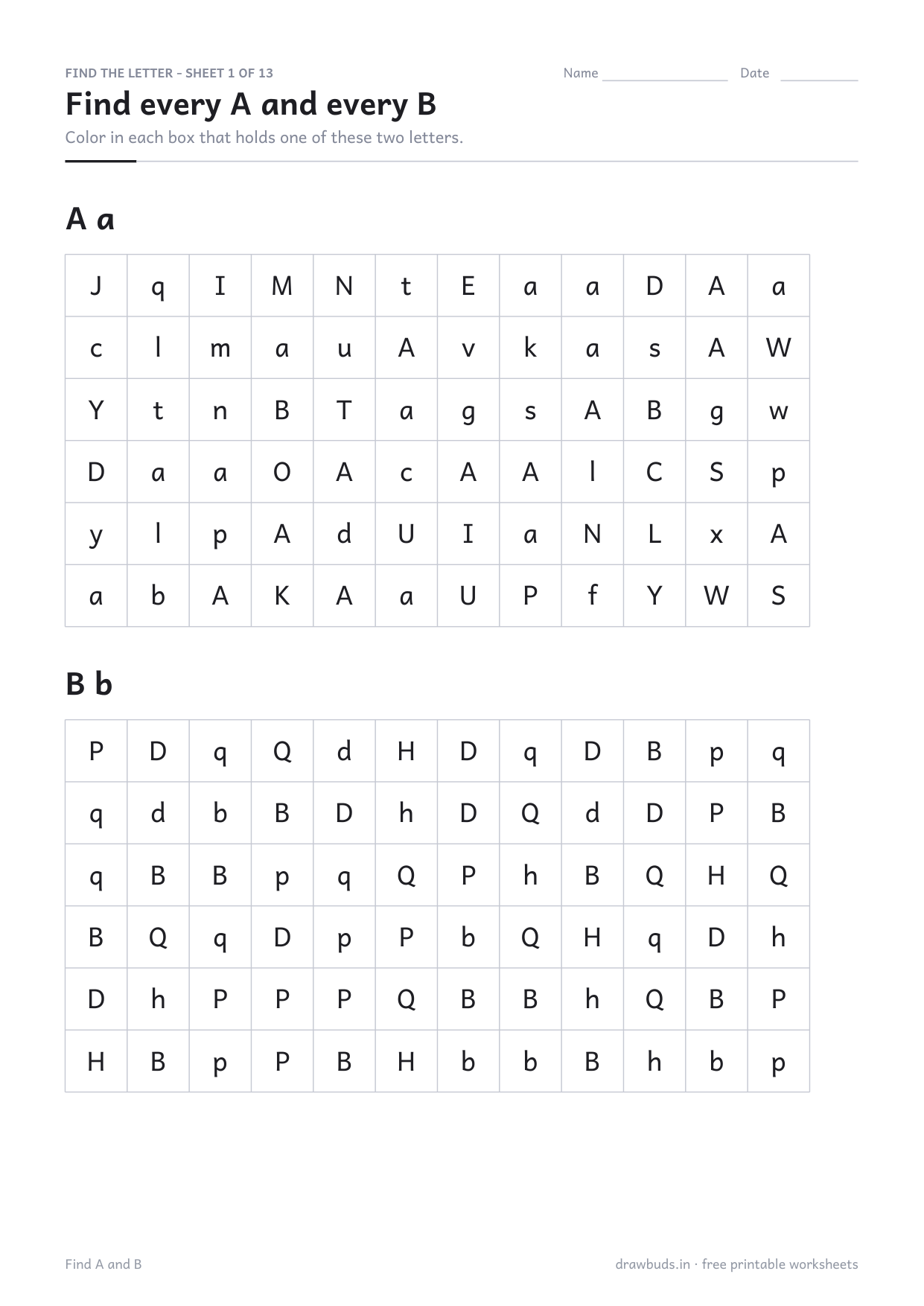
What is on each page
Two letters, one grid each — twelve columns by six rows, capitals and small letters mixed. The child colors in every box holding the target letter. Thirteen sheets cover all twenty-six.
The distractors are the point
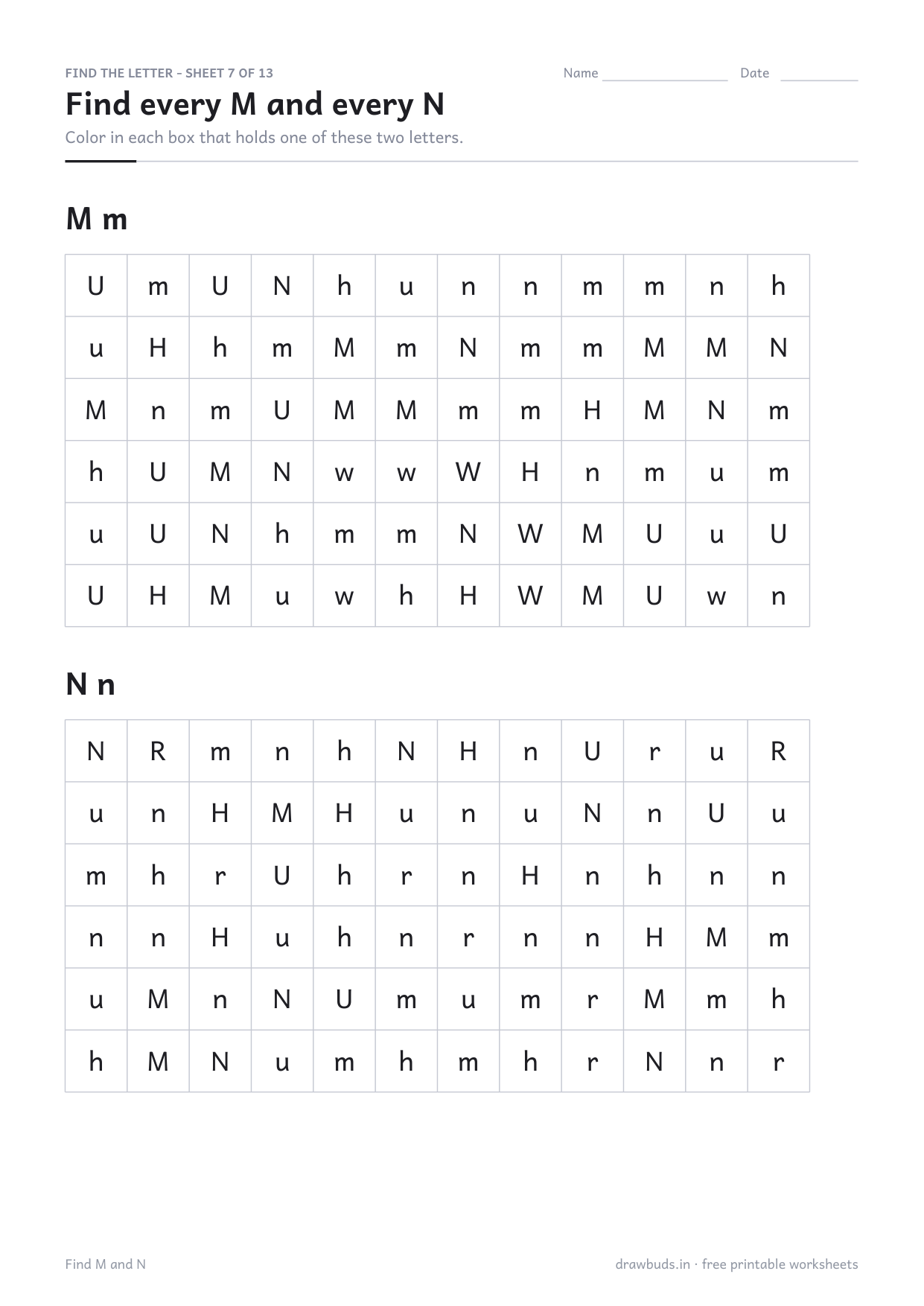
A search grid that hides b among w, k and s is easy and teaches nothing. The confusion children actually have is between letters that share a shape, so the grids are built from those:
- b, d, p, q — a circle and a stick, in four arrangements.
- m, n, u, w, h — arches and their upside-down versions.
- i, j, l, t, f — a vertical stroke with something small added.
Each of those letters is searched for inside its own family, which is where the mistake lives.
Both cases on the same page
The grid mixes capitals and small letters, and both count as a hit. That is deliberate: a child who only recognises B has learned half a letter, and reading uses the other half far more often.
How to use it
Say the letter’s sound, not its name, before starting — “buh”, not “bee”. Letter names are needed eventually; letter sounds are what turn a found letter into a read word. Then color rather than circle, because coloring is slower and the child looks at each box for longer.
Reversals are normal
Mixing up b and d is normal until around age seven and is not on its own a sign of dyslexia. What helps is not being told the difference but meeting the letters separately and often — which is why the two sheets covering them are not next to each other in this book.
What comes next
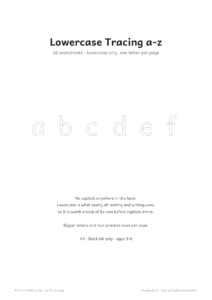
Match Capital to Small Letters for the other half of letter recognition, and Lowercase Tracing a-z for writing them.
Printing this one correctly
In your printer dialog set Scale to 100% or Actual size, not Fit to page. Fit to page shrinks the tracing letters and they stop matching the size a child's hand is learning.
Plain paper is fine for crayons and pencils. If your child uses felt pens, 100 gsm paper stops the ink bleeding to the next sheet.