Rhyming Words Worksheets
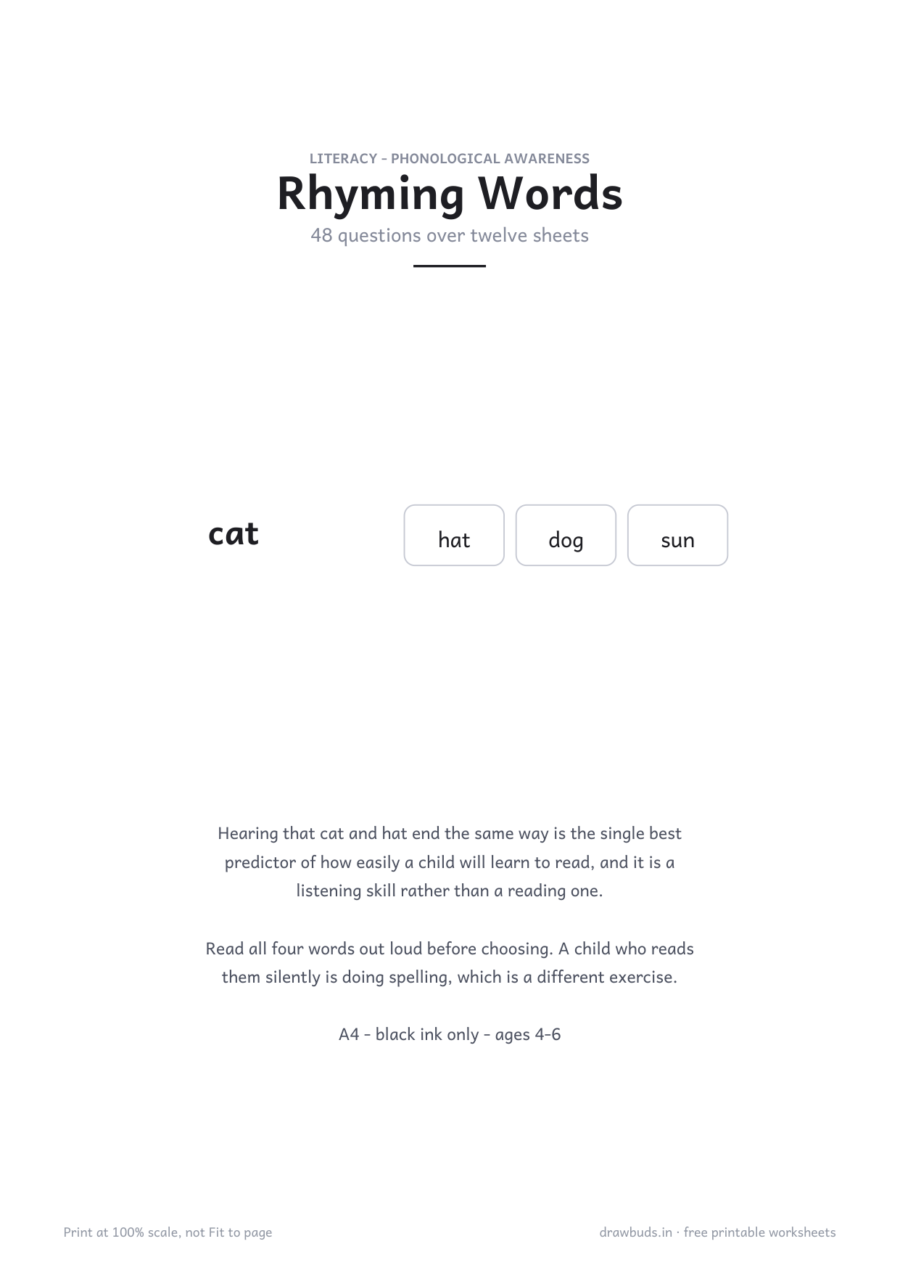
13 printable pages. 48 questions, each a word and three choices. Read all four out loud — this is a listening exercise, not a reading one.
- Pages
- 13
- Ages
- 4-6
- Paper size
- A4
- Black ink only
Free to print at home, at school, and in a classroom of thirty.
48 questions, one word and three choices, read aloud rather than read
Hearing that cat and hat end the same way is one of the strongest predictors of how easily a child will learn to read. It is also a listening skill rather than a reading one, which is why this book is meant to be done out loud.
What is on each page
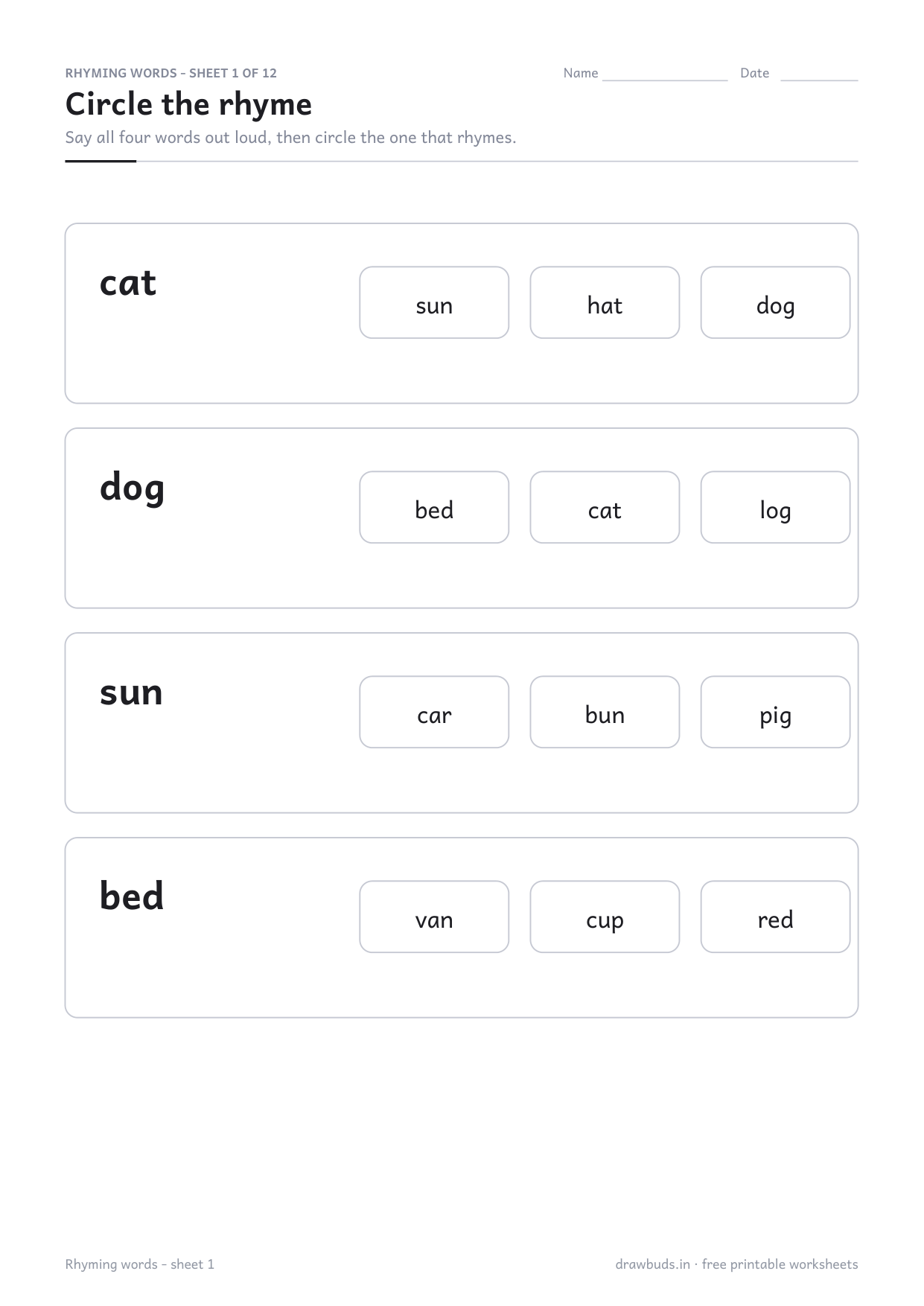
Four questions. Each has one word on the left in large type, and three choices in boxes to the right. The child circles the one that rhymes.
Twelve sheets, 48 questions. The early sheets use three-letter words; the later ones move to two-syllable words like monkey and donkey, where the rhyme is in the second half of the word and much easier to miss.
Read all four out loud, every time
This is the whole instruction. A child who reads the options silently is doing spelling — looking for matching letters — and spelling and rhyme do not always agree. Bear rhymes with chair and shares almost none of its letters.
The distractors are chosen, not random
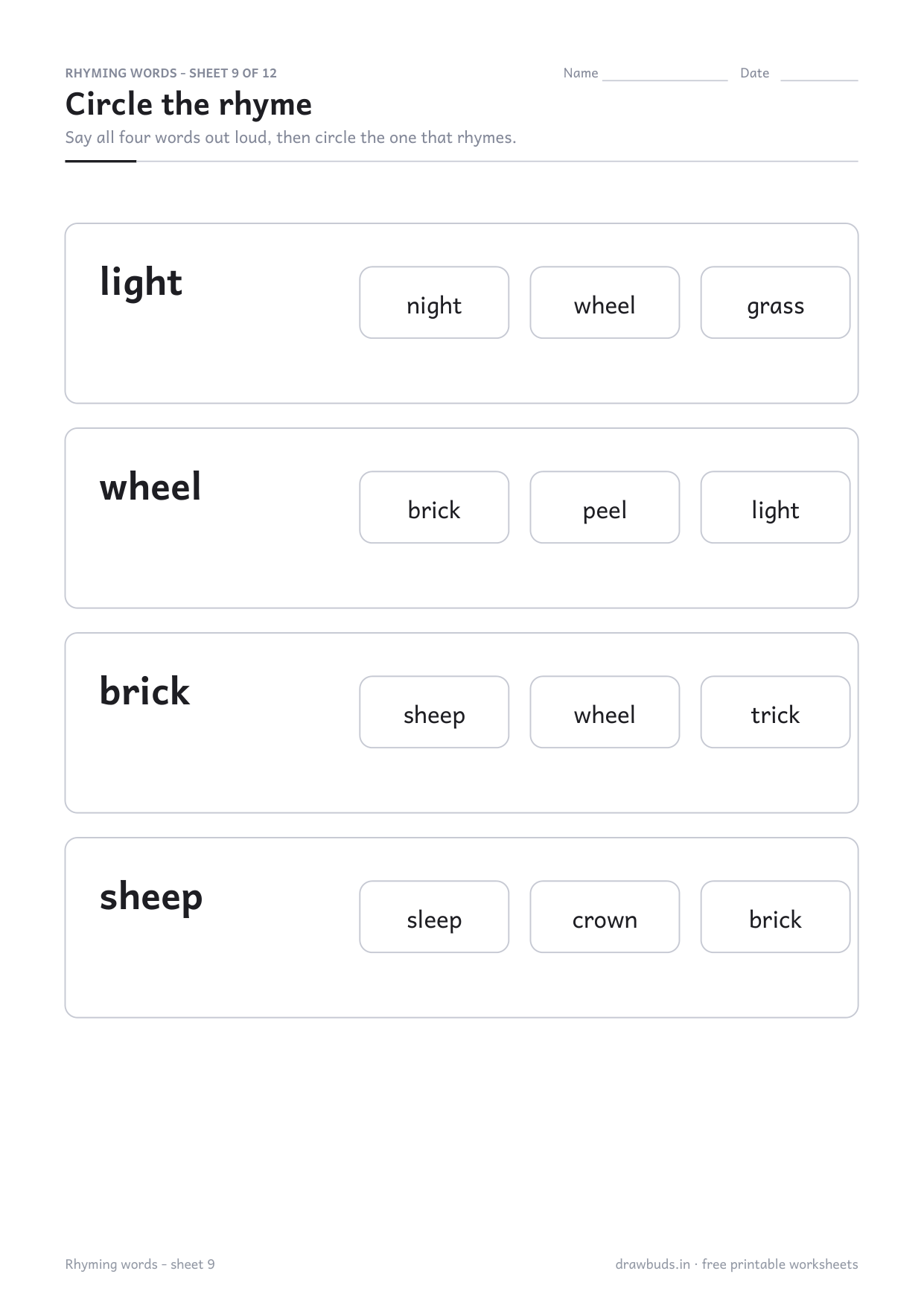
Each wrong answer is a word from the same everyday vocabulary, so it cannot be eliminated for being unfamiliar. On several questions one of the wrong answers starts with the same sound as the target word, because children who are guessing tend to reach for alliteration instead of rhyme.
Before the worksheet
Rhyme is learned in songs and nursery rhymes long before it is learned on paper, and a child who cannot hear it yet will not get it from a worksheet. If these sheets are a struggle, do a fortnight of saying pairs out loud — cat, hat; dog, log — and asking whether they sound the same at the end. Then come back.
What comes next
Counting Syllables is the other half of the same skill: rhyme is about the end of a word, syllables are about its chunks. CVC Words Tracing turns the rhymes into written word families.
Printing this one correctly
In your printer dialog set Scale to 100% or Actual size, not Fit to page. Fit to page shrinks the tracing letters and they stop matching the size a child's hand is learning.
Plain paper is fine for crayons and pencils. If your child uses felt pens, 100 gsm paper stops the ink bleeding to the next sheet.