Cursive Capital Letters A-Z: Tracing Worksheets
Cursive capital letters A-Z in four lines: one capital a page on a four-line rule, with a note on each capital that looks nothing like print. Free PDF.
- Pages
- 27
- Ages
- 7-10
- Paper size
- A4 and US Letter
- Black ink only
Same worksheets, two paper sizes. Free to print at home, at school, and in a classroom of thirty.
26 sheets, one cursive capital a page, notes on which look unlike print
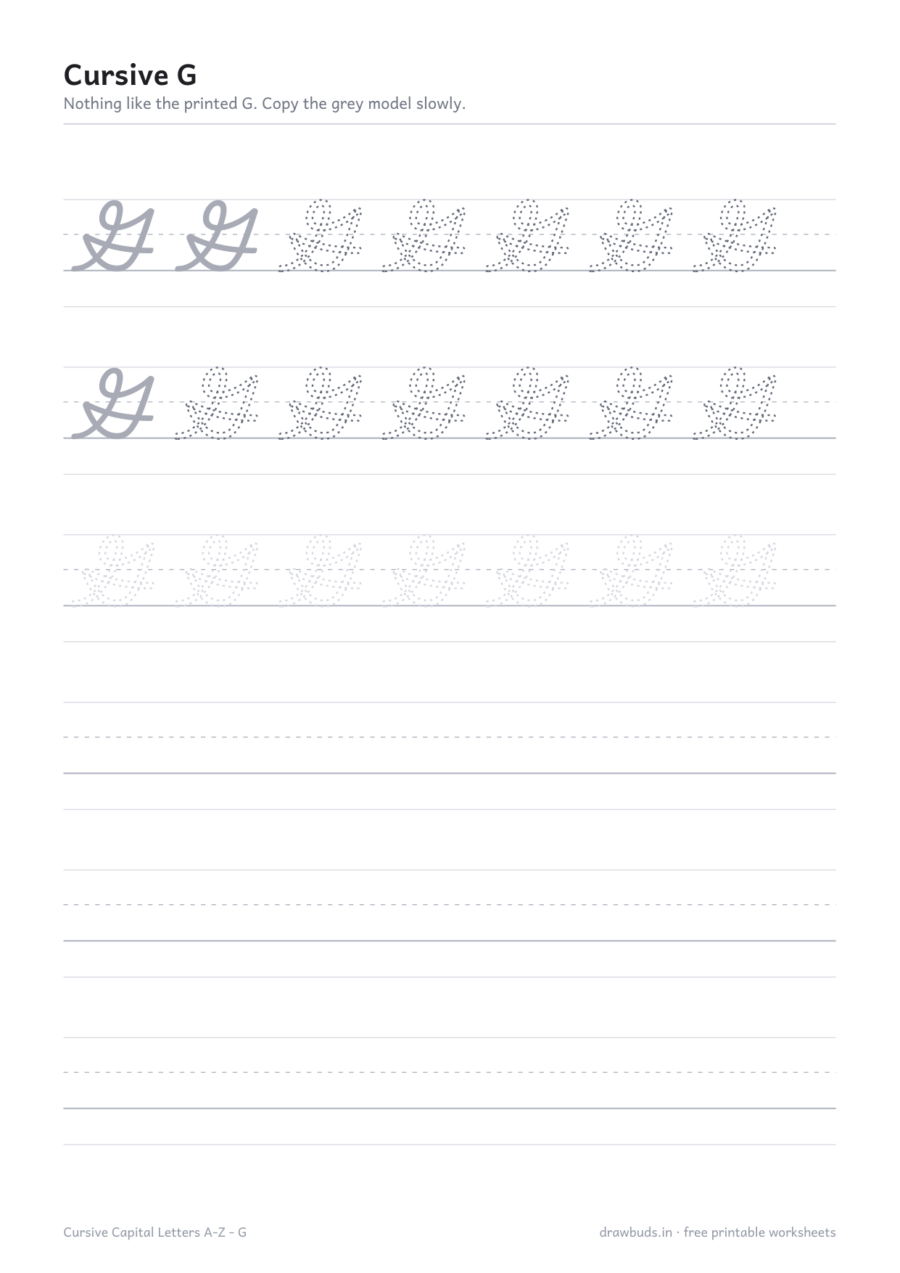
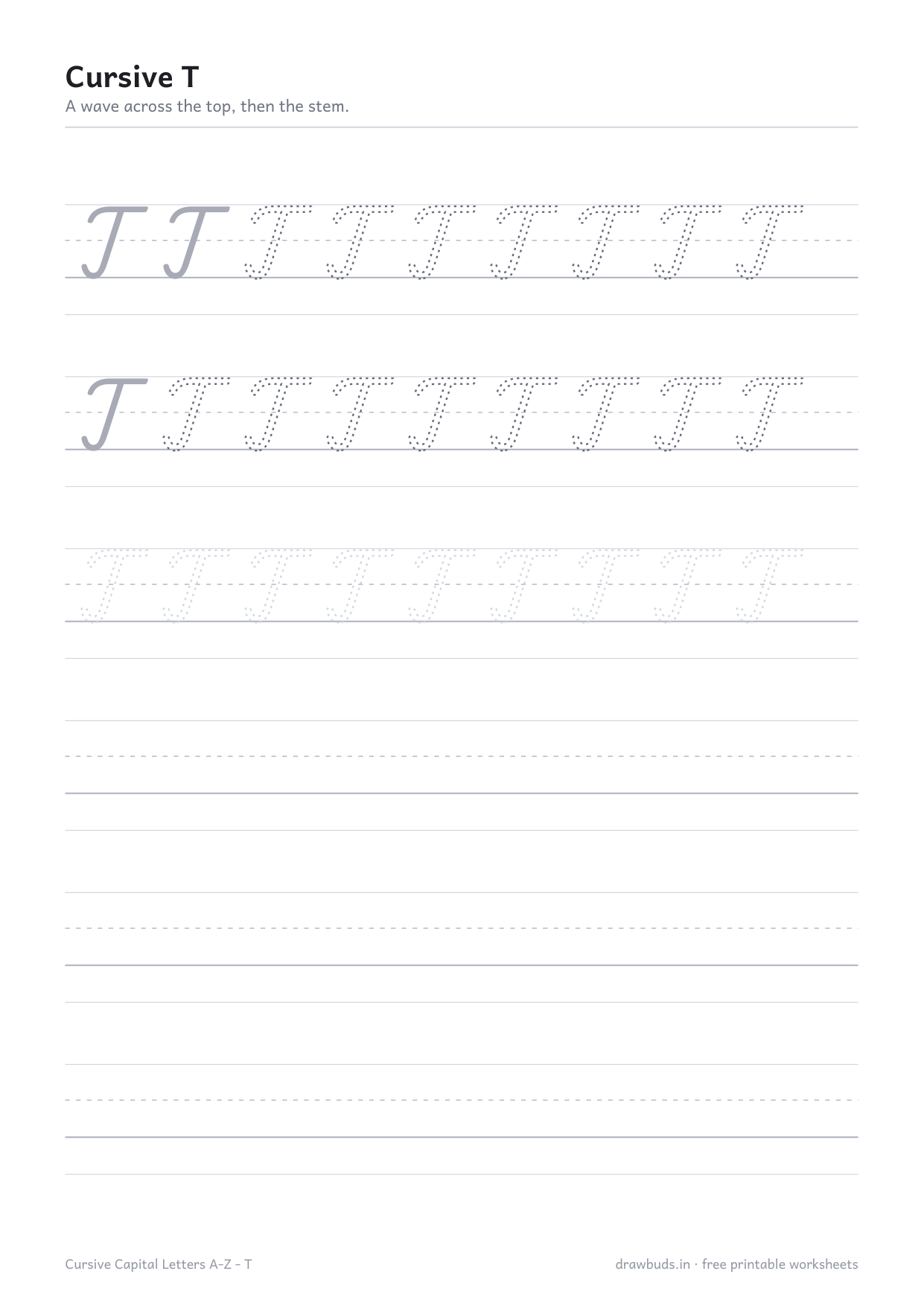
These cursive capital letters A-Z worksheets exist because of about six letters. Most cursive capitals are a printed capital with a flourish, and a child works them out unaided. G, Q, T, F, I and Z are not, and a child copying those from a printed alphabet produces something that is simply a different letter.
What is in the 27 pages
- Sheet A through sheet Z: 26 sheets, one capital a page, in alphabet order.
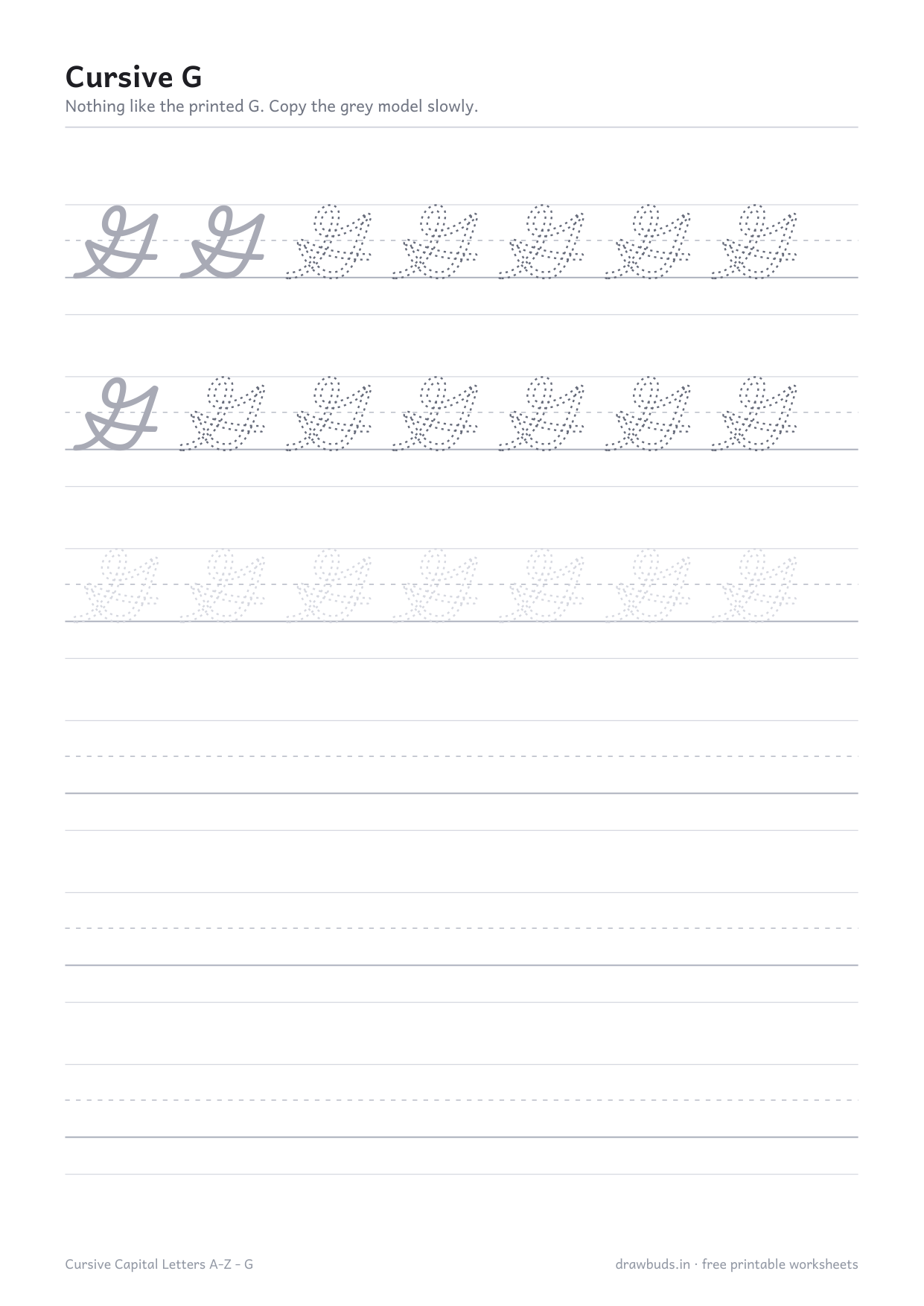
- Every sheet: solid capitals to copy, then dotted ones to trace, then ruled lines to write unaided.
- Every sheet: cursive capital letters in four lines, with a top line, a dashed midline, the baseline and a descender line, the same ruling as a four-line copybook.
- The awkward capitals: a line saying what the cursive form does differently from the printed one.
The capitals that look nothing like print
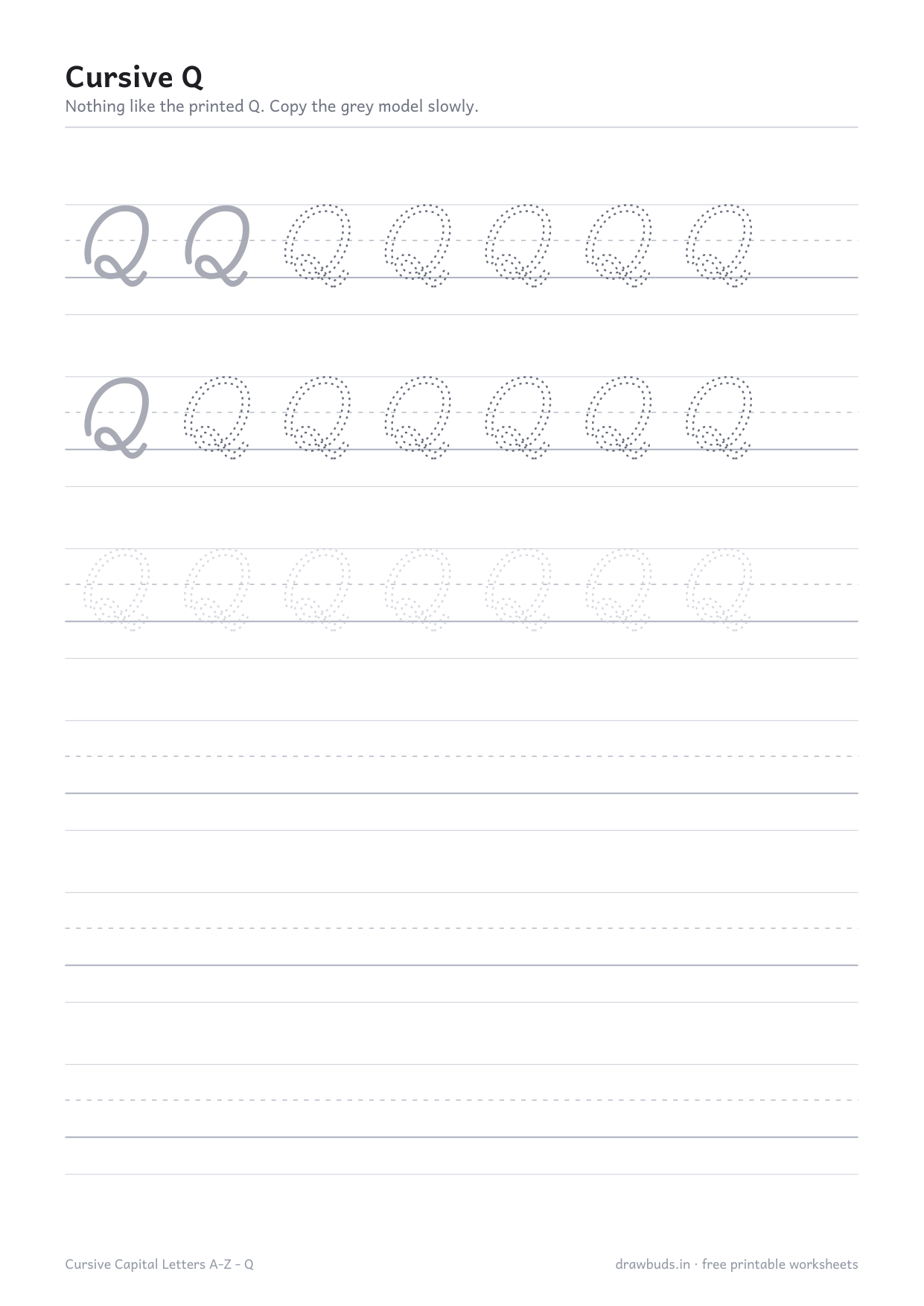
Cursive Q is the one people notice. In many cursive hands it reads closer to a figure 2 than to a printed Q, and a child who has never been told that will correct it back to the printed shape every time. Cursive G, F, T, I and Z are the others worth slowing down on. If a child keeps getting one letter wrong in their own writing, it is almost certainly on this list, and the right move is that single sheet rather than the whole book again.
Capitals are a separate book for a reason
Lowercase cursive is a system. The letters share four or five starting moves and they join to each other, so learning them in families pays off. Capitals are not a system: they start a word, they do not have to join to what follows, and each is close to its own shape. That is why these sheets run plainly A to Z with no family grouping, while cursive lowercase letters a-z is worth working by starting move.
One capital at the front of a word
A capital appears once in a word and then never again, so it gets a fraction of the practice a lowercase letter does. That is the real reason capitals stay shaky long after the small letters are fluent, and it is why a page each is worth the paper. Write the child’s own name at the top of their sheet and the capital gets a reason to exist.
When to start, and what comes first
Cursive usually starts around seven, once printed letters are automatic. Lowercase comes before capitals, because that is where the joins and the heights are learned. If printed capitals are still being reversed, that is a printing problem rather than a cursive one, and alphabet tracing worksheets a-z is the book to go back to. For free writing once both cases are secure, use handwriting practice paper.
Printing this one correctly
In your printer dialog set Scale to 100% or Actual size, not Fit to page. Fit to page shrinks the tracing letters and they stop matching the size a child's hand is learning.
Plain paper is fine for crayons and pencils. If your child uses felt pens, 100 gsm paper stops the ink bleeding to the next sheet.