Cursive Lowercase Letters a-z: Tracing Worksheets
Cursive lowercase letters a-z worksheets: one looped letter a page, solid to copy then dotted to trace, on a four-line cursive rule. Free PDF.
- Pages
- 27
- Ages
- 7-10
- Paper size
- A4 and US Letter
- Black ink only
Same worksheets, two paper sizes. Free to print at home, at school, and in a classroom of thirty.
26 sheets, one looped cursive letter a page, copy, trace and write, four-line rule
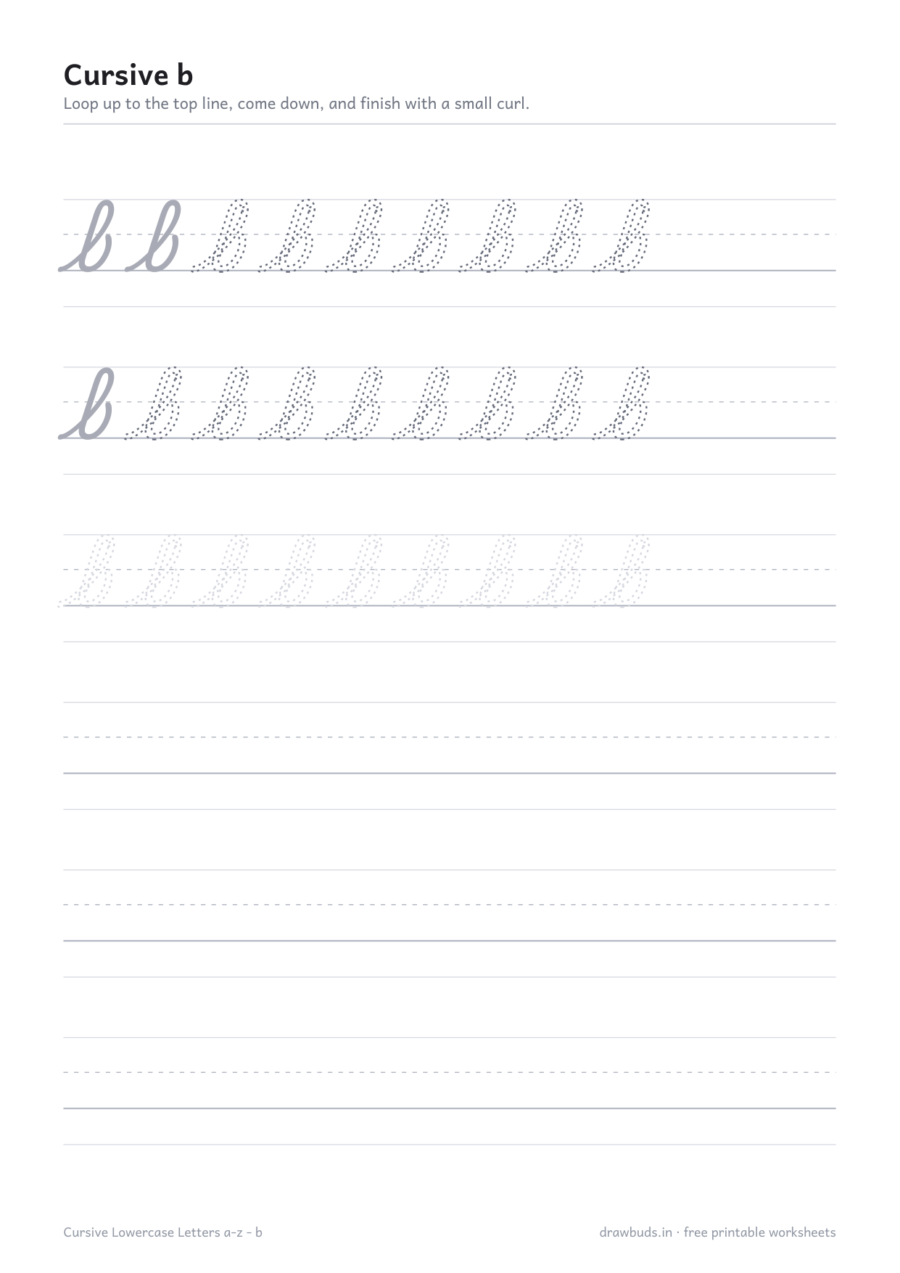
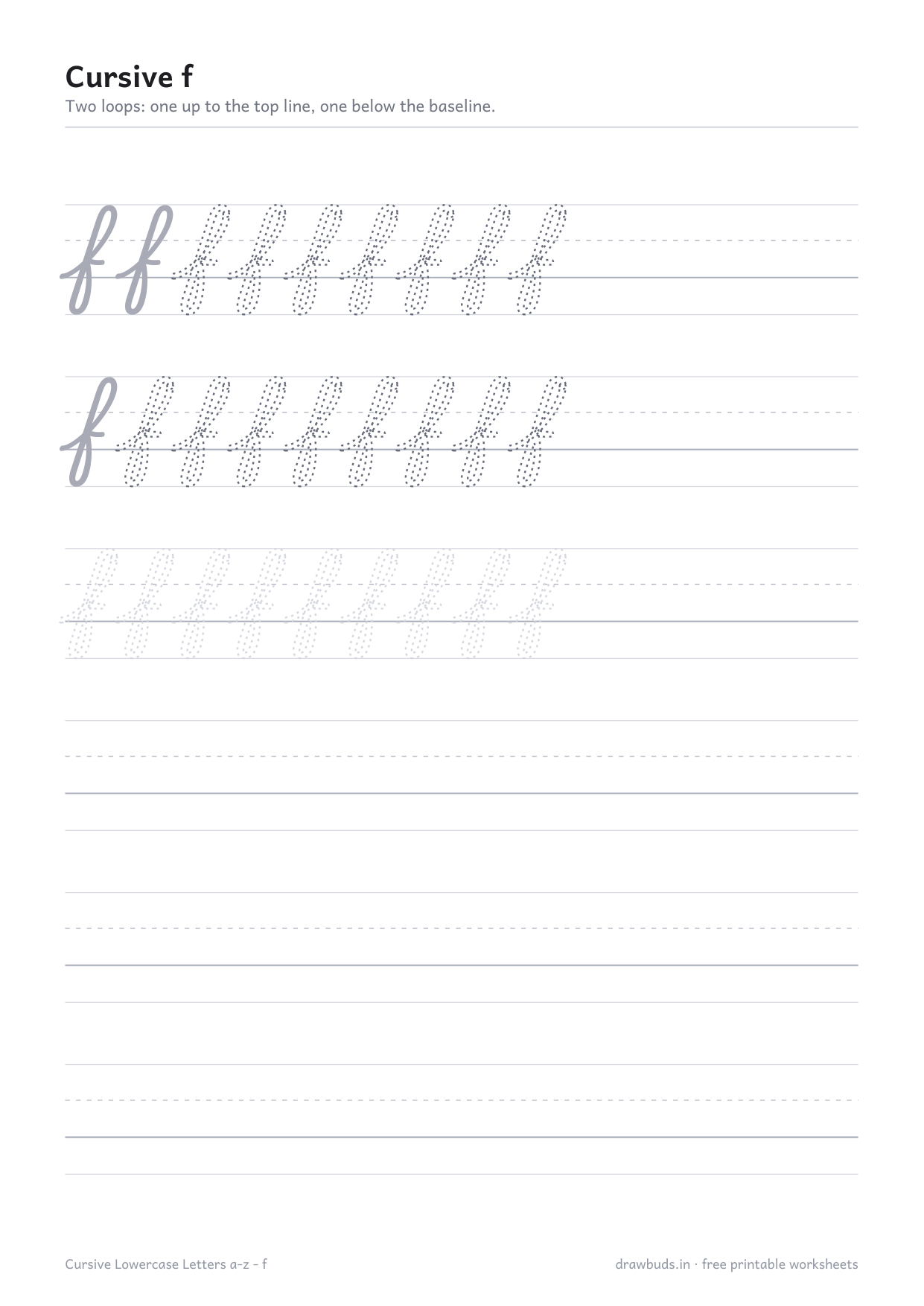
These cursive lowercase letters a-z worksheets give each letter its own page and a line telling you where the pen starts, which is the part a child cannot work out by looking. Cursive b and cursive f both loop up to the top line, but b comes straight back down and f carries on below the baseline, and nothing about the finished shape says so.
What is in the 27 pages
- Sheet a through sheet z: 26 sheets, one letter a page, in alphabet order.
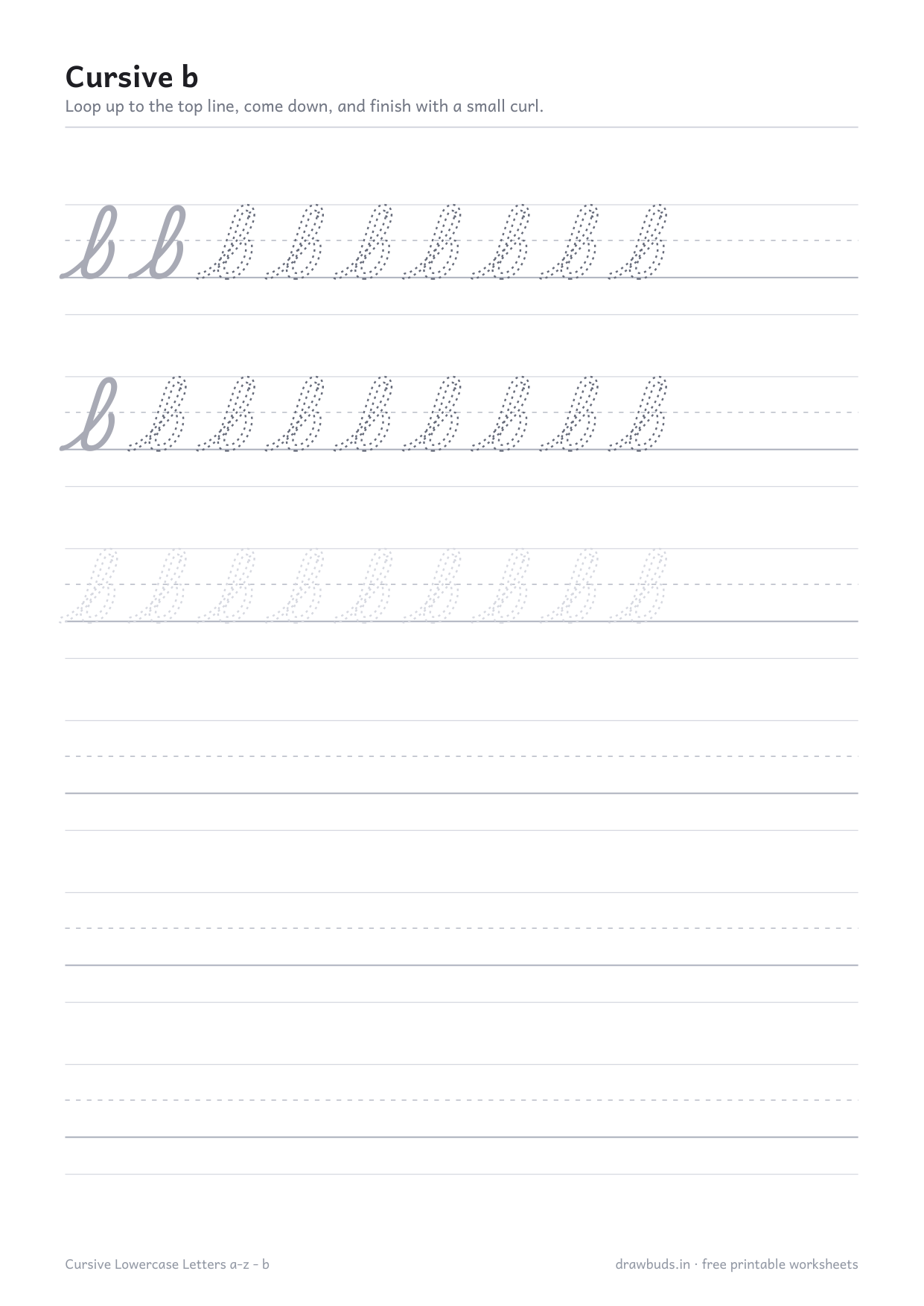
- Every sheet: a line of solid letters to copy, then dotted letters to trace, then ruled lines to write on unaided.
- Every sheet: a four-line cursive rule, with the midline dashed.
- Cover page: what the four lines mean and how to sit the paper.
The four lines, and why the midline is dashed
Cursive is a game of heights. e stops at the midline and l goes to the top, and they are the same loop. The dashed midline is the one a child checks against, so it is drawn differently from the three solid lines on purpose. If a page is being traced accurately but the letters still look wrong, height against the midline is almost always what is off, not the shape.
Letters grouped by how they start
The sheets run a to z, but the starting moves fall into families, and it is worth knowing which page belongs to which. a, c, d, g and q all begin the same way, just under the midline, curving back and round. m, n and x start with a hump over the midline. h, k and l swing up into a tall loop. i, u and w start on the baseline and swing up. Working a to z is fine, but a child who is struggling usually needs the family, not the alphabet: doing a, c, d, g and q together in one sitting teaches one move five times instead of five moves once.
The letters that go below the line
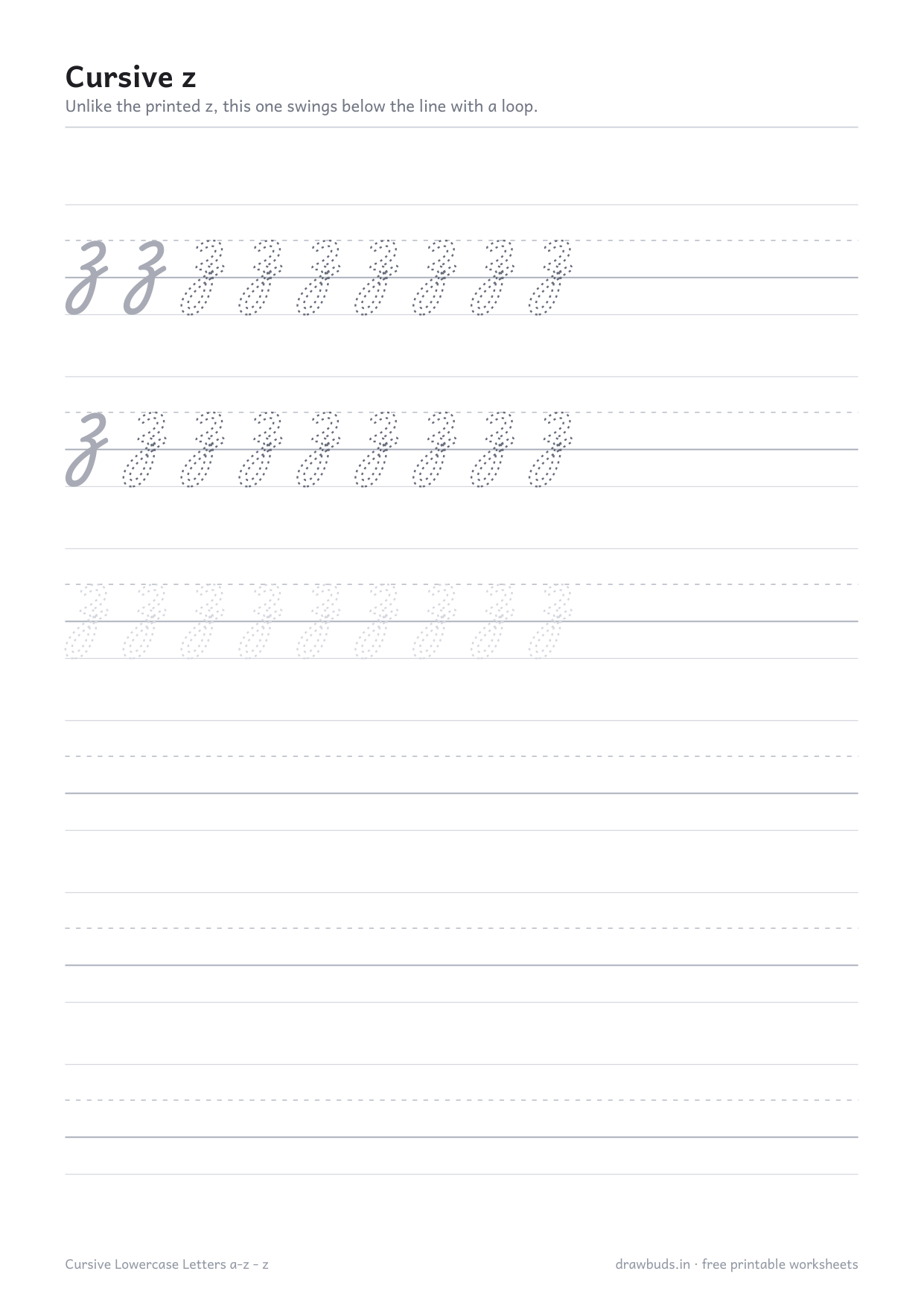
f, g, j, p, q, y and z all drop below the baseline, and z is the one that surprises people. The printed z sits entirely on the line. The cursive z swings under it with a loop, so a child copying from a printed alphabet gets it wrong every time. Sheet z says so in its instruction line.
Before this book, and after it
Cursive is worth starting once printed letters are formed without thinking about them, usually around seven. If letters are still being reversed, lowercase letter tracing a-z comes first, and handwriting worksheets with directional arrows fix the starting point rather than the shape. Capitals are a separate book because cursive capitals share almost nothing with their printed forms: cursive capital letters a-z.
Joining letters together is the next step after this one, and it needs single letters to be secure first. The joins are in cursive words and sentences, sorted by whether a letter joins low or high. Ruled paper for free writing is in handwriting practice paper.
Printing this one correctly
In your printer dialog set Scale to 100% or Actual size, not Fit to page. Fit to page shrinks the tracing letters and they stop matching the size a child's hand is learning.
Plain paper is fine for crayons and pencils. If your child uses felt pens, 100 gsm paper stops the ink bleeding to the next sheet.