Animal Names Tracing A-Z
27 printable pages. One animal for every letter, with the letter pair, the whole word, and a box to draw the animal in.
- Pages
- 27
- Ages
- 4-7
- Paper size
- A4
- Black ink only
Free to print at home, at school, and in a classroom of thirty.
Letter pair, animal name and a drawing box on every page
Tracing the letter A is one skill. Tracing the word Ant is a harder one, and tracing Elephant is harder again. This book runs the alphabet a second time, as whole words, for a child who already knows the letters and needs something to do with them.
The twenty-six animals
Ant, Bear, Cat, Duck, Elephant, Frog, Goat, Horse, Iguana, Jellyfish, Koala, Lion, Monkey, Newt, Owl, Panda, Quail, Rabbit, Snake, Tiger, Urchin, Vulture, Whale, Fox, Yak, Zebra.
What is on each page
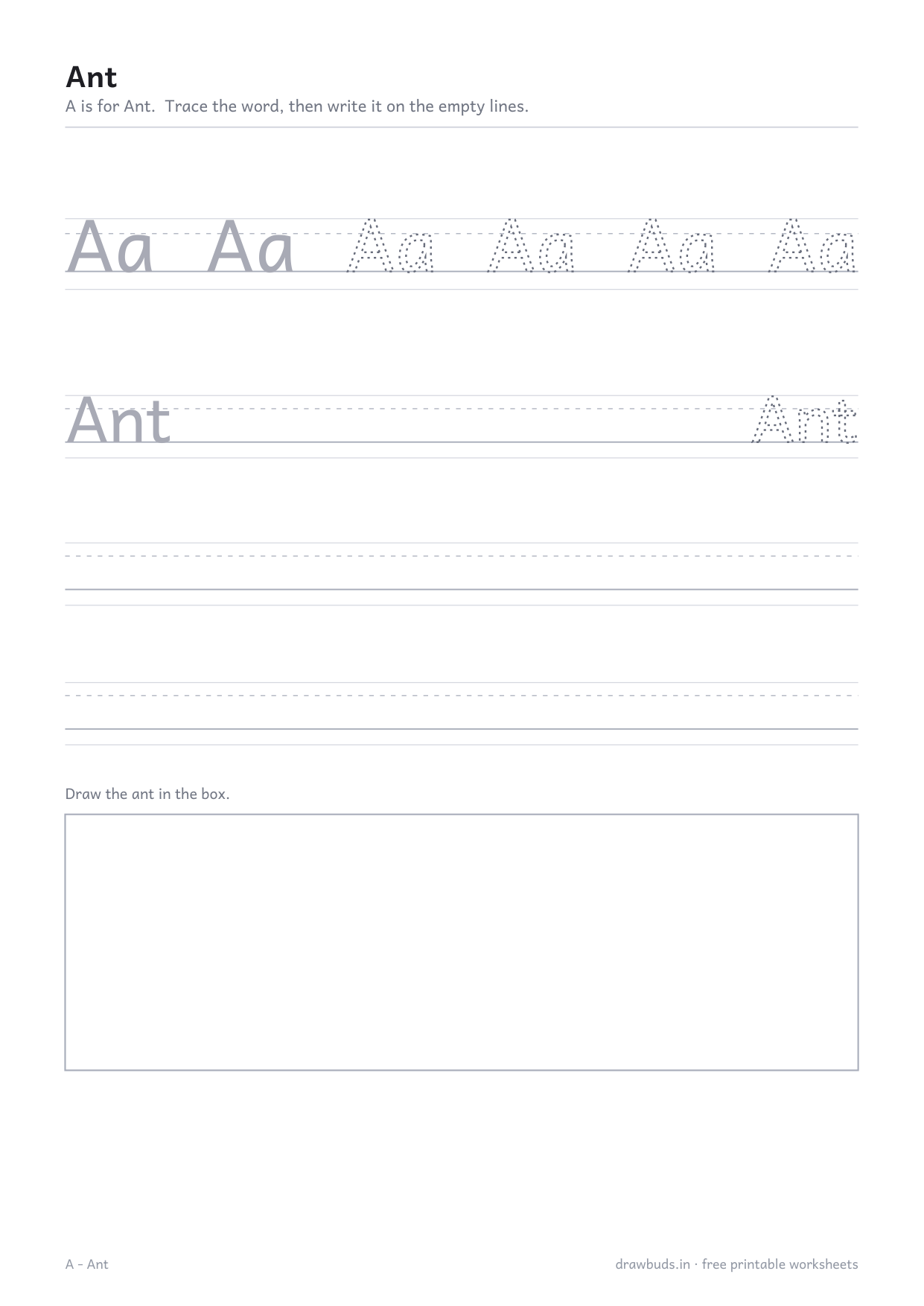
The letter pair — Aa, Bb — on a full tracing row, then the animal’s name on three rows, then an empty box to draw the animal in. The drawing box is not decoration: a child who has just written Jellyfish six times has earned two minutes of drawing, and the drawing is what makes them remember the word.
About X
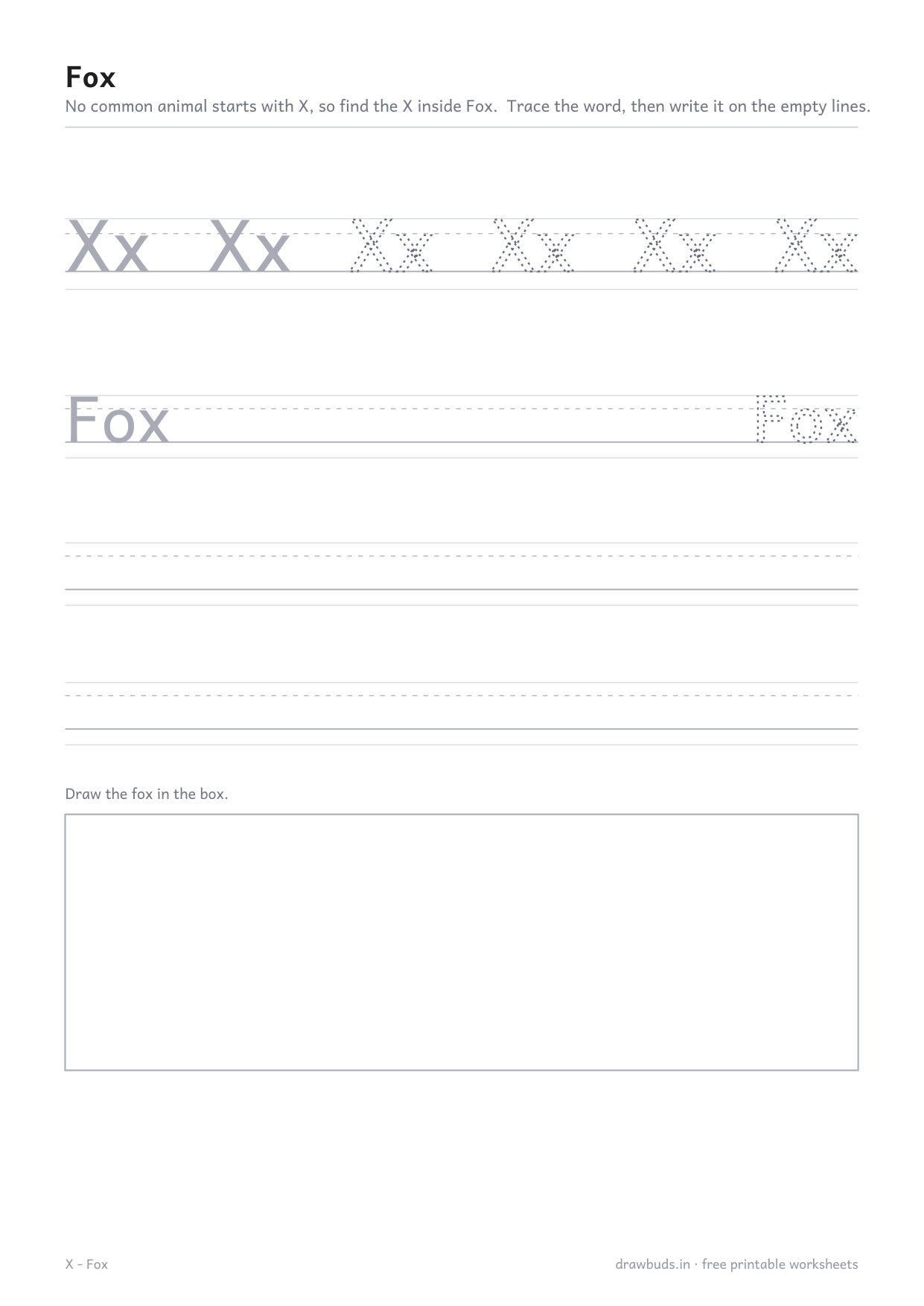
There is no common English animal beginning with X. Books that claim otherwise reach for the x-ray tetra, which no child has heard of and which is not called that outside an aquarium catalogue. The X page here says so on the page and asks the child to find the X inside Fox instead — the same honest dodge the A-Z alphabet book makes with Box.
U and Q
The other two thin letters are handled the same way. Urchin is a real animal a child can be shown a photograph of, which umbrella bird effectively is not, and Quail is a real bird rather than the queen bee that usually fills the slot.
What comes next
If the words are too long, go back to Alphabet Tracing A-Z, where each page is one letter and one short word.
Printing this one correctly
In your printer dialog set Scale to 100% or Actual size, not Fit to page. Fit to page shrinks the tracing letters and they stop matching the size a child's hand is learning.
Plain paper is fine for crayons and pencils. If your child uses felt pens, 100 gsm paper stops the ink bleeding to the next sheet.