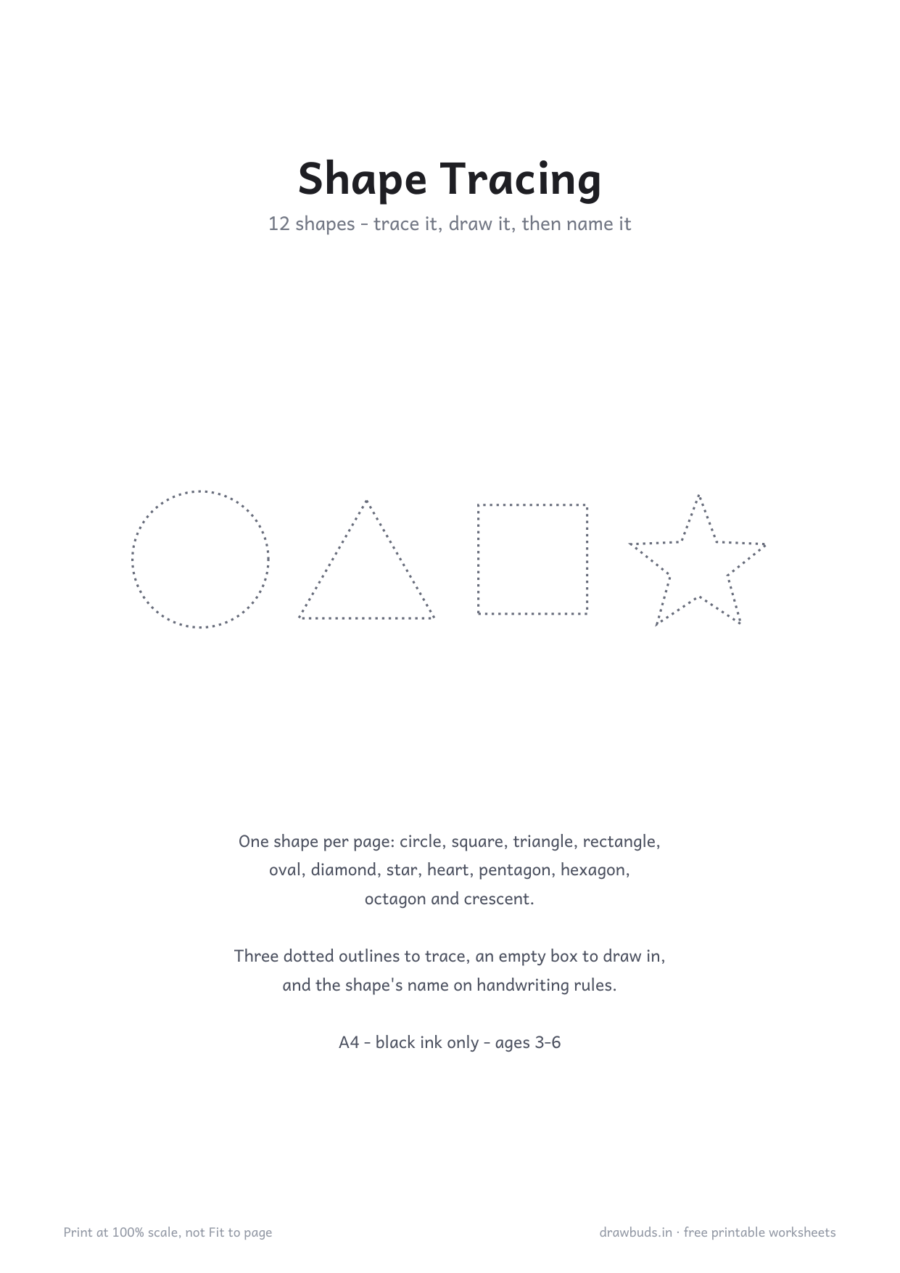
Shape Tracing Worksheets
13 printable pages. Twelve shapes, each with a model to copy, two dotted outlines to trace, an empty box to draw it in, and its name on handwriting rules.
- Pages
- 13
- Ages
- 3-6
- Paper size
- A4
- Black ink only
Free to print at home, at school, and in a classroom of thirty.
Twelve shapes, each with a model, two tracings, a drawing box and its name
Twelve shapes, one per page: circle, square, triangle, rectangle, oval, diamond, star, heart, pentagon, hexagon, octagon and crescent. Each page asks for the shape three ways, and finishes by asking for its name in writing.
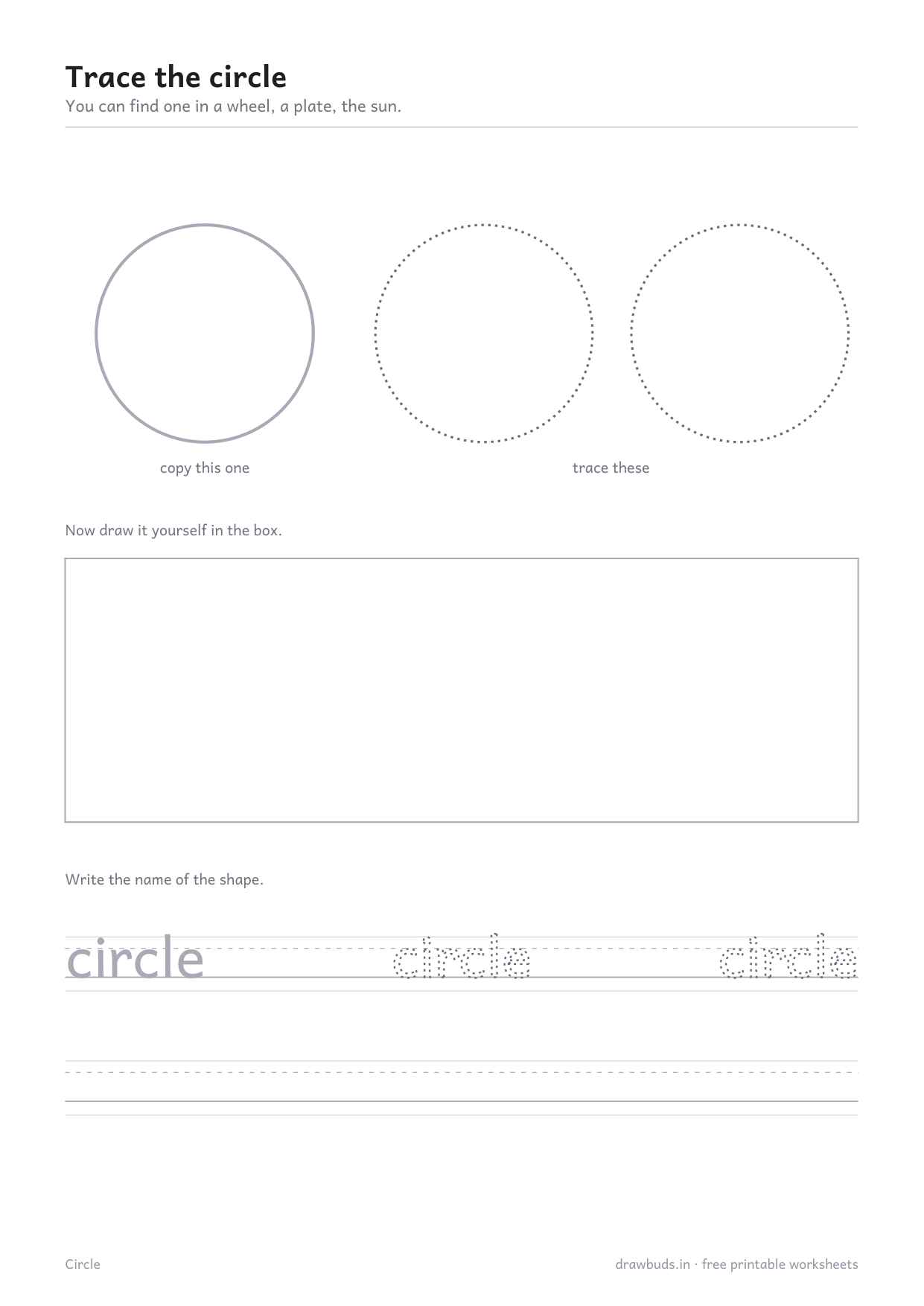
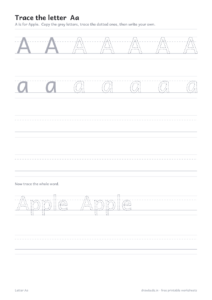
The four steps on every page
- Copy — one solid outline, drawn once at full size.
- Trace — two dotted outlines of the same size.
- Draw — an empty box, no guides at all. This is the step that shows whether the shape is actually known.
- Write — the shape’s name on the four-line rule.
Why the empty box matters
Tracing a shape and drawing one are different skills, and a worksheet that only asks for tracing cannot tell them apart. The box is where a circle turns out to be an egg and a square turns out to have five corners — which is the point at which a child learns what makes a square a square.
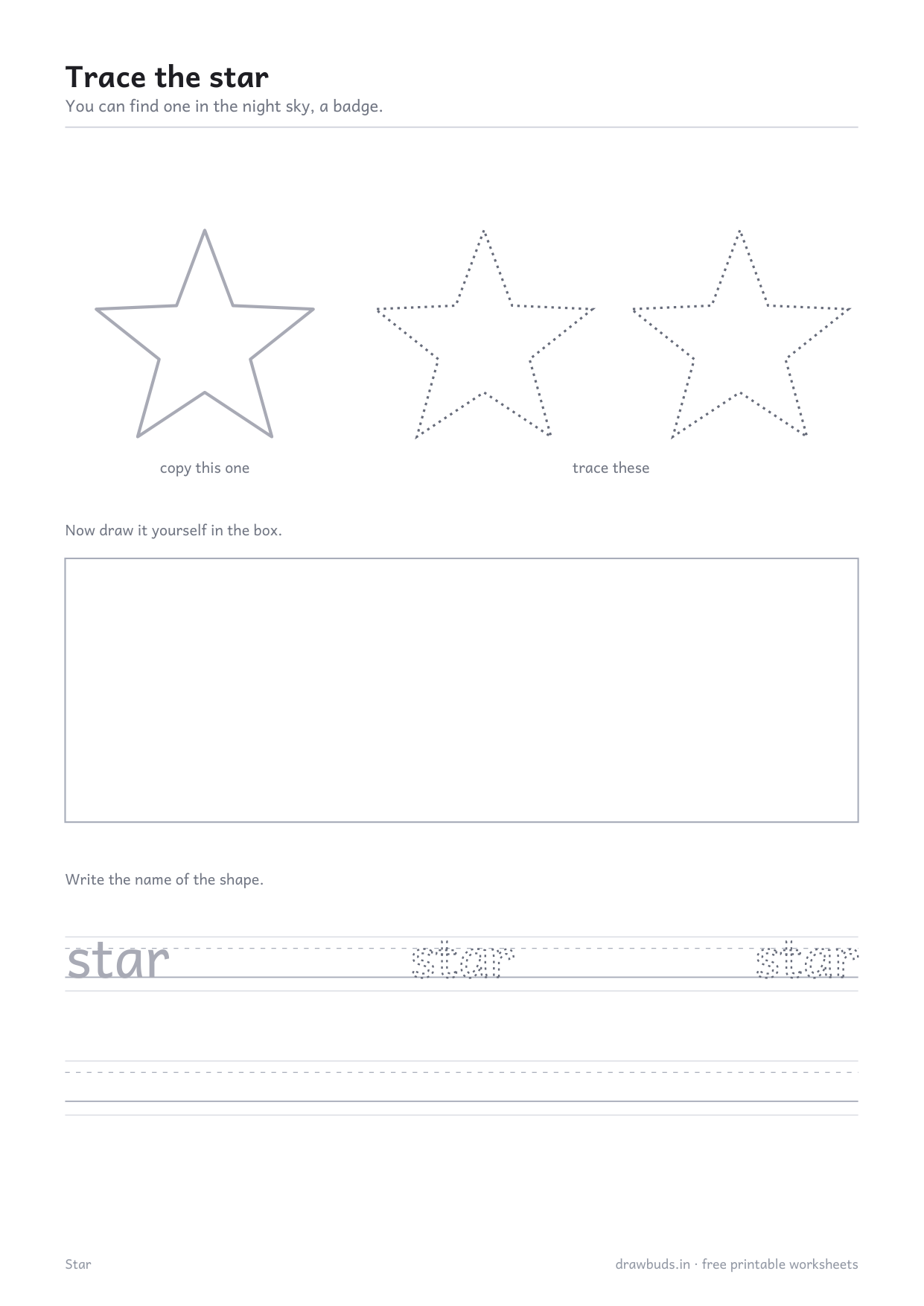
Naming, not just drawing
Each page carries a line saying where the shape turns up: a wheel, a plate, the sun for the circle; a stop sign for the octagon. Shape names stick when they are attached to something, and a child who has been shown one octagon in the world will name it for years.
Order
The book runs easiest to hardest. Circle, square and triangle are the three most preschools test for, and they are first. Pentagon, hexagon and octagon are at the back because a child needs to be able to count sides to tell them apart, which is a maths skill, not a drawing one.
What comes next
Big Shapes to Color uses the same outlines at full page size, and Pre-Writing Lines covers the open strokes these closed shapes are made from.
Printing this one correctly
In your printer dialog set Scale to 100% or Actual size, not Fit to page. Fit to page shrinks the tracing letters and they stop matching the size a child's hand is learning.
Plain paper is fine for crayons and pencils. If your child uses felt pens, 100 gsm paper stops the ink bleeding to the next sheet.