Counting Indian Money Worksheets: Rupees
Counting Indian money worksheets: rupee coins, mixed coins, notes, making an amount, working out change and a shop page, with answers. Free PDF.
- Pages
- 20
- Ages
- 6-8
- Paper size
- A4 and US Letter
- Black ink only
Same worksheets, two paper sizes. Free to print at home, at school, and in a classroom of thirty.
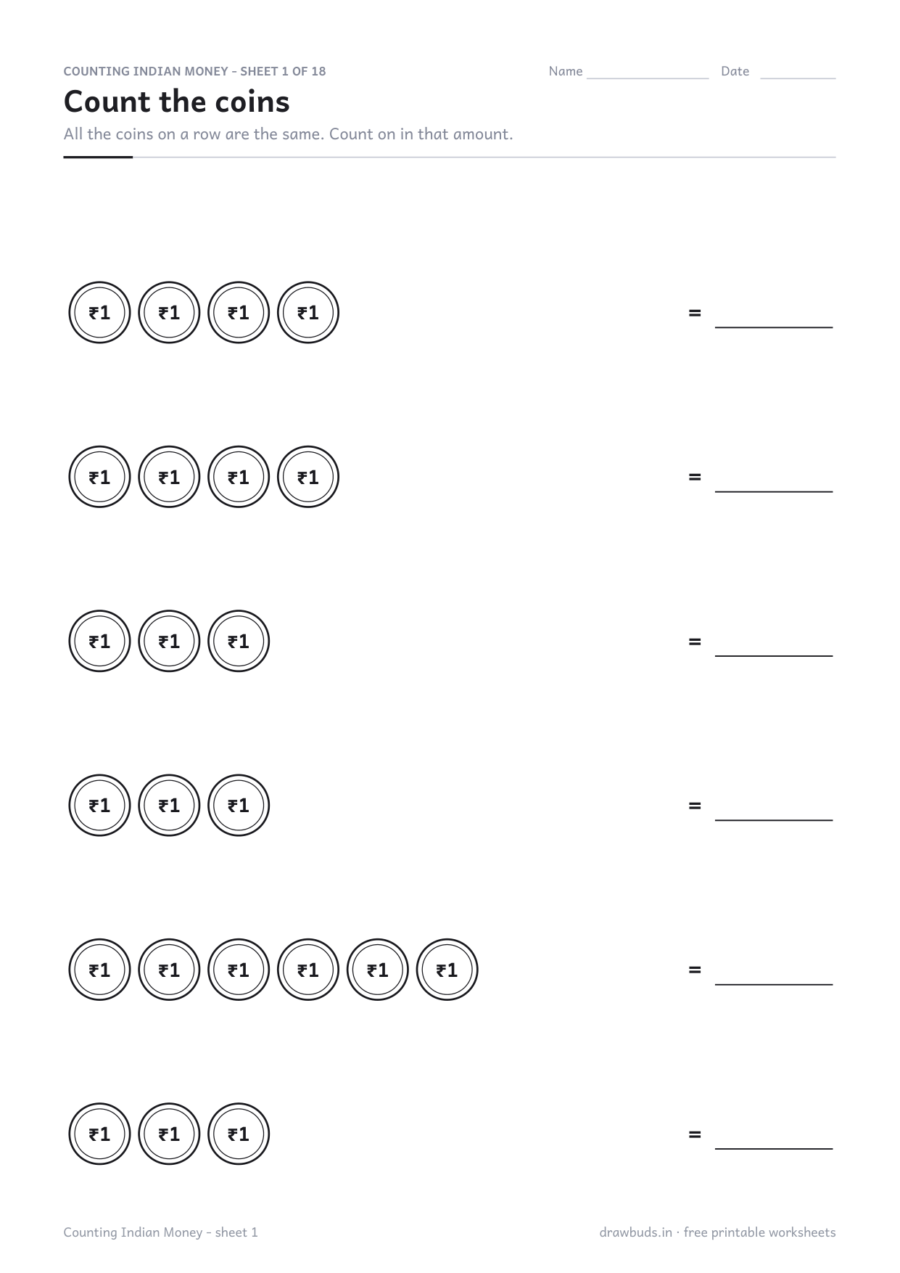
18 sheets: rupee coins, mixed coins, notes, make an amount, change, a shop, answers
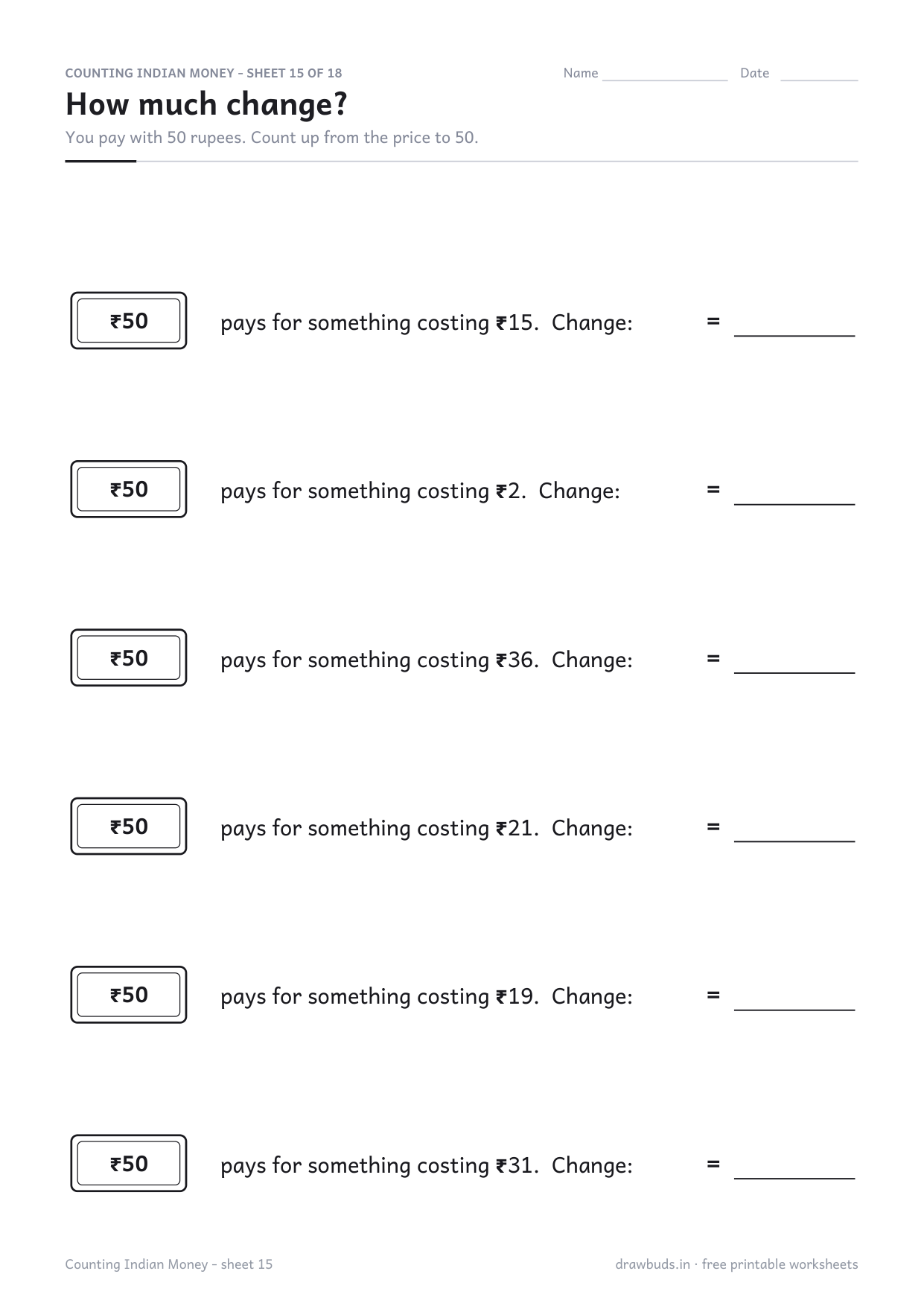
These counting Indian money worksheets teach change the way a shopkeeper actually works it out. Sheets 15 and 16 do not subtract the price from the note. They count up from the price until they reach it, which is faster, needs no borrowing, and is what the person behind the counter is doing while the child watches.
What is in the 20 pages
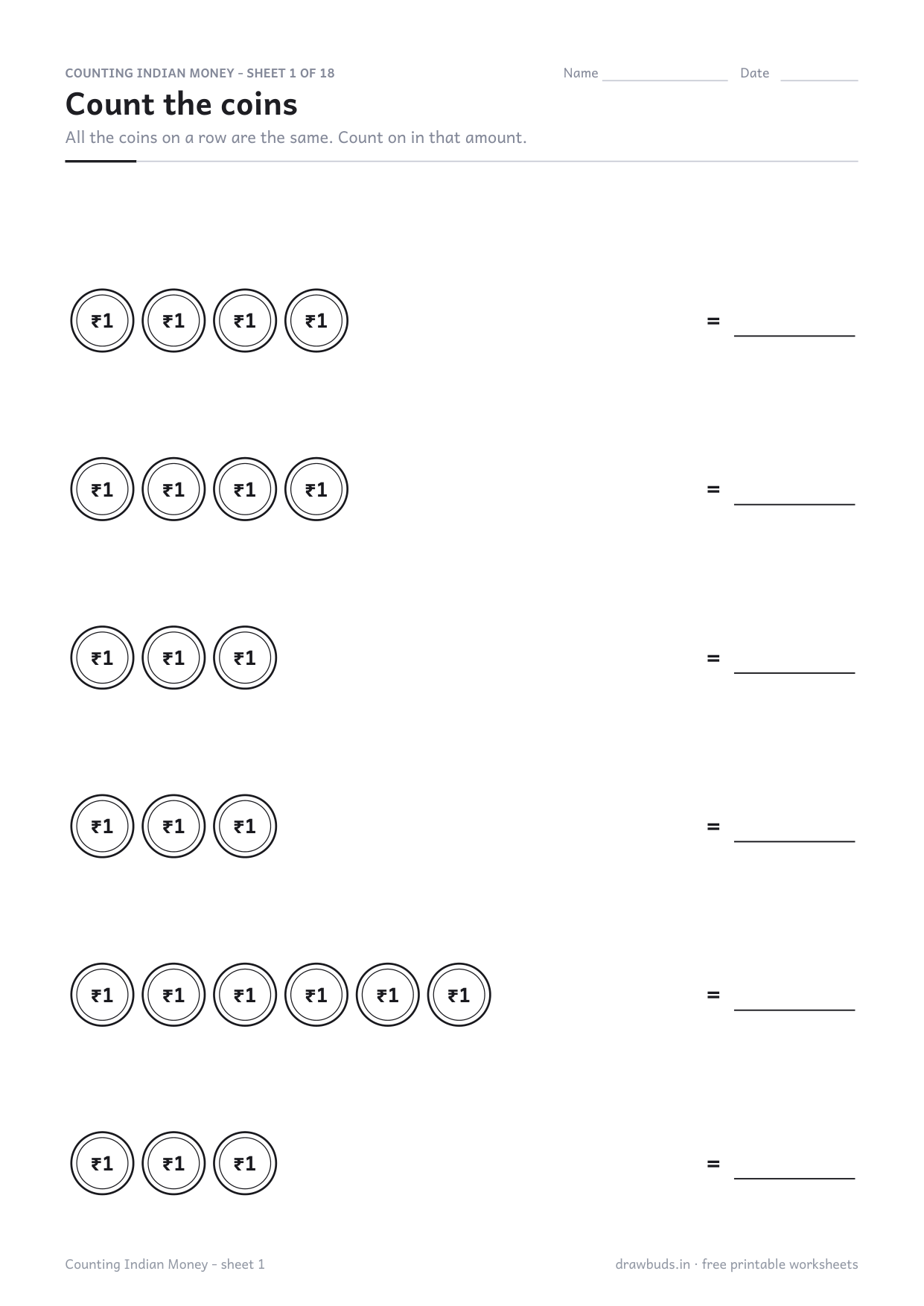
- Sheets 1-4: count coins of one kind.
- Sheets 5-8: count mixed coins.
- Sheets 9-10: count the notes.
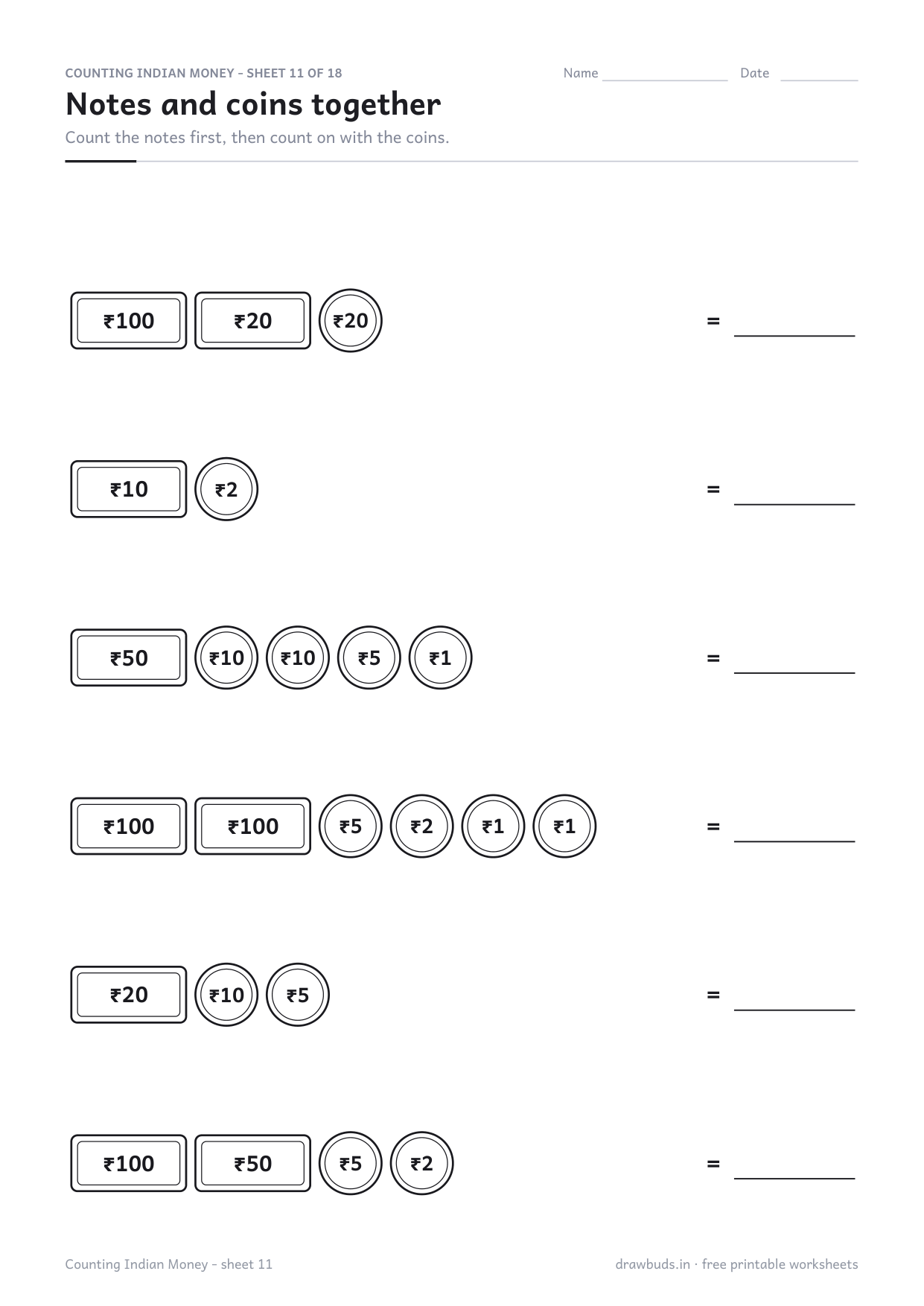
- Sheets 11-12: notes and coins together.
- Sheets 13-14: make a given amount.
- Sheets 15-16: how much change.
- Sheets 17-18: at the shop.
- Last page: every answer, sheet by sheet.
Start with the biggest, then count on
Sheets 5-8 mix the coins, and the habit they build is sorting before counting. Put the tens down first, then the fives, then the ones, and the total comes out in one pass. A child counting a scattered handful in the order it happens to lie will get a different answer twice out of three times, and will blame the arithmetic rather than the method.
Making an amount has more than one right answer
Sheets 13 and 14 ask the child to make an amount rather than count one. Eighteen rupees can be a ten, a five, two twos and a one, or nine twos. Both are correct, and a sheet where two children have different answers and both are right is doing something a column of sums cannot. The answer page gives one way and says so.
Whole rupees only
There are no paise on these sheets. Coins below one rupee have effectively left circulation, and a worksheet that still counts fifty paise is teaching a child to handle money they will never be handed. Everything here is in whole rupees, which also keeps the arithmetic inside what a six to eight year old can already do.
Class 1, class 2, or class 3
Indian schools introduce money in class 1 and return to change and shop problems in class 2 and class 3. The shop sheets at the end need addition and subtraction within 100 to be reasonably secure, so addition and subtraction within 20 comes first if those are shaky. For the dollars and cents version of the same eighteen sheets, see counting money worksheets with coins, dollars and cents.
Printing this one correctly
In your printer dialog set Scale to 100% or Actual size, not Fit to page. Fit to page shrinks the tracing letters and they stop matching the size a child's hand is learning.
Plain paper is fine for crayons and pencils. If your child uses felt pens, 100 gsm paper stops the ink bleeding to the next sheet.