Pencil Grip Worksheets: Pencil Control for Preschoolers
Pencil grip worksheets for ages 3-5: wide roads, curves, zigzags, loops, a spiral, a maze and a grip reminder, before letters. 12 pages, free PDF.
- Pages
- 12
- Ages
- 3-5
- Paper size
- A4 and US Letter
- Black ink only
Same worksheets, two paper sizes. Free to print at home, at school, and in a classroom of thirty.
Wide roads, loops, a spiral and a maze, with the grip reminder on page one
Pencil control is the part that gets skipped. A child who cannot yet keep a line inside a wide road will not keep a letter inside a ruled line, and no amount of letter practice fixes it. These twelve pages work only on the hand: staying between two lines, stopping at a corner, turning without lifting off.
The twelve pages
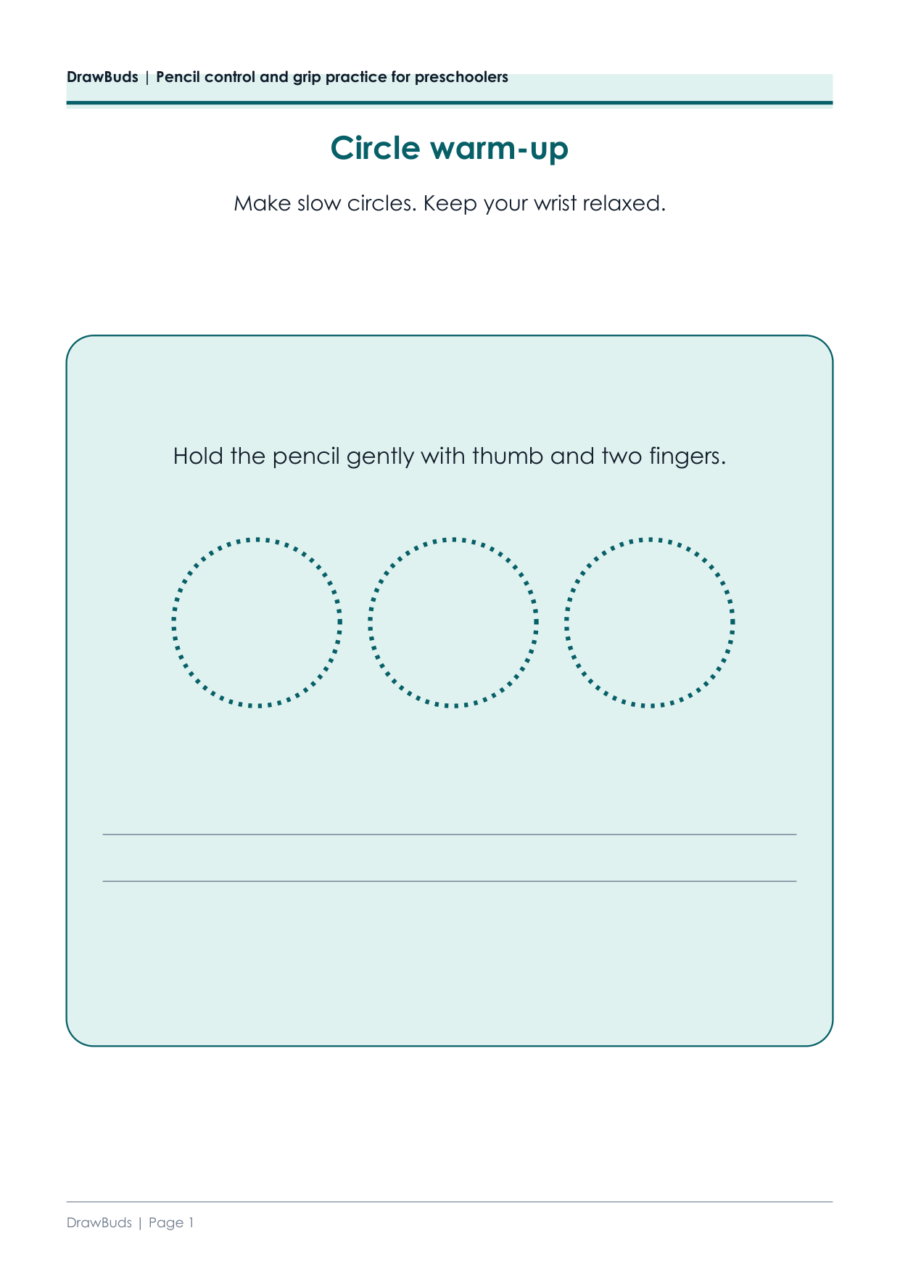
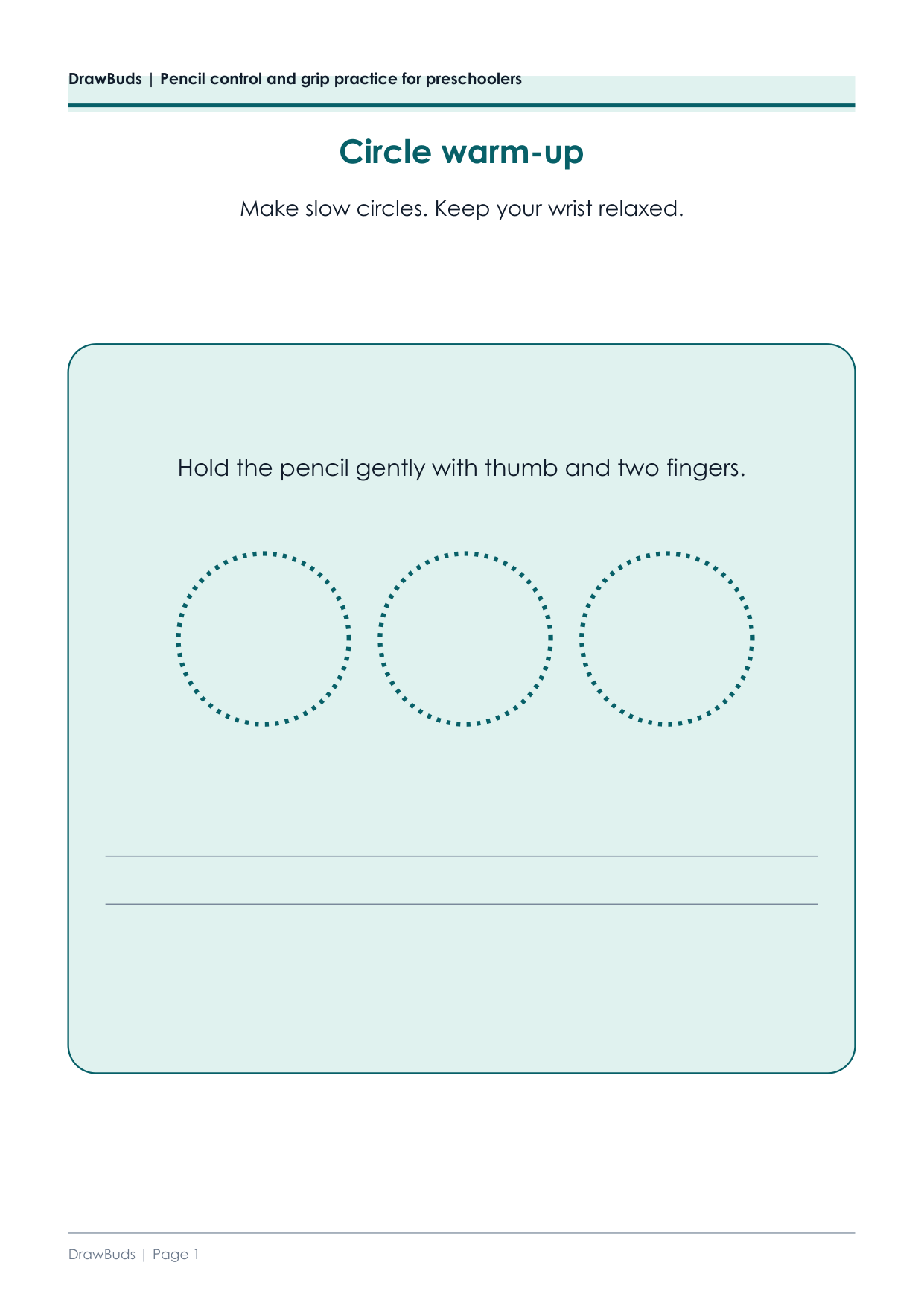
- Circle warm-up – three large circles, with the grip reminder printed at the top of the page.
- Straight pencil roads – three wide roads to stay inside.
- Curved pencil roads – the same roads, bending.
- Zigzag roads – stop at each corner, then go again.
- Loop practice – ten linked loops, left to right.
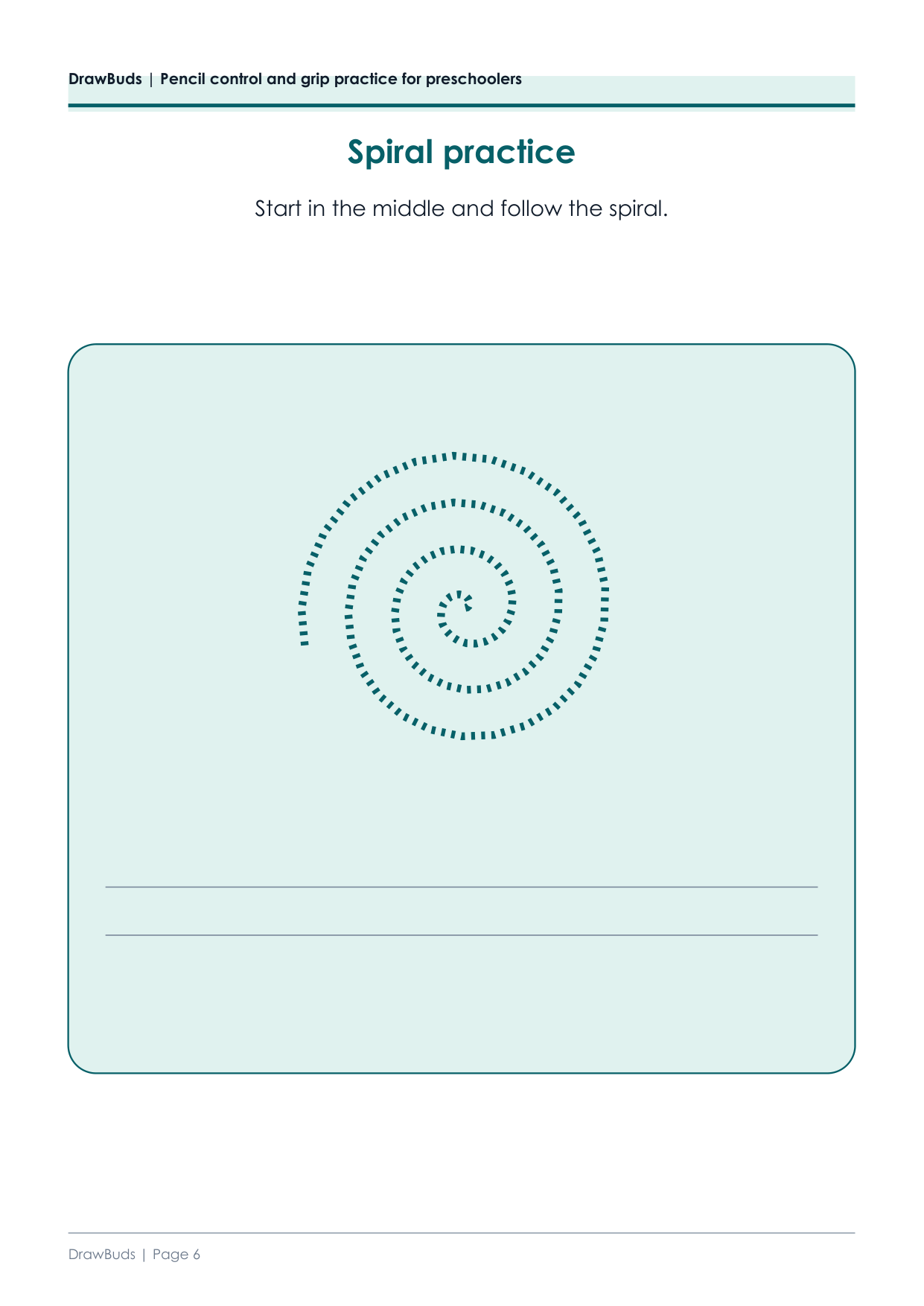
- Spiral practice – one continuous spiral from the middle out.
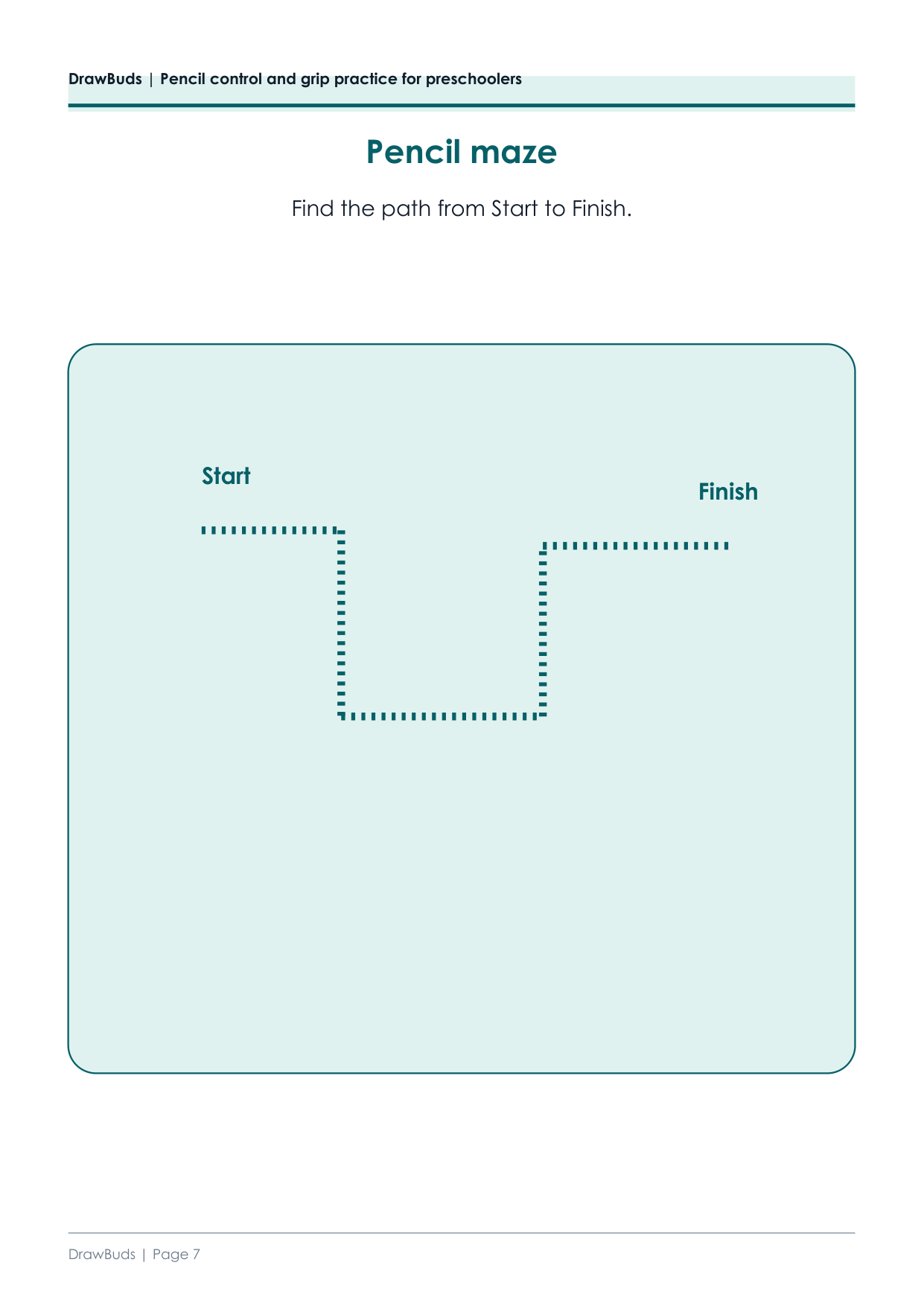
- Pencil maze – Start to Finish, four turns.
- Shape control – three circles traced without lifting the pencil.
- Follow the paths – two crossing paths, each ending in a target circle.
- Copy the pattern – two patterns, then a row of their own.
- Name practice – a model to trace, then two free rows.
- Mixed control – a road, a circle and an arch, child’s choice.
The grip reminder, and what not to do with it
Page one says: hold the pencil gently with the thumb and two fingers. That is a reminder, not a correction schedule. At three, a fist grip is age-appropriate and self-corrects; at five, a thumb wrapped over the fingers is worth a short, cheerful intervention. Which grips matter at which age – and the two that are actually worth fixing – is set out in pencil grip by age.
Why roads and mazes rather than letters
A road has two edges, so the child can see whether they succeeded without being told. That feedback is what builds control; a letter gives no such signal until an adult judges it. The spiral is the hardest page in the book and is the one to come back to – it needs a continuous turn with no stopping point, which is the movement behind a, d, g, o and q.
What comes next
When the roads are staying clean, move to strokes on ruled lines with writing practice for 3-4 year olds, then to letters with letter formation A-Z. Cutting builds the same hand strength from the other direction – scissor cutting practice is worth running alongside this.
Printing
A4, single sided, grayscale is fine. Short sessions beat long ones: two pages with a relaxed hand teaches more than six with a tired one.
Printing this one correctly
In your printer dialog set Scale to 100% or Actual size, not Fit to page. Fit to page shrinks the tracing letters and they stop matching the size a child's hand is learning.
Plain paper is fine for crayons and pencils. If your child uses felt pens, 100 gsm paper stops the ink bleeding to the next sheet.