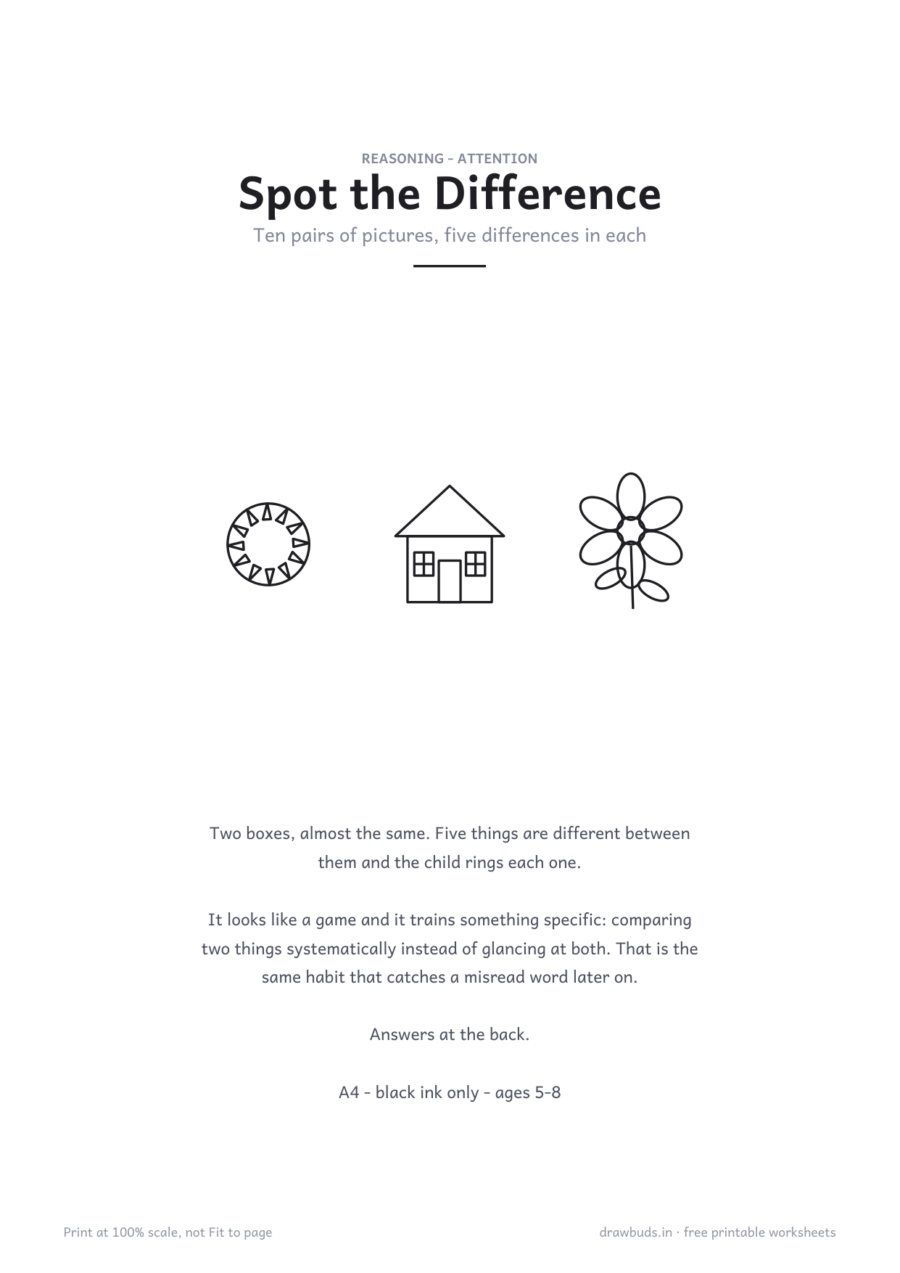
Spot the Difference Worksheets
12 printable pages. Ten pairs of pictures with exactly five differences in each — one thing gone, and four changed in size, position or the way up. Answers at the back.
- Pages
- 12
- Ages
- 5-8
- Paper size
- A4
- Black ink only
Free to print at home, at school, and in a classroom of thirty.
Ten pairs, five differences in each, answers at the back
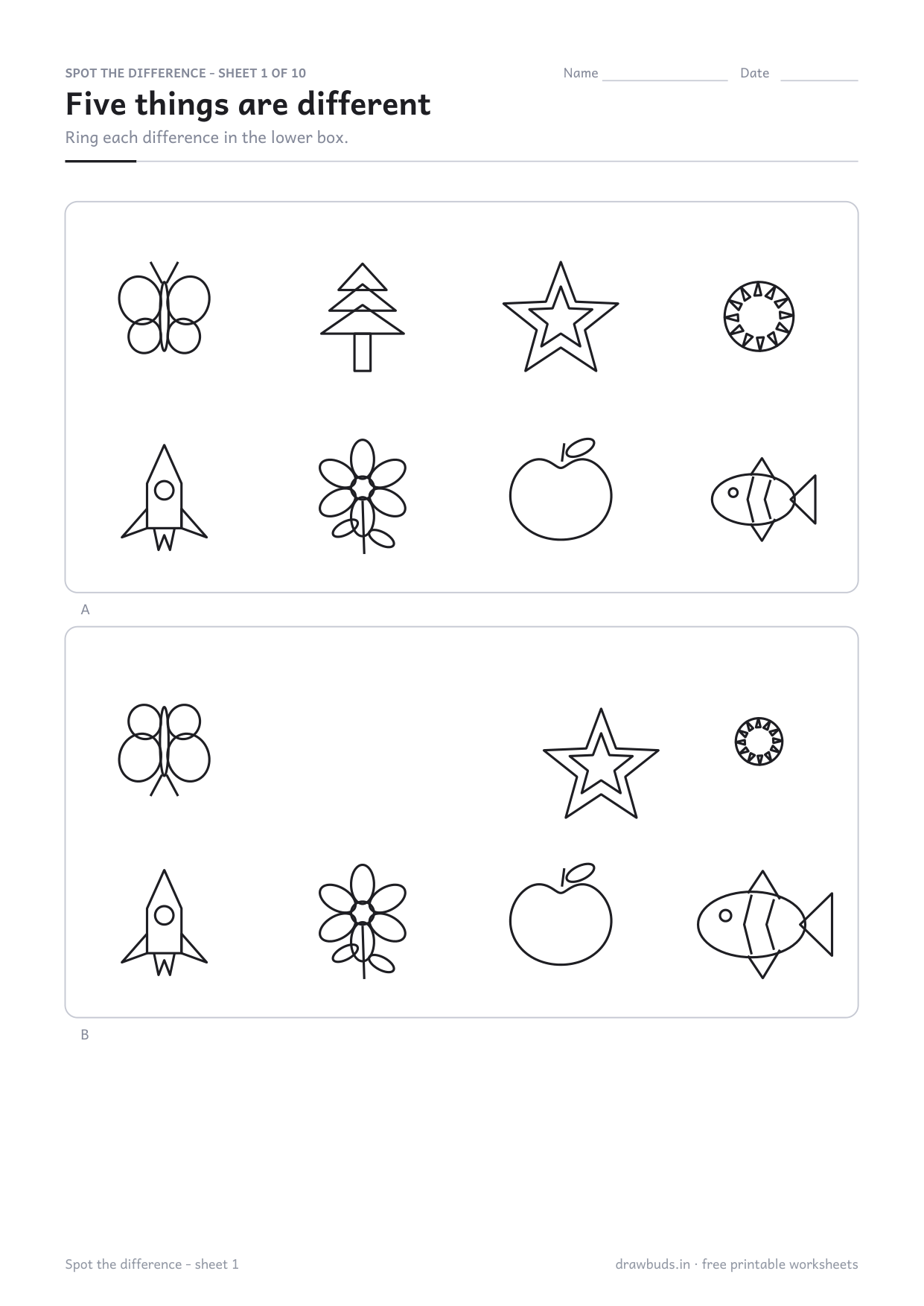
Two boxes of pictures that look the same. Five things are different between them, and the child rings each one in the lower box.
It plays like a game and it trains something specific: comparing two things systematically rather than glancing at both and deciding they match. That is the same habit that catches a misread word.
How the five differences are made
Never five of the same trick, and only ever one picture actually missing. Each sheet has exactly one of each:
- one picture is gone
- one is smaller
- one is bigger
- one has moved
- one is upside down
The missing one is the easiest and gets found first every time. The upside-down one is usually last, and on some pictures it is genuinely hard to see.
Teach the sweep
Most children scan both boxes at random and find three of the five. The method that finds all five is boring and reliable: take the pictures one at a time, top left to bottom right, and check each against its partner before moving on. Saying “same” out loud for the ones that match keeps the place.
Ring, do not just point
Ringing each difference in box B leaves a record, so a child can count how many they have found and see that they are still two short. Pointing leaves nothing and the same difference gets found twice.
The answers
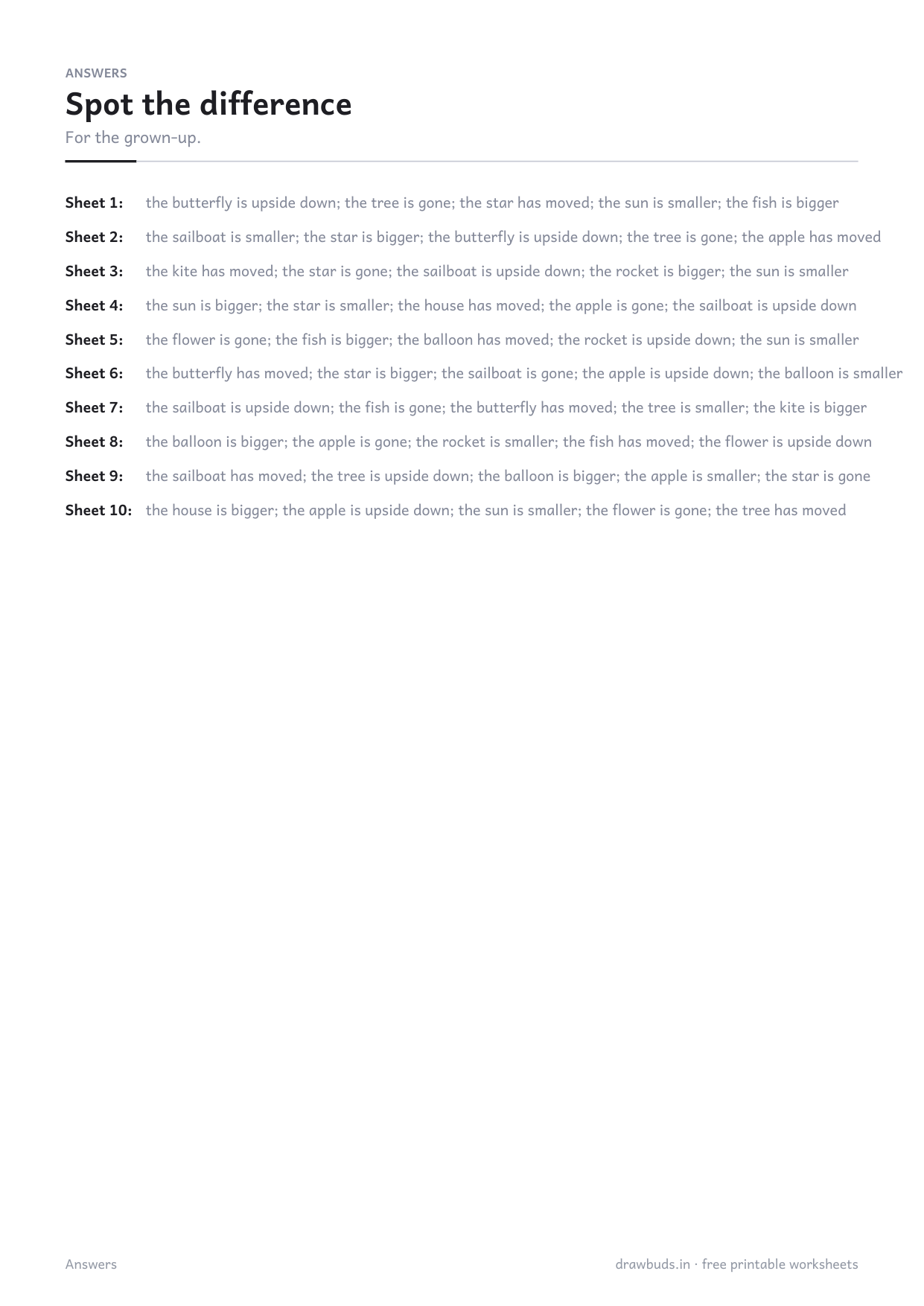
The last page lists all five differences for every sheet, in words. It is for the adult, and it is deliberately at the back rather than upside down at the foot of the page, where it always gets read.
What comes next
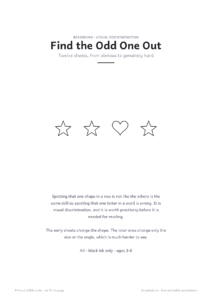
Find the Odd One Out is the simpler version — one row rather than two pictures — and a good place to go back to if five differences is too many.
Printing this one correctly
In your printer dialog set Scale to 100% or Actual size, not Fit to page. Fit to page shrinks the tracing letters and they stop matching the size a child's hand is learning.
Plain paper is fine for crayons and pencils. If your child uses felt pens, 100 gsm paper stops the ink bleeding to the next sheet.