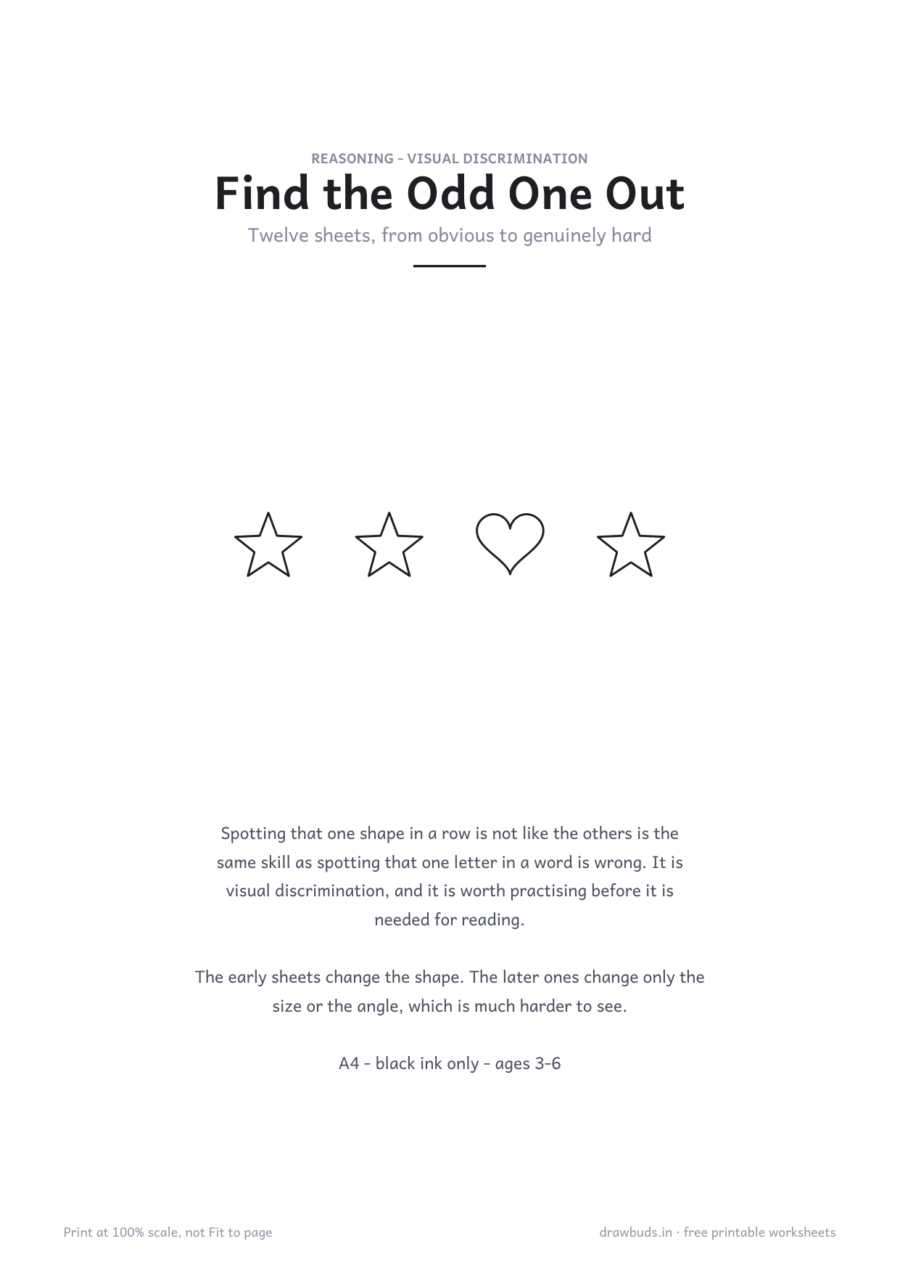
Find the Odd One Out
13 printable pages. Five rows a sheet, one shape in each not like the others — different shape at first, then different size, then simply turned around.
- Pages
- 13
- Ages
- 3-6
- Paper size
- A4
- Black ink only
Free to print at home, at school, and in a classroom of thirty.
Different shape, then different size, then turned around
Spotting that one shape in a row is not like the others is the same skill as spotting that one letter in a word is wrong. It is visual discrimination, and it is worth practising before reading demands it.
Three levels, and they are genuinely different
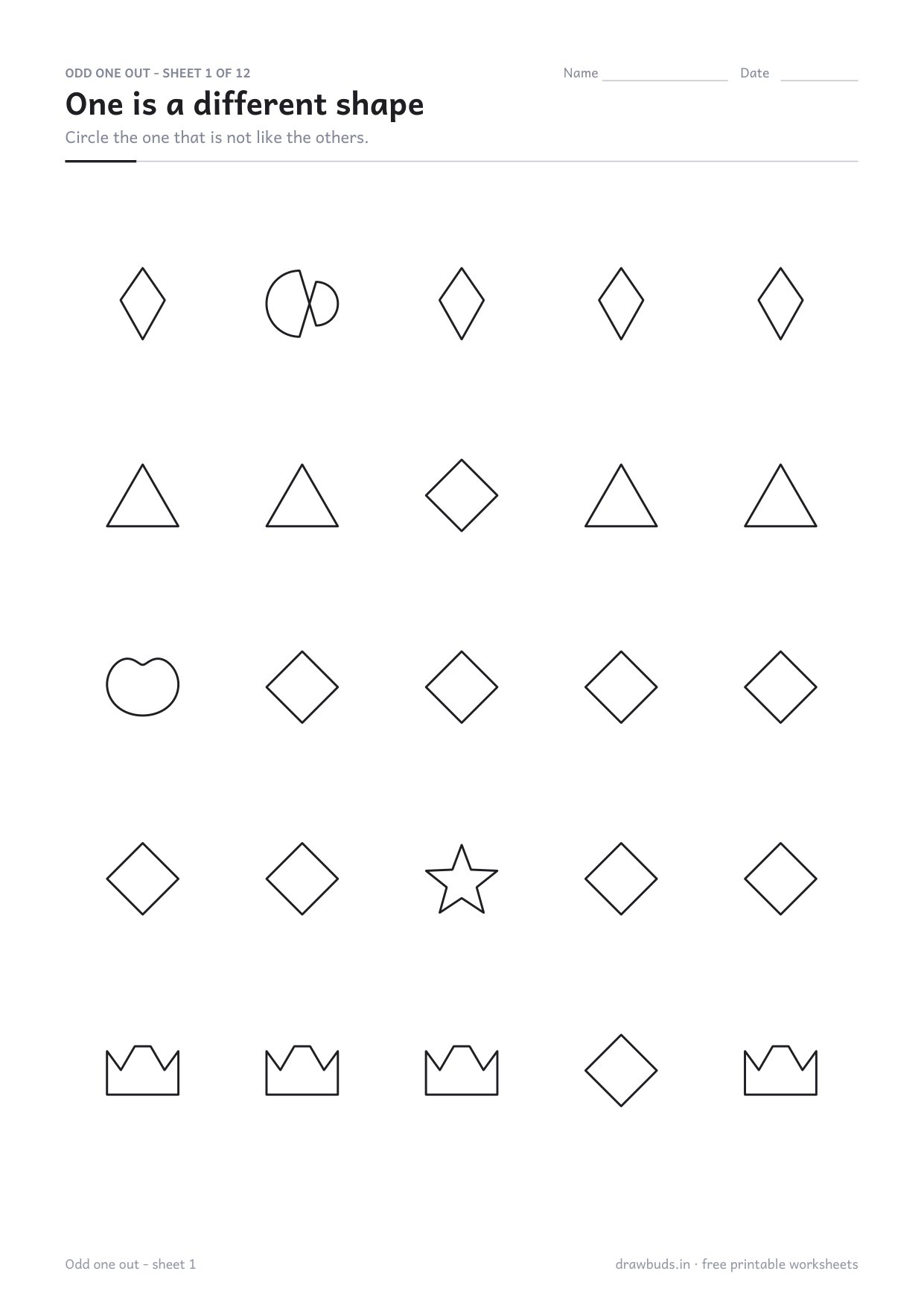
- Sheets 1 to 5 — a different shape. A heart among four stars. Most three-year-olds can do these.
- Sheets 6 to 9 — a different size. Five identical shapes, one smaller. Now the child has to compare rather than recognise.
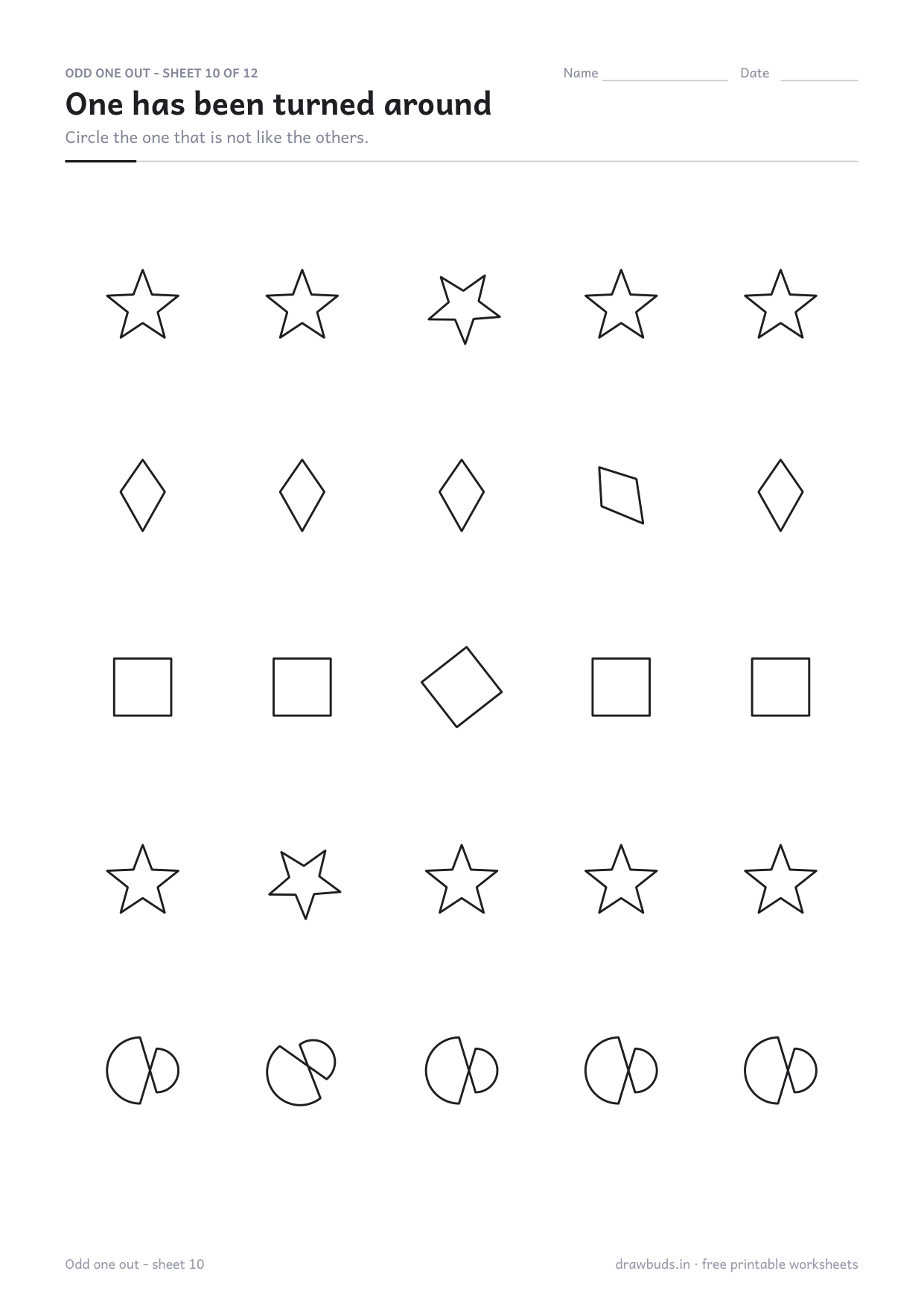
- Sheets 10 to 12 — turned around. Five identical shapes, one rotated. This is the hardest and the most useful.
Why the rotated ones matter
Young children treat a shape as the same thing whichever way up it is, and for most of life that is correct: a cup on its side is still a cup. Letters are the exception. b, d, p and q are the same shape rotated and flipped, and they are four different letters.
Noticing that something has been turned around is the exact skill those four letters need, and the last three sheets are the only part of this book that practises it.
Ask why, not just which
Circling the odd one takes a second. Saying what is different about it takes longer and is where the learning is — “it’s smaller”, “it’s upside down”, “it’s got a point at the top”. A child who can say it can find it next time.
If it is too easy
Time it. Five rows in under a minute, all correct, means move on. This is a skill that plateaus quickly, and there is no benefit in doing all twelve sheets if the first three were effortless.
What comes next
Spot the Difference is the same skill applied to two whole pictures instead of one row, and Find and Color the Letter applies it to the letters themselves.
Printing this one correctly
In your printer dialog set Scale to 100% or Actual size, not Fit to page. Fit to page shrinks the tracing letters and they stop matching the size a child's hand is learning.
Plain paper is fine for crayons and pencils. If your child uses felt pens, 100 gsm paper stops the ink bleeding to the next sheet.