Even and Odd Numbers Worksheets
Even and odd numbers worksheets: 192 questions, from dots in pairs to three digit numbers, next even and odd, and sums. Answers included. Free PDF.
- Pages
- 15
- Ages
- 5-8
- Paper size
- A4 and US Letter
- Black ink only
Same worksheets, two paper sizes. Free to print at home, at school, and in a classroom of thirty.
12 sheets, 192 questions: dots in pairs, E or O within 20, 60, 100 and 1000, next even and odd, sums, answers
These even and odd numbers worksheets start where the idea actually lives, with dots a child can pair up, and end with three digit numbers where only the last digit matters. There are 192 questions on 12 sheets, and every answer is a single letter, E or O, or one number.
What is in the 15 pages
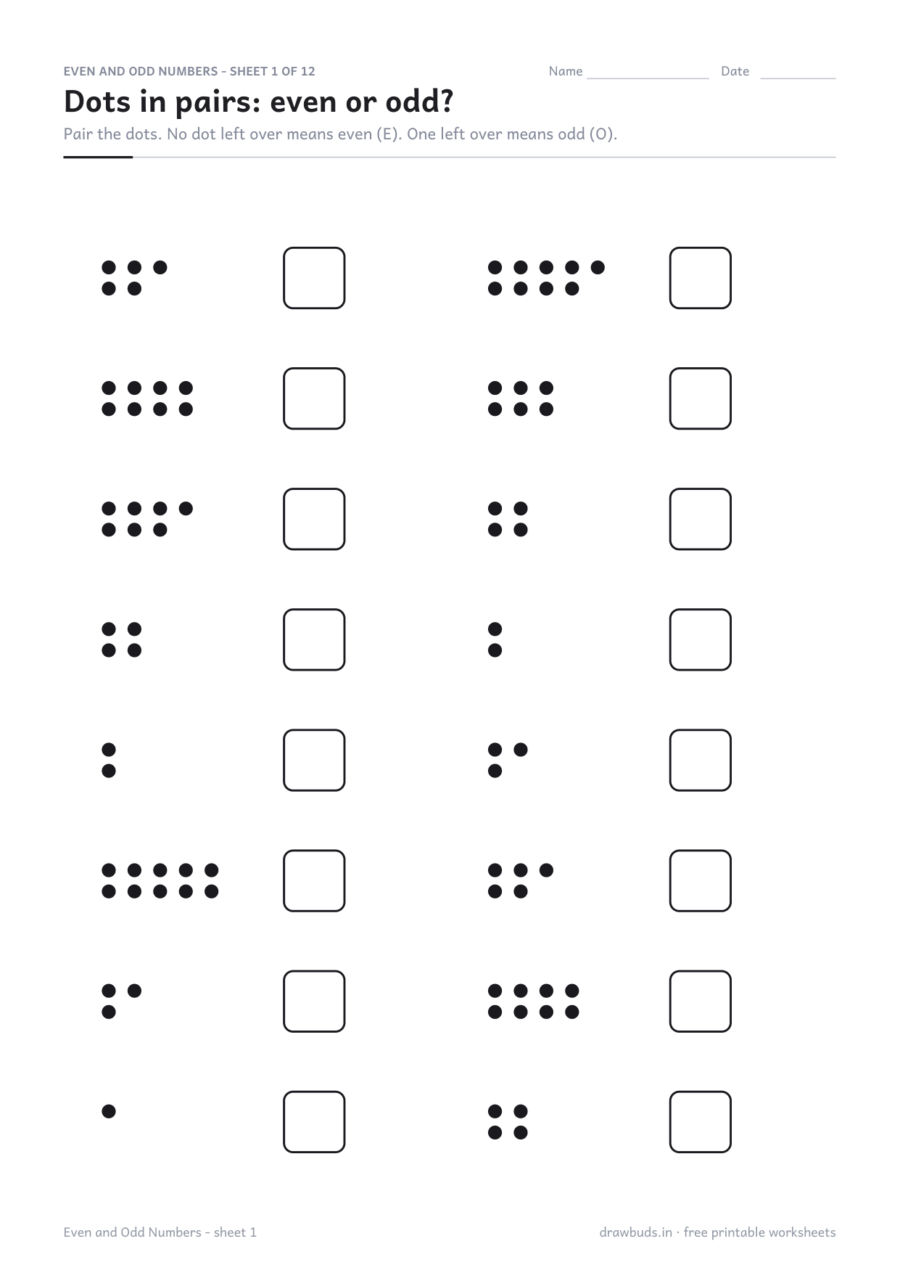
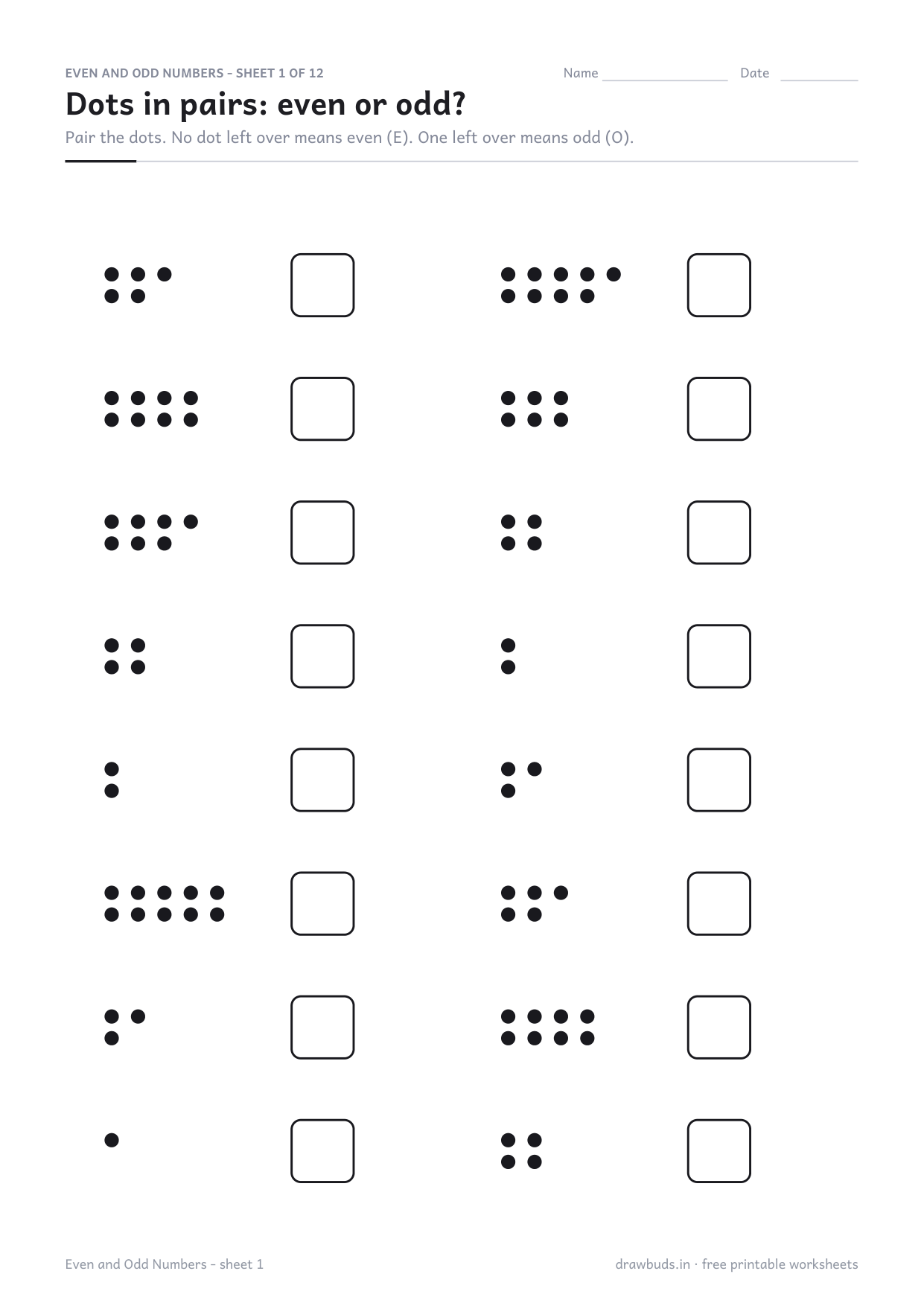
- Sheets 1-2: rows of dots set out in pairs. If every dot has a partner the number is even. If one dot is left alone it is odd.
- Sheets 3-6: write E or O beside a number, first within 20, then within 60, then within 100, then three digit numbers such as 763 and 936.
- Sheets 7-8: the next even number after a number, then the next odd number.
- Sheet 9: next even and next odd mixed, so the child has to read which one is asked.
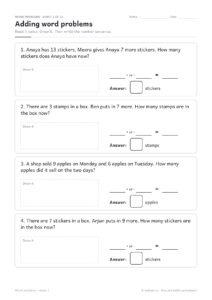
- Sheets 10-11: add two numbers, then decide if the answer is even or odd.
- Sheet 12: a review that mixes every kind of question.
- Last two pages: every answer, sheet by sheet.
Why the book starts with dots
A child can learn that even numbers end in 0, 2, 4, 6 or 8 and still not know what even means. The dots show it. Seven dots make three pairs with one dot left over, so 7 is odd. Eight dots make four pairs and nothing is left, so 8 is even. On sheet 1 the first row is 5 dots and then 8 dots, so the difference shows up in the first minute.
The rule a child can use on any number
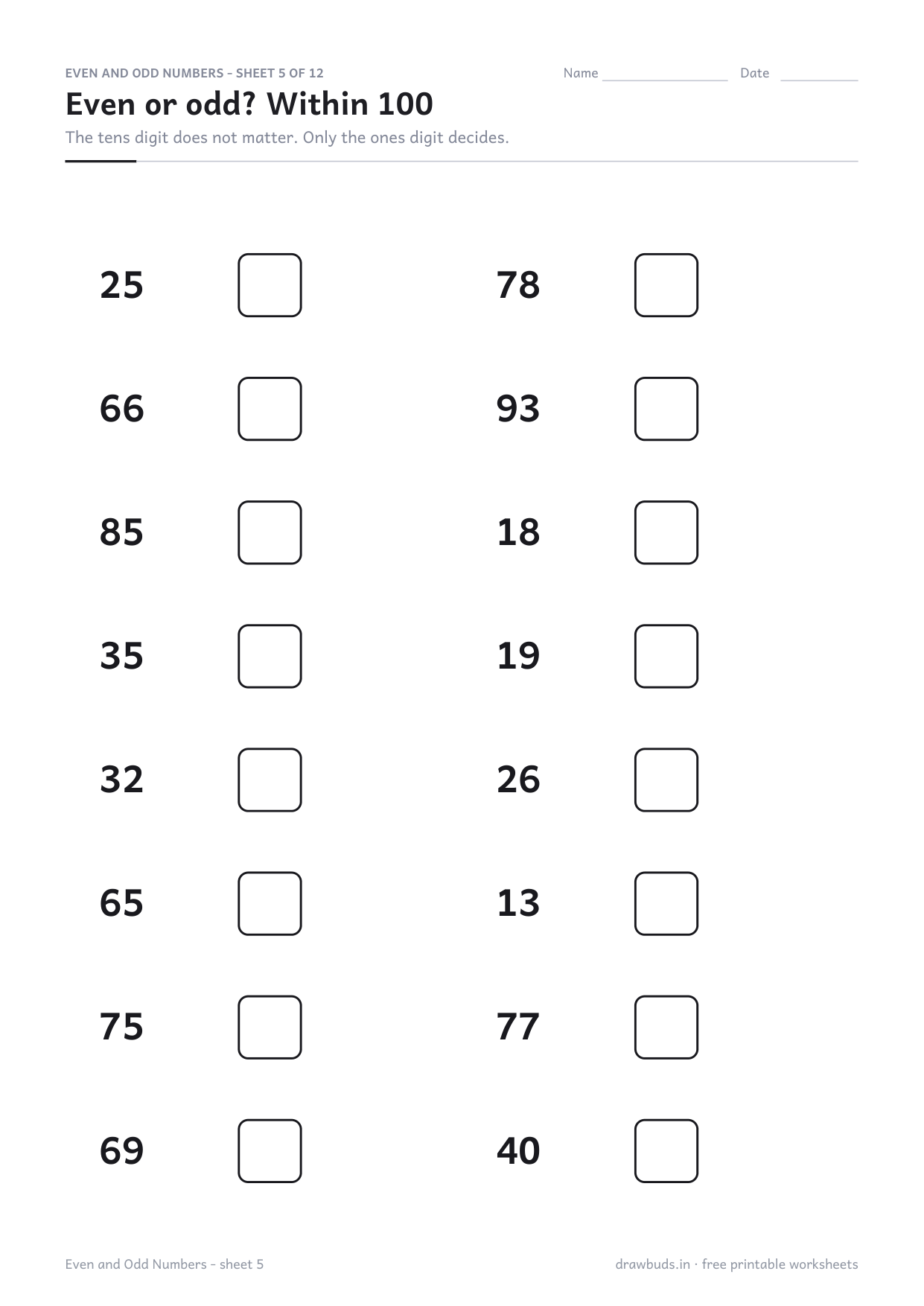
From sheet 3 the dots are gone and the child looks at the last digit only. Sheet 5 is built to make that point: 25 is odd, 66 is even, and the tens digit makes no difference to either. Sheet 6 then gives numbers like 763 and 850. A child who checks only the ones digit gets them right as easily as the small ones, and that is the moment the rule sticks.
Next even, next odd, and adding
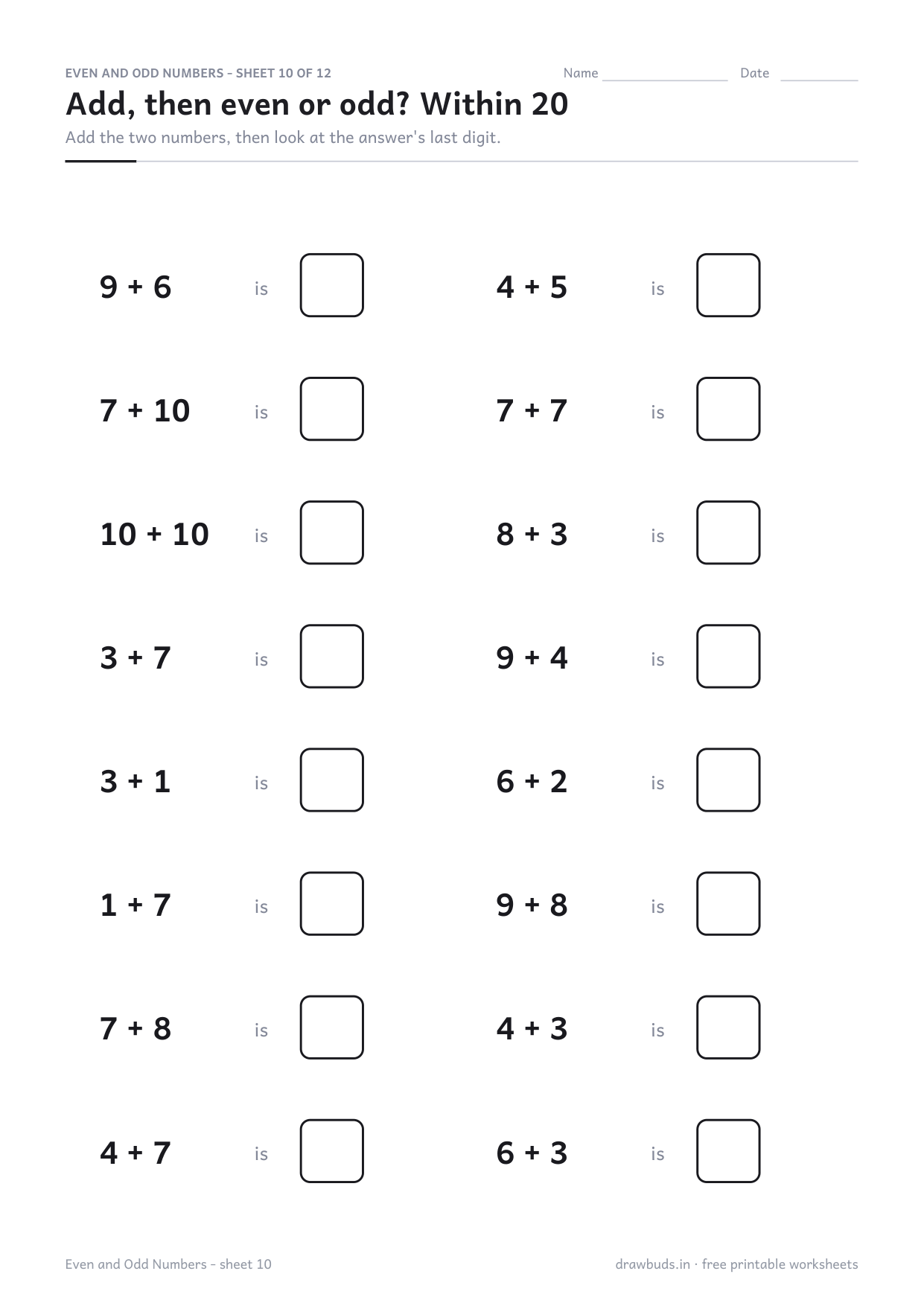
Sheets 7 and 8 ask for the next even or odd number after a given one. After an even number the next even number is two more, and after an odd number it is one more. Sheets 10 and 11 add two numbers first. 9 + 6 makes 15, which is odd, and 10 + 10 makes 20, which is even. After a few rows most children notice the pattern on their own. Even plus even is even, odd plus odd is even, and even plus odd is odd.
Who it is for
The sheets suit children of about 5 to 8, in kindergarten, grade 1 or grade 2, who can count to 100. For more practice with numbers in order, try the before, after and between numbers worksheets. To compare two numbers, use the comparing numbers worksheets.
Printing
Print at 100% scale, not Fit to page, so the answer boxes stay large enough for small handwriting. The book comes as an A4 PDF and a US Letter PDF with the same sheets. Black ink only.
Printing this one correctly
In your printer dialog set Scale to 100% or Actual size, not Fit to page. Fit to page shrinks the tracing letters and they stop matching the size a child's hand is learning.
Plain paper is fine for crayons and pencils. If your child uses felt pens, 100 gsm paper stops the ink bleeding to the next sheet.