2 Digit Subtraction Worksheets: With Borrowing
2 digit subtraction worksheets: 144 column sums, no borrowing on sheets 1-6 and borrowing on 7-12, with exchange boxes and answers. Free PDF.
- Pages
- 14
- Ages
- 6-8
- Paper size
- A4 and US Letter
- Black ink only
Same worksheets, two paper sizes. Free to print at home, at school, and in a classroom of thirty.
144 column sums, no borrowing then borrowing, exchange boxes, answers
These 2 digit subtraction worksheets start with sums where every top digit is bigger than the one below it, and only then move on to borrowing. That order exists because of one very common mistake: faced with 52 − 27, a child takes the smaller digit from the bigger one in each column, writes 35, and is sure they are right.
What is in the 14 pages
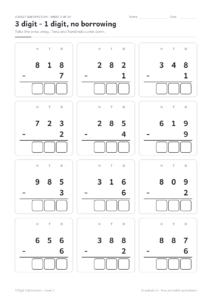
- Sheets 1-2: 2 digit − 1 digit, no borrowing (37 − 3).
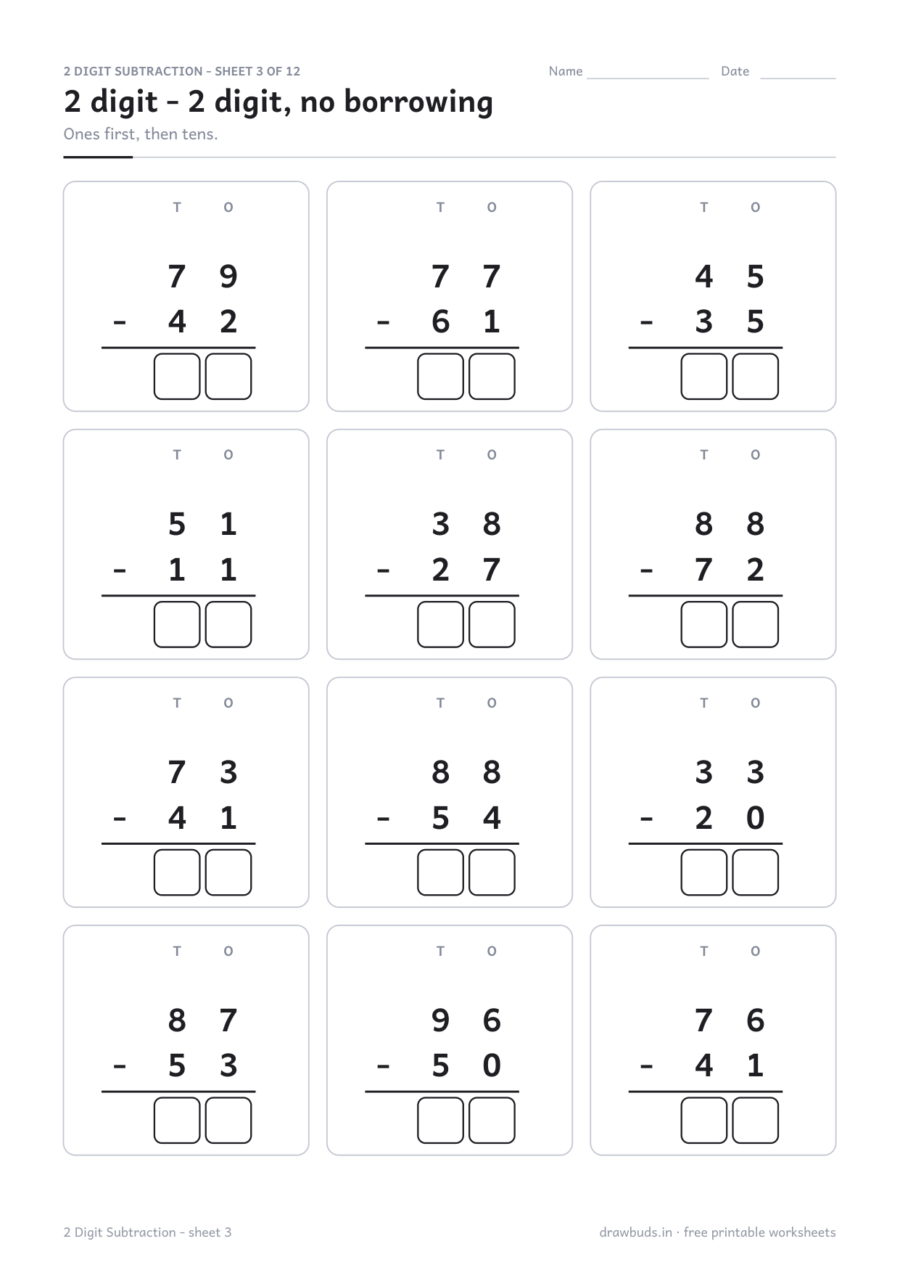
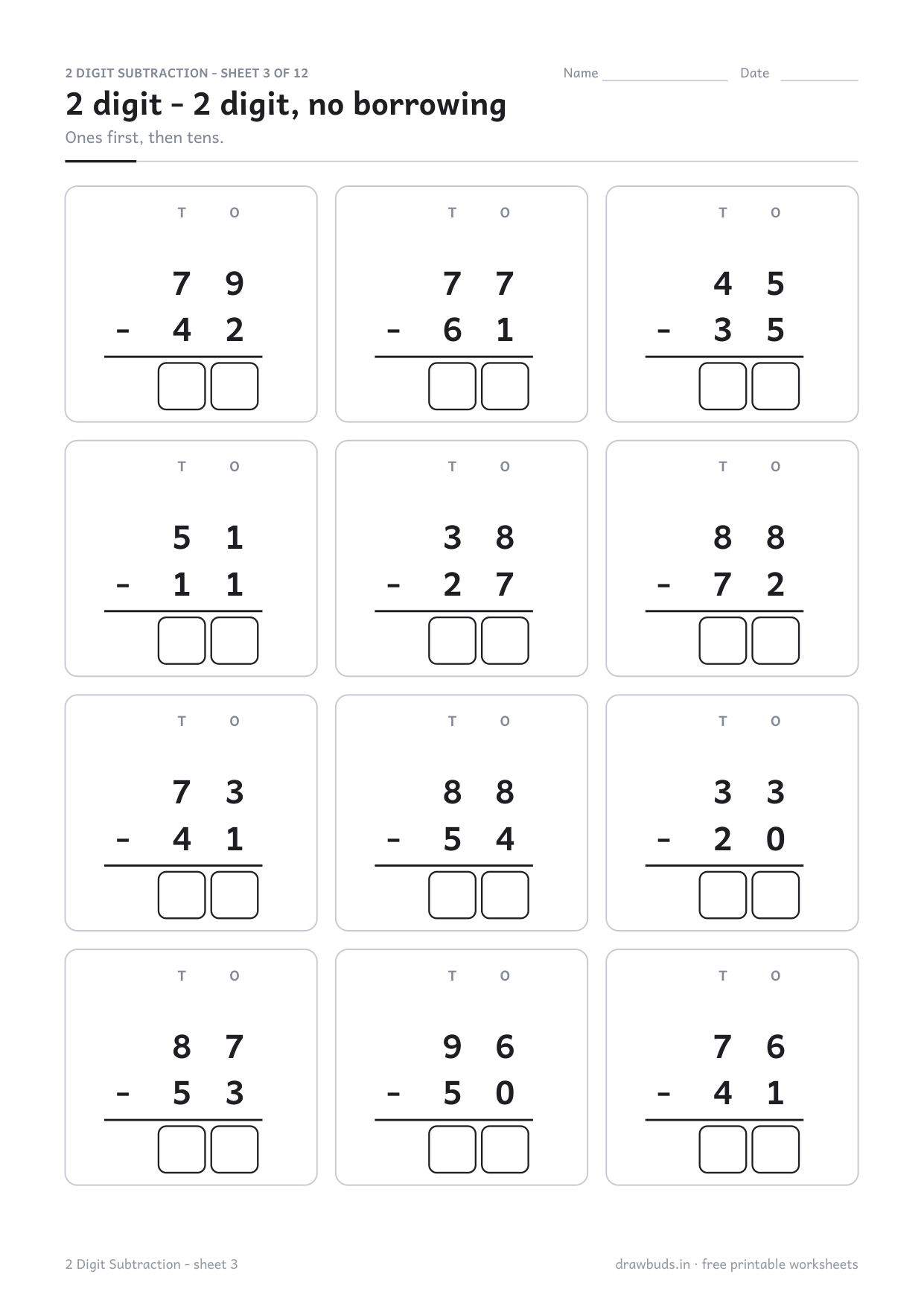
- Sheets 3-6: 2 digit − 2 digit, no borrowing (79 − 42).
- Sheets 7-8: 2 digit − 1 digit with borrowing (71 − 5).
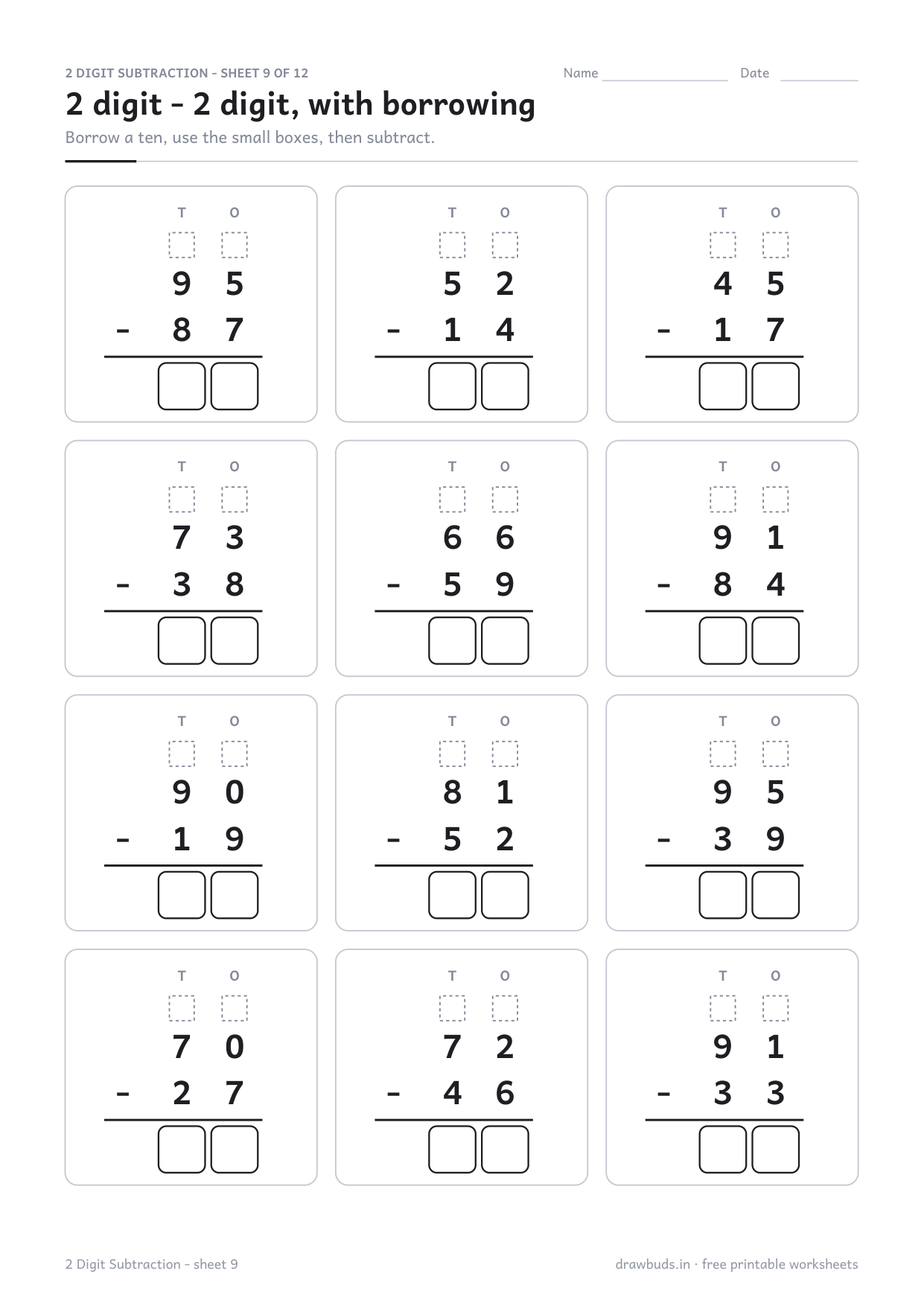
- Sheets 9-12: 2 digit − 2 digit with borrowing, also called regrouping (73 − 38).
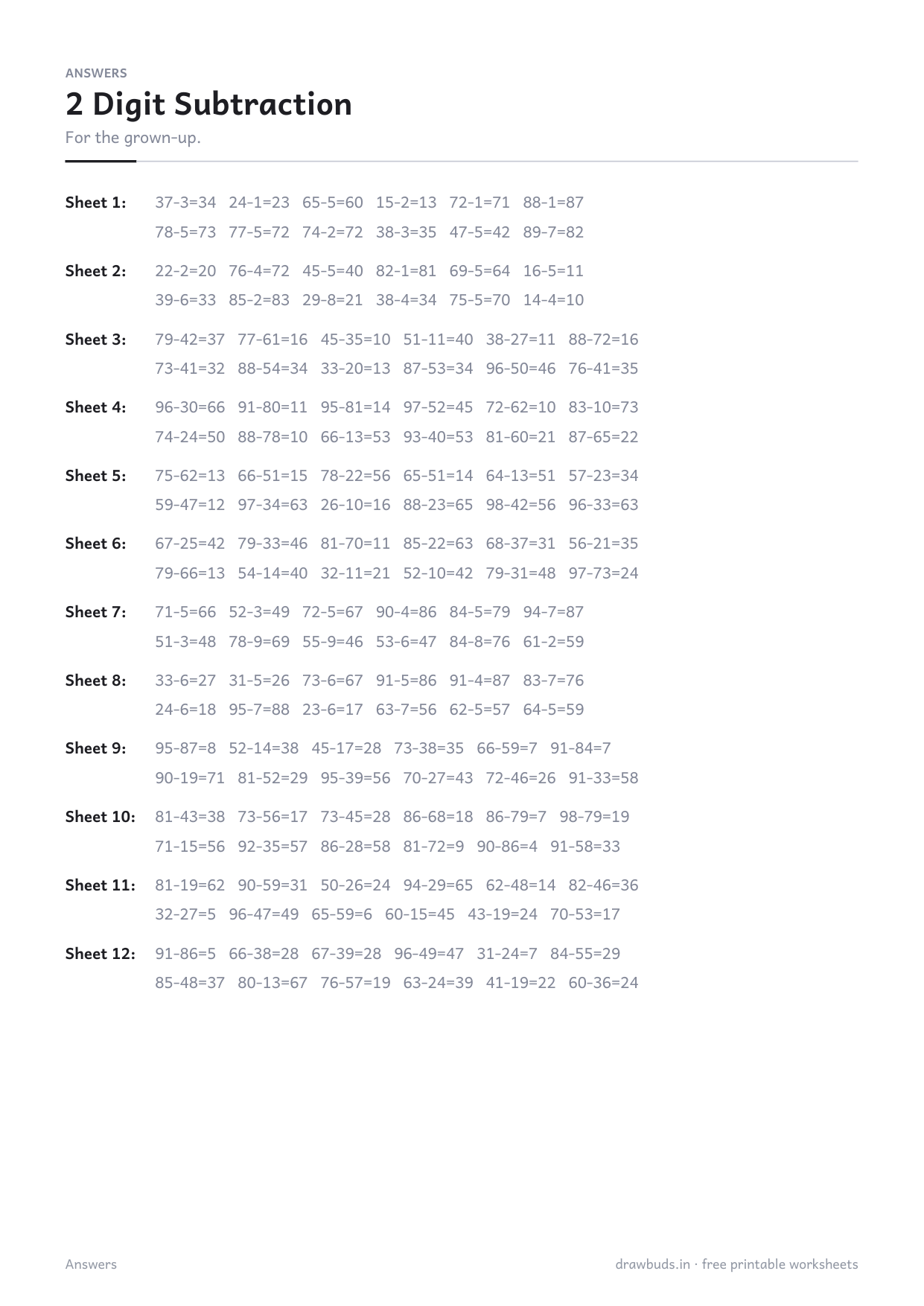
- Last page: every answer.
Twelve column sums a sheet, 144 in all, none repeated, and no answer below zero.
Subtraction without borrowing is not wasted time
The first six sheets build one rule: work from the top number down, ones column first. A child who says “seven take away three” every time, never “three from seven, or seven from three, whichever works”, has the rule that borrowing depends on. The 35 mistake above comes from skipping this stage.
How the borrowing sheets work
From sheet 7 there is a small dashed box above both columns. In 71 − 5 there are not enough ones to take 5 from 1, so one of the 7 tens is changed into ten ones: cross out the 7 and write 6 in the box above the tens, then write 11 above the ones. Now 11 − 5 = 6 and 6 − 0 = 6, so the answer is 66.
Some schools say borrowing, some say regrouping or exchanging. It is the same step. Say whichever word the class teacher uses, so the child hears one name for it.
A child who cannot yet picture one ten as ten ones will find the boxes arbitrary. Half an hour with the tens and ones worksheets, where tens are drawn as rods of ten squares, usually fixes that faster than more subtraction does.
Which class is this for
Subtraction without borrowing is usually class 1 in India and grade 1 elsewhere. Borrowing is class 2, or grade 2. The sheets are in that order, so a class 1 child can stop at sheet 6 and pick the book up again the following year.
Before and after
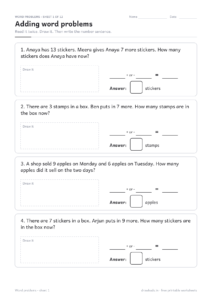
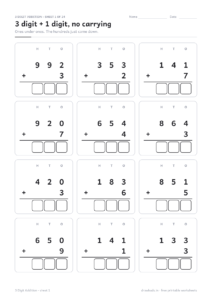
If single-digit take-away is still shaky, subtraction worksheets within 10 come first. For the addition version of these sheets, see 2 digit addition worksheets. For subtraction as a story (“how many are left?”, “how many more?”), see word problems.
Printing this one correctly
In your printer dialog set Scale to 100% or Actual size, not Fit to page. Fit to page shrinks the tracing letters and they stop matching the size a child's hand is learning.
Plain paper is fine for crayons and pencils. If your child uses felt pens, 100 gsm paper stops the ink bleeding to the next sheet.