Multiplication Tables 1 to 10 Worksheets
Multiplication tables 1 to 10 worksheets: one table a sheet, then mixed practice in learning order, and a 10 x 10 chart to fill in. Free PDF.
- Pages
- 28
- Ages
- 7-9
- Paper size
- A4 and US Letter
- Black ink only
Same worksheets, two paper sizes. Free to print at home, at school, and in a classroom of thirty.
Ten times tables, practice in learning order, a 10 x 10 chart to fill, answers
These multiplication tables 1 to 10 worksheets do not go 1, 2, 3, 4 once the single tables are done. From sheet 11 they regroup into 2, 5 and 10 together, then 3 and 4, then 6 and 8, then 7 and 9, because that is the order the tables actually get learned in rather than the order they are numbered in.
What is in the 28 pages
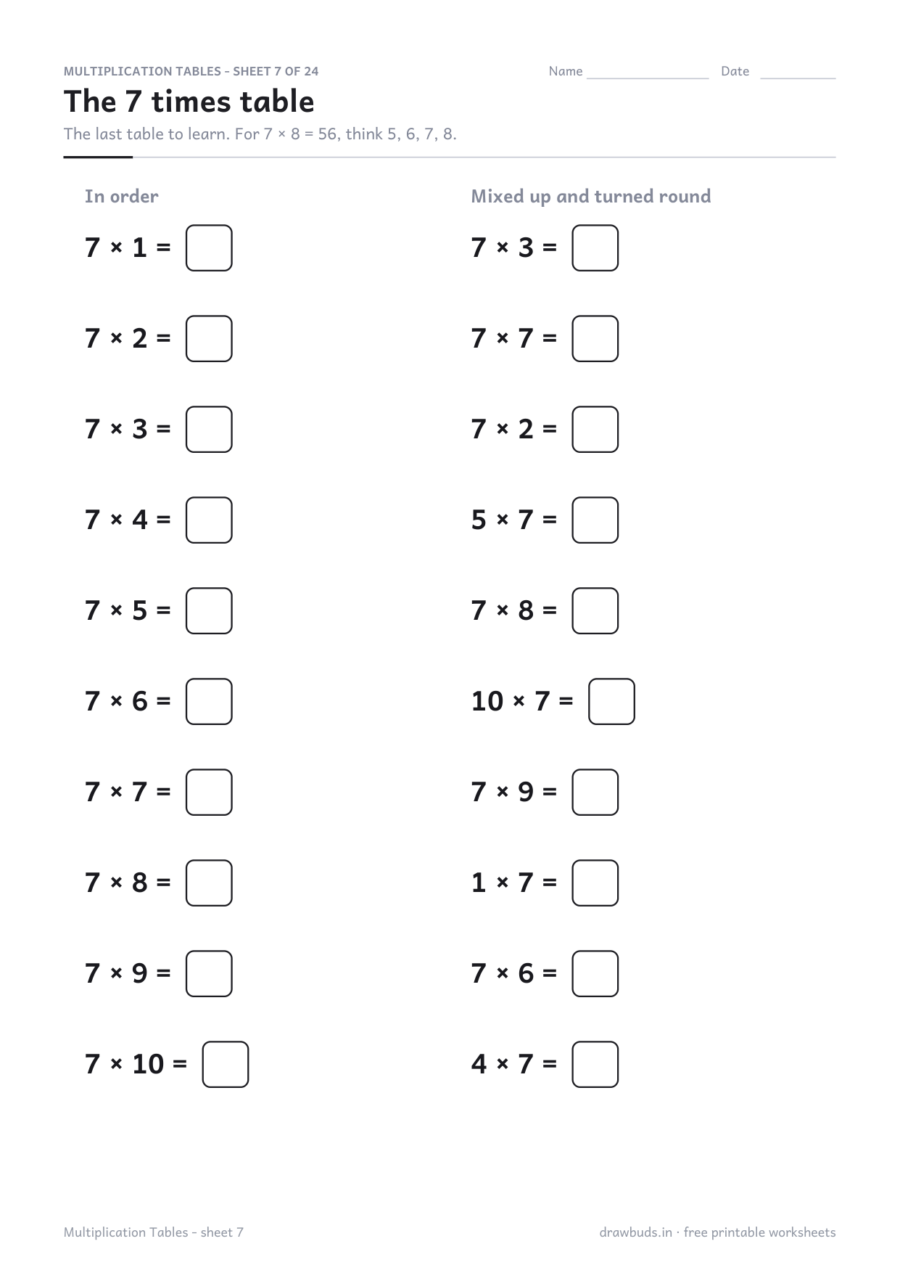
- Sheets 1-10: one table a sheet, the 1 times table through the 10 times table.
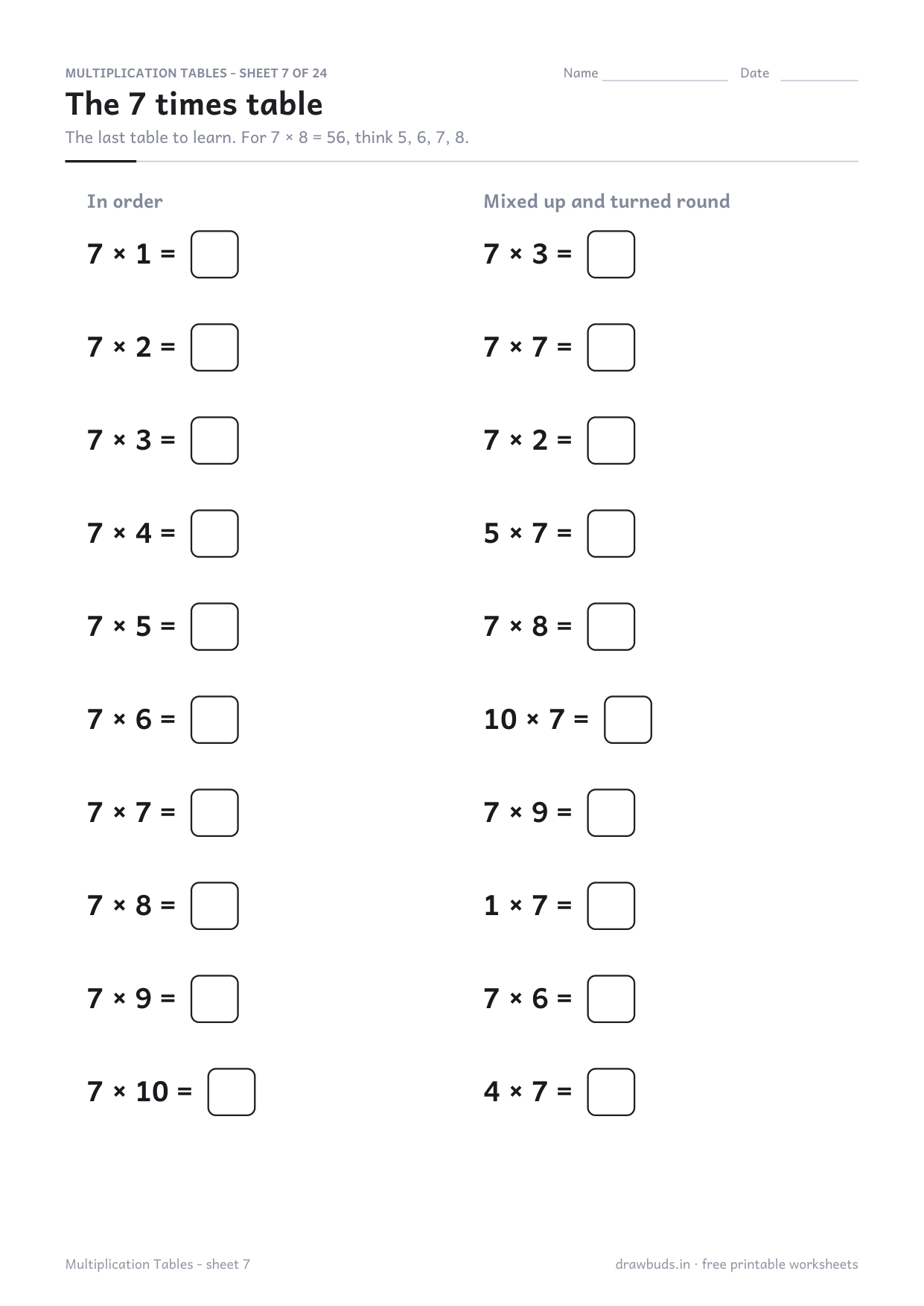
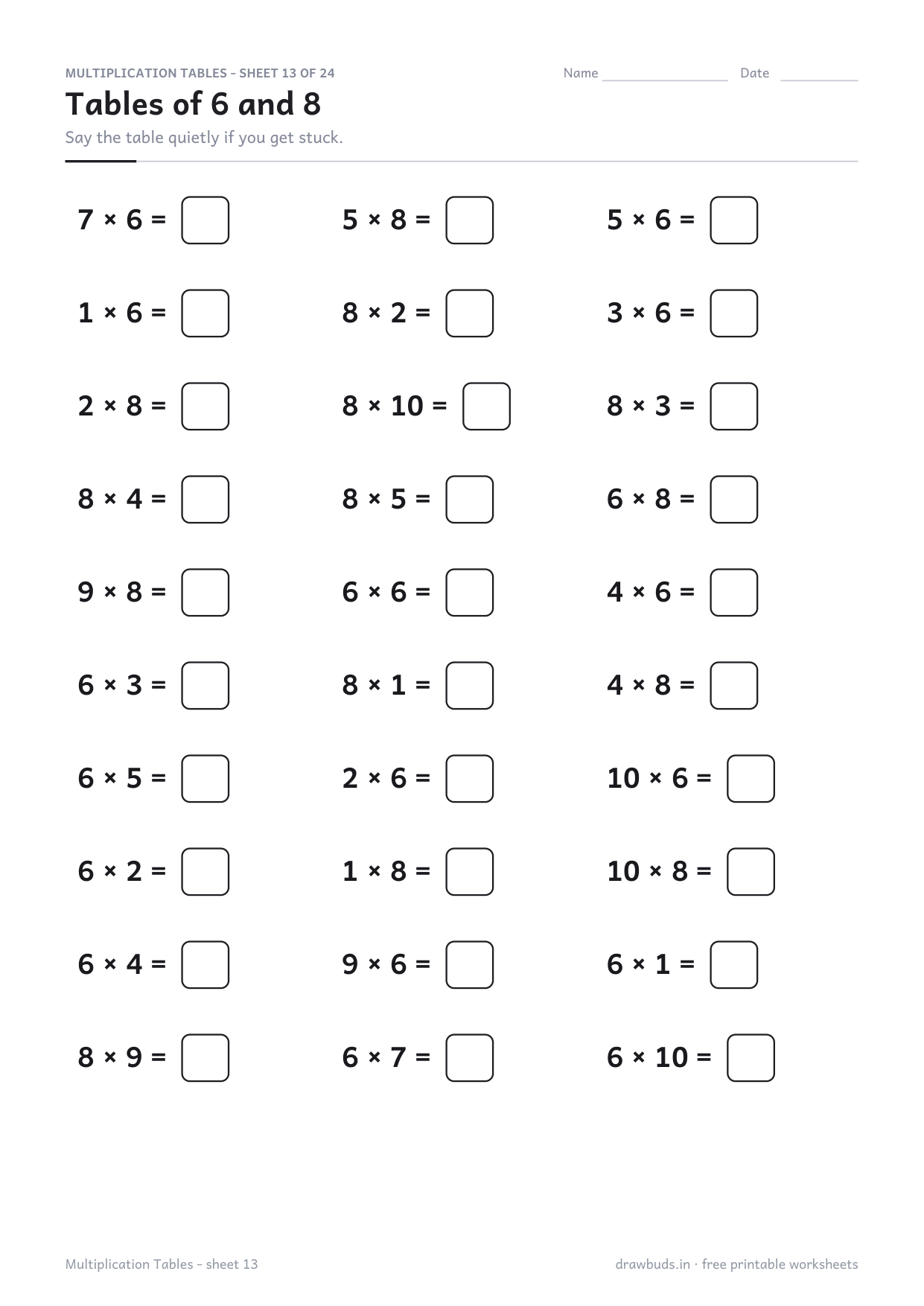
- Sheets 11-14: mixed practice in learning order, 2, 5 and 10, then 3 and 4, then 6 and 8, then 7 and 9.
- Sheets 15-18: the same four groups again as missing-number questions.
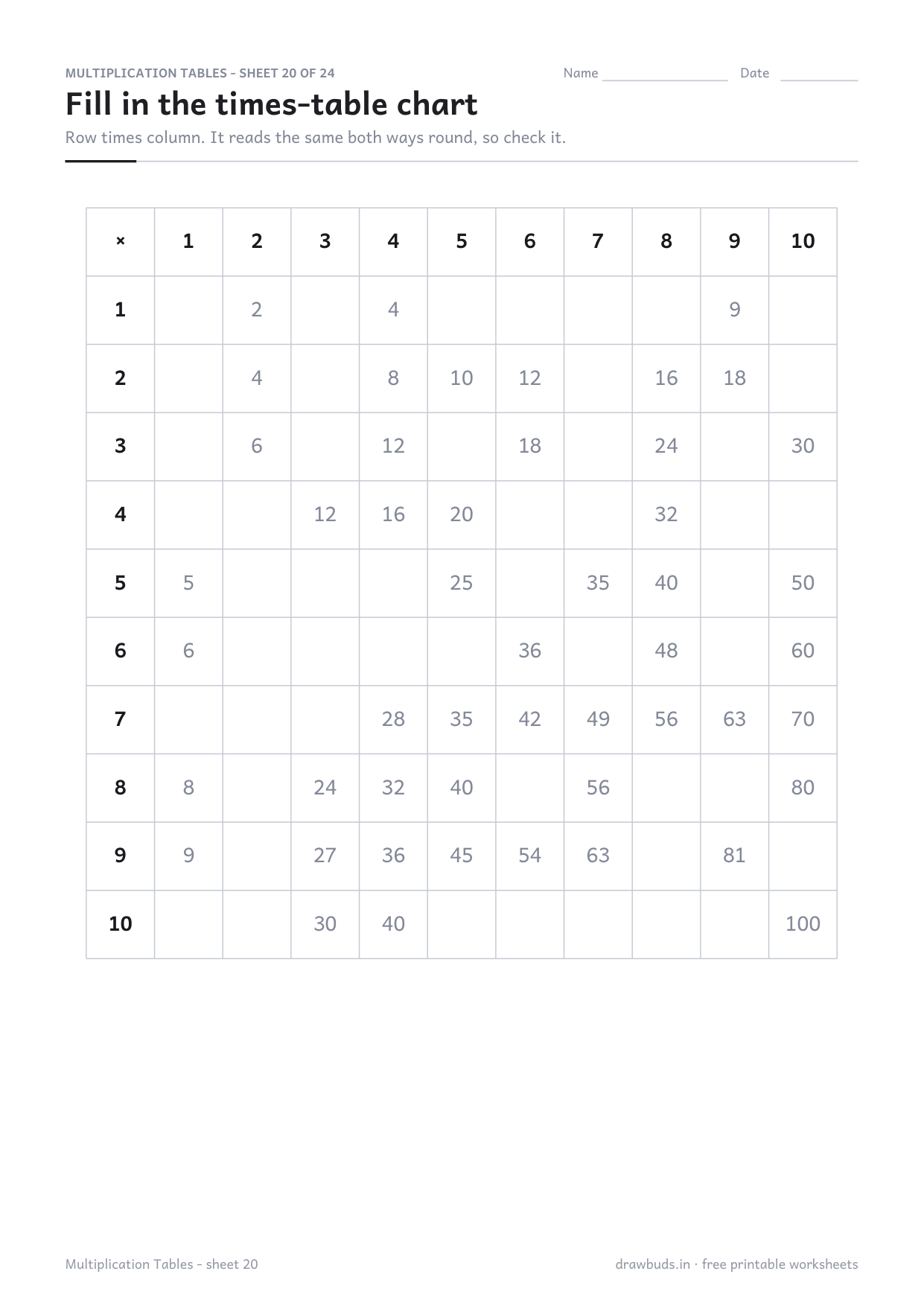
- Sheets 19-22: the 10 x 10 chart, filled in less and less each time.
- Sheets 23-24: all ten tables, mixed.
- Last three pages: every answer, including the full chart.
Why 2, 5 and 10 come first
The grouping is the whole point of the second half. The 2, 5 and 10 tables share a pattern a child can see, so they land first and land together. 3 and 4 follow because doubling the 2s gets you the 4s. 6 and 8 are the doubles of 3 and 4. That leaves 7 and 9, which are last for a plain reason: they have the fewest shortcuts and need the most repetition. A book that drills 1 to 10 in numerical order spends its early sheets on the 1 times table, which no child has ever needed.
Asked in order, then turned round
On each single-table sheet the questions run in order first and then come back scrambled and reversed. This matters more than it looks. A child who has chanted the table can answer 7 x 6 by running the chant from the start, and that is not knowing the fact. Asking 6 x 7 immediately after, out of order, is what tells you whether the answer is recalled or recited.
The chart, filled in four times
Sheets 19 to 22 are the same 10 x 10 grid with less given away each time, ending with a blank one. Filling a grid is a different skill from answering a line of sums: the child has to hold a row and a column at once, and the patterns become visible, the 5s column ending in 0 and 5, the 9s row with digits that add to nine. The answer pages carry the complete chart so it can be checked without doing the arithmetic again.
Class 2, class 3, or grade 3
Indian schools start tables in class 2 and expect 1 to 10 by the end of class 3. US schools cover them in grade 3. If the tables are being memorised with nothing underneath them, multiplication as repeated addition builds the groups and arrays the tables are shorthand for, and skip counting by 2, 5 and 10 is the step before that.
Once the tables are known, division worksheets turn them round.
Printing this one correctly
In your printer dialog set Scale to 100% or Actual size, not Fit to page. Fit to page shrinks the tracing letters and they stop matching the size a child's hand is learning.
Plain paper is fine for crayons and pencils. If your child uses felt pens, 100 gsm paper stops the ink bleeding to the next sheet.