Number Tracing Worksheets 1-100: Printable PDF
Number tracing worksheets 1-100: one decade a sheet, every number copied once and traced four times, then a 100 chart to trace and one to fill. Free PDF.
- Pages
- 13
- Ages
- 4-7
- Paper size
- A4 and US Letter
- Black ink only
Same worksheets, two paper sizes. Free to print at home, at school, and in a classroom of thirty.
12 sheets: one decade a page, each number copied once and traced four times, then a traceable 100 chart and one to write alone
These number tracing worksheets 1-100 pick up where most number tracing stops, at 20. Past 20 the job changes. A child is no longer learning ten shapes, they are learning that a two-digit number is a tens digit and then a ones digit, written in that order, and that the tens digit stays the same all the way down a decade.
What is in the 13 pages
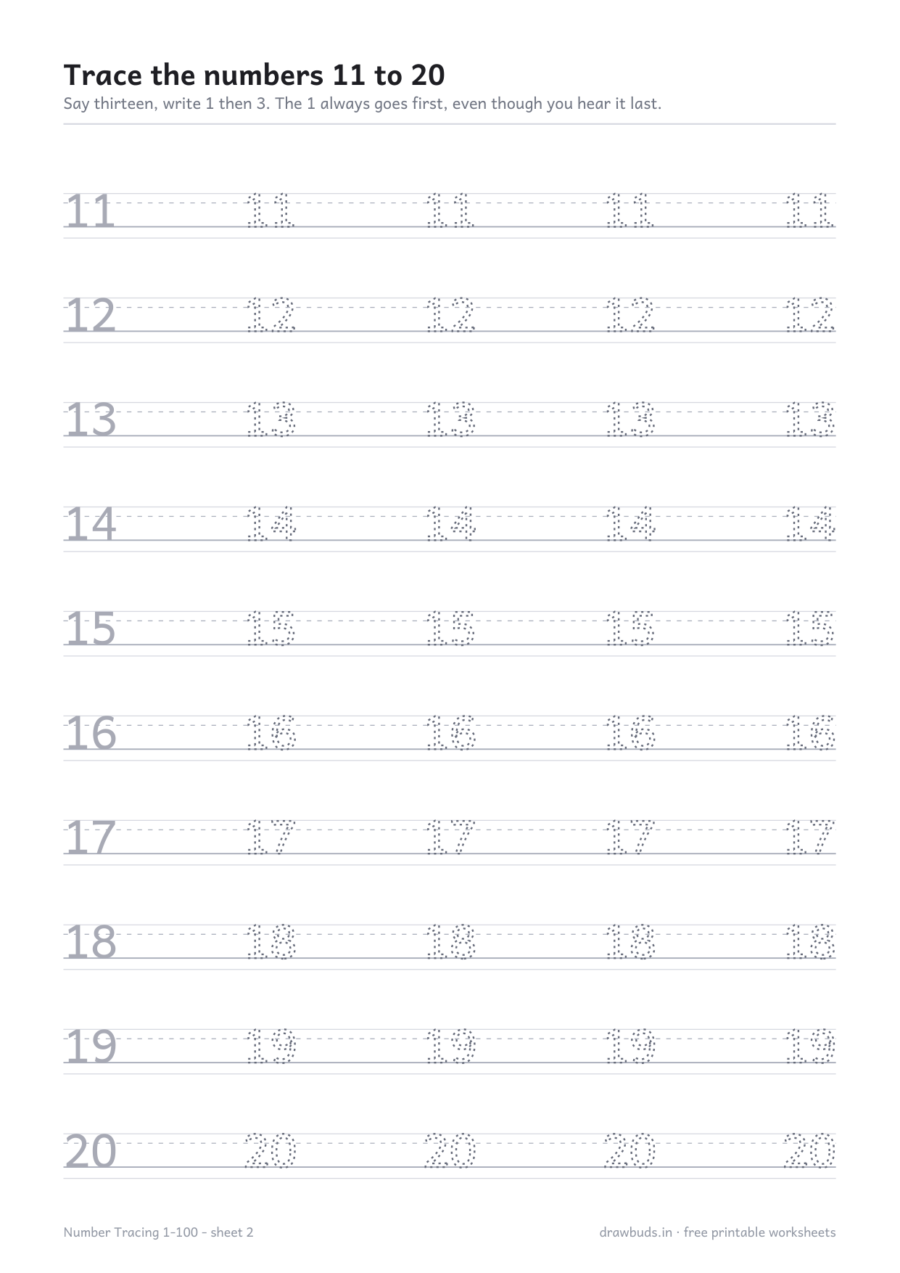
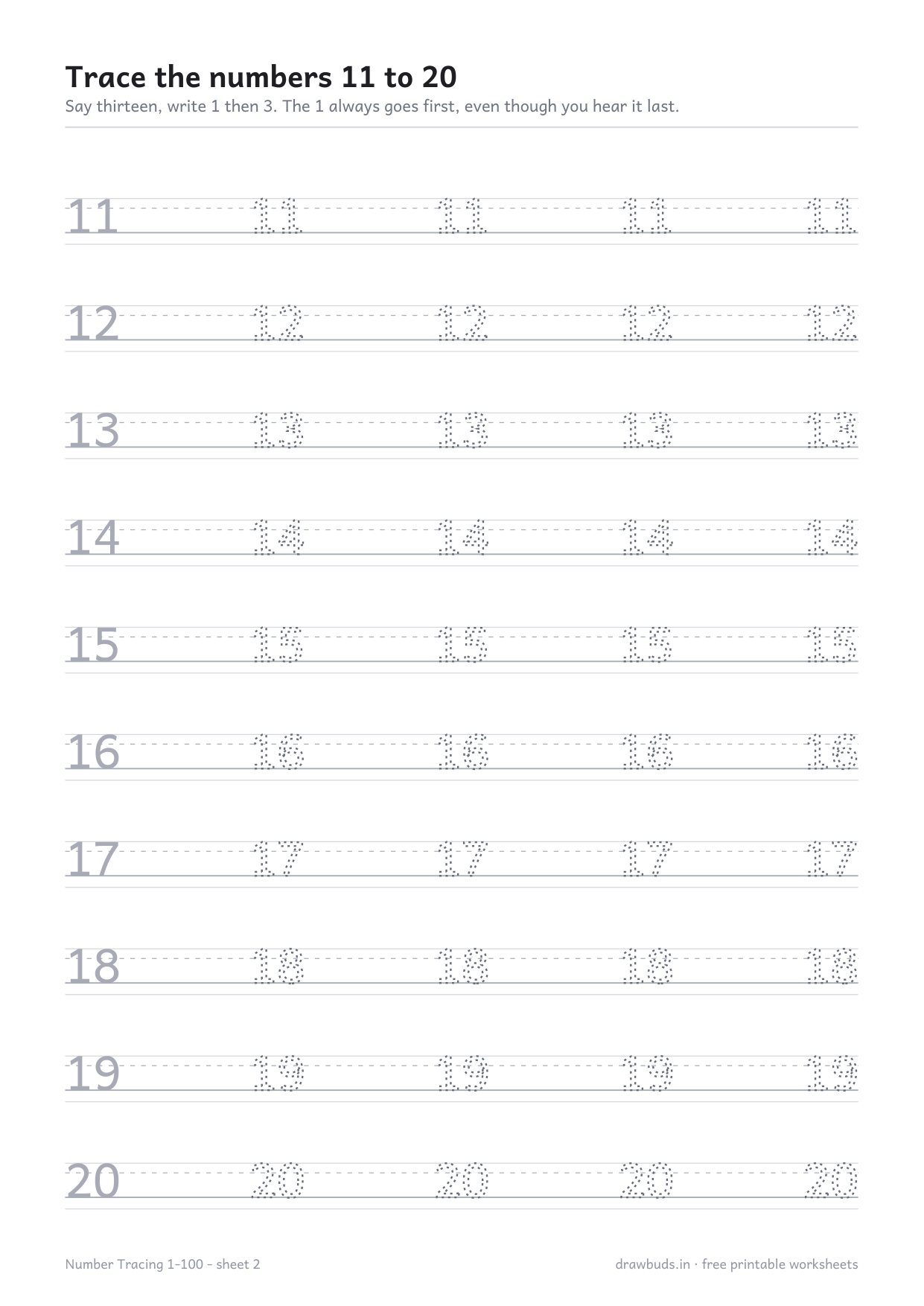
- Sheets 1 to 10: one decade each, 1 to 10, then 11 to 20, and so on up to 91 to 100. Every number is shown once in solid grey to copy and then four times dotted to trace, so the book holds 400 numerals to trace.
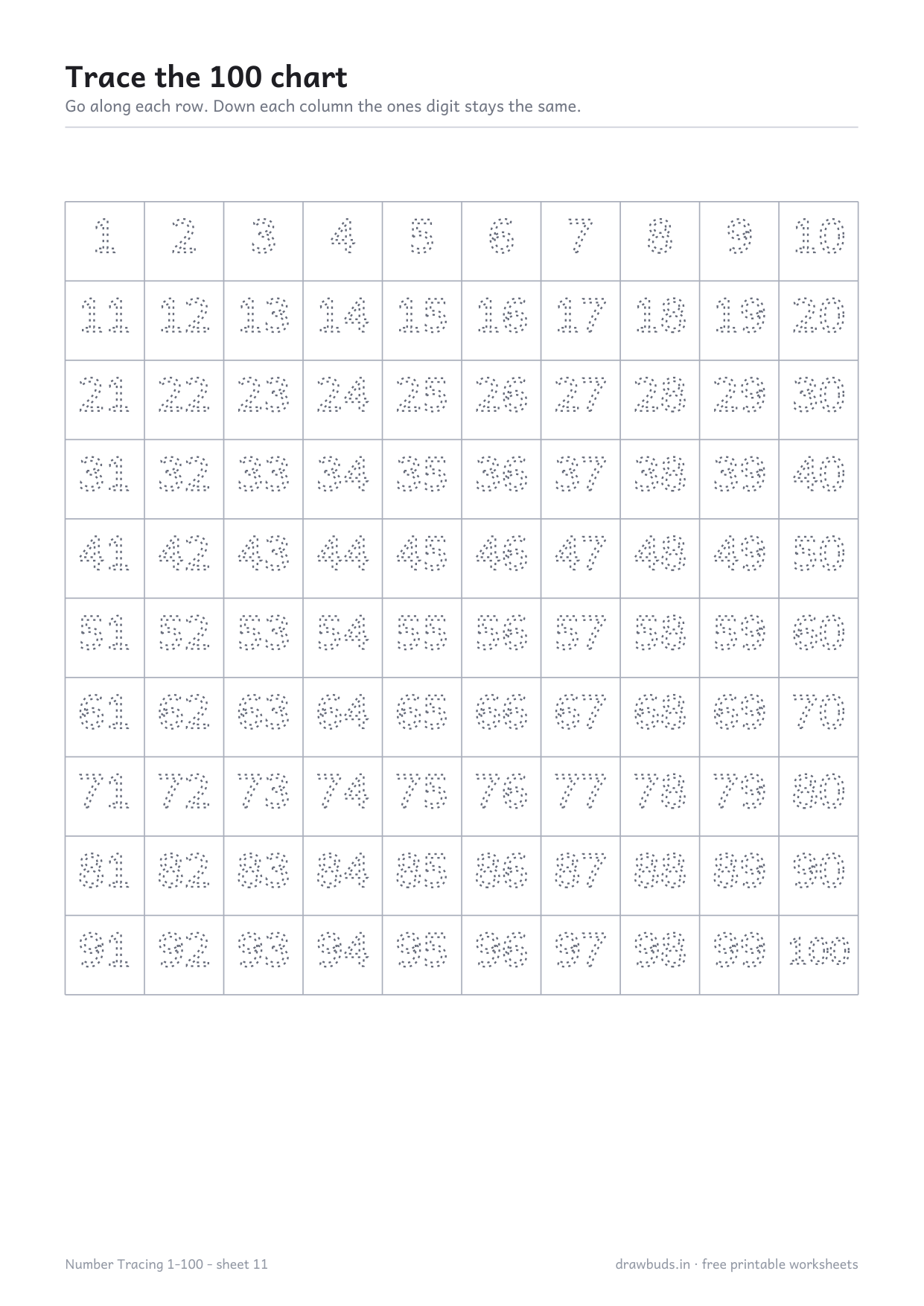
- Sheet 11: the whole 100 chart, every number dotted, ten to a row.
- Sheet 12: an empty 100 chart with only 10, 20, 30 and the other tens filled in. The other 90 numbers are written from memory, in order.
Each sheet has one line at the top about the mistake that sheet is most likely to catch, rather than a general instruction repeated ten times.
Why the teens get a warning of their own
Thirteen is said with the three first and the teen second. Twenty-three is said with the twenty first. So a child who writes what they hear writes 31 when they mean 13, and it is one of the most common reversals at this age. Sheet 2 says it in so many words: the 1 always goes first, even though you hear it last. Tracing 11 to 20 five times each, with that sentence above them, is a cheap way to fix the habit before it sets.
From 21 upward, watch the tens digit
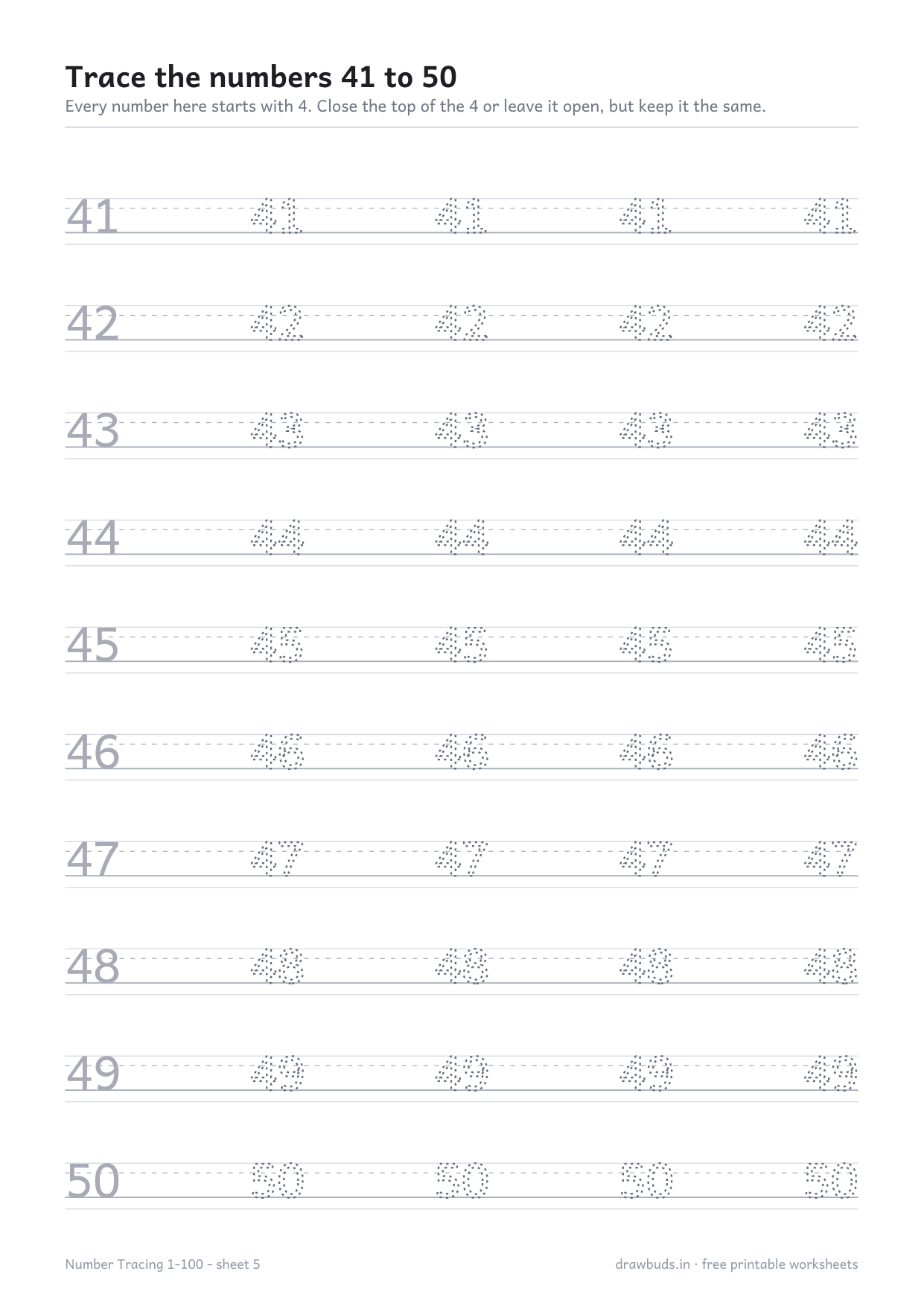
From the third sheet on, every number on a page starts with the same digit. That is the pattern worth pointing out while a child traces. Down the page only the ones digit moves, and it moves through 1 to 9 the same way it did on the first sheet. A child who notices this stops treating 47 as a new shape and starts building it from two they already know. The last sheet ends on 100, the first number with three digits, which is worth a moment of its own.
The 100 chart, traced and then written
The traceable 100 chart on sheet 11 shows the whole sequence at once. Read across, each row is a decade. Read down, each column keeps the same ones digit, so 3, 13, 23 and 33 sit on top of each other. Sheet 12 takes the numbers away and leaves only the tens, so the child has to produce the sequence rather than follow it. It is a fair check of whether the earlier sheets worked.
Before this book, and after it
If single numerals are still shaky, start with number tracing worksheets 1-20, which has one number a page with objects to count. Once writing to 100 is easy, missing numbers 1 to 100 uses the same chart with gaps to fill, which tests the sequence without the tracing.
Printing this one correctly
In your printer dialog set Scale to 100% or Actual size, not Fit to page. Fit to page shrinks the tracing letters and they stop matching the size a child's hand is learning.
Plain paper is fine for crayons and pencils. If your child uses felt pens, 100 gsm paper stops the ink bleeding to the next sheet.