Write the Alphabet Worksheets, No Tracing
Write the alphabet worksheets with no dotted letters: missing letters, what comes next and before, then A to Z from memory, with answers. Free PDF.
- Pages
- 27
- Ages
- 4-6
- Paper size
- A4 and US Letter
- Black ink only
Same worksheets, two paper sizes. Free to print at home, at school, and in a classroom of thirty.
24 sheets, no dotted letters: missing letters, next and before, copy from a model, A to Z from memory, answers
These write the alphabet worksheets have no dotted letters anywhere in them, and that is the whole point. Tracing tells you a child can follow a line. Asking for the letter between P and R tells you whether they know the alphabet, and those are different things that produce an identical looking finished page.
What is in the 27 pages
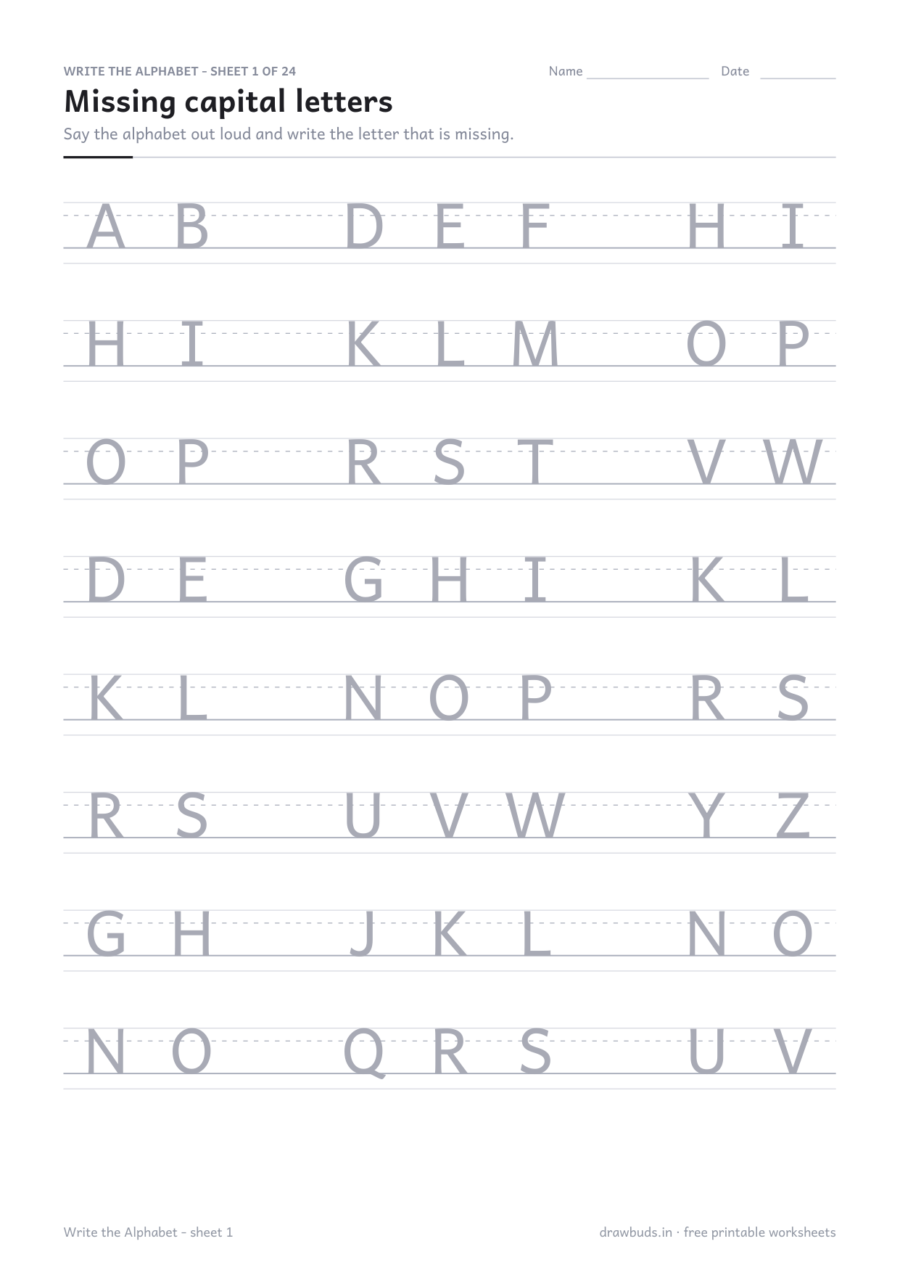
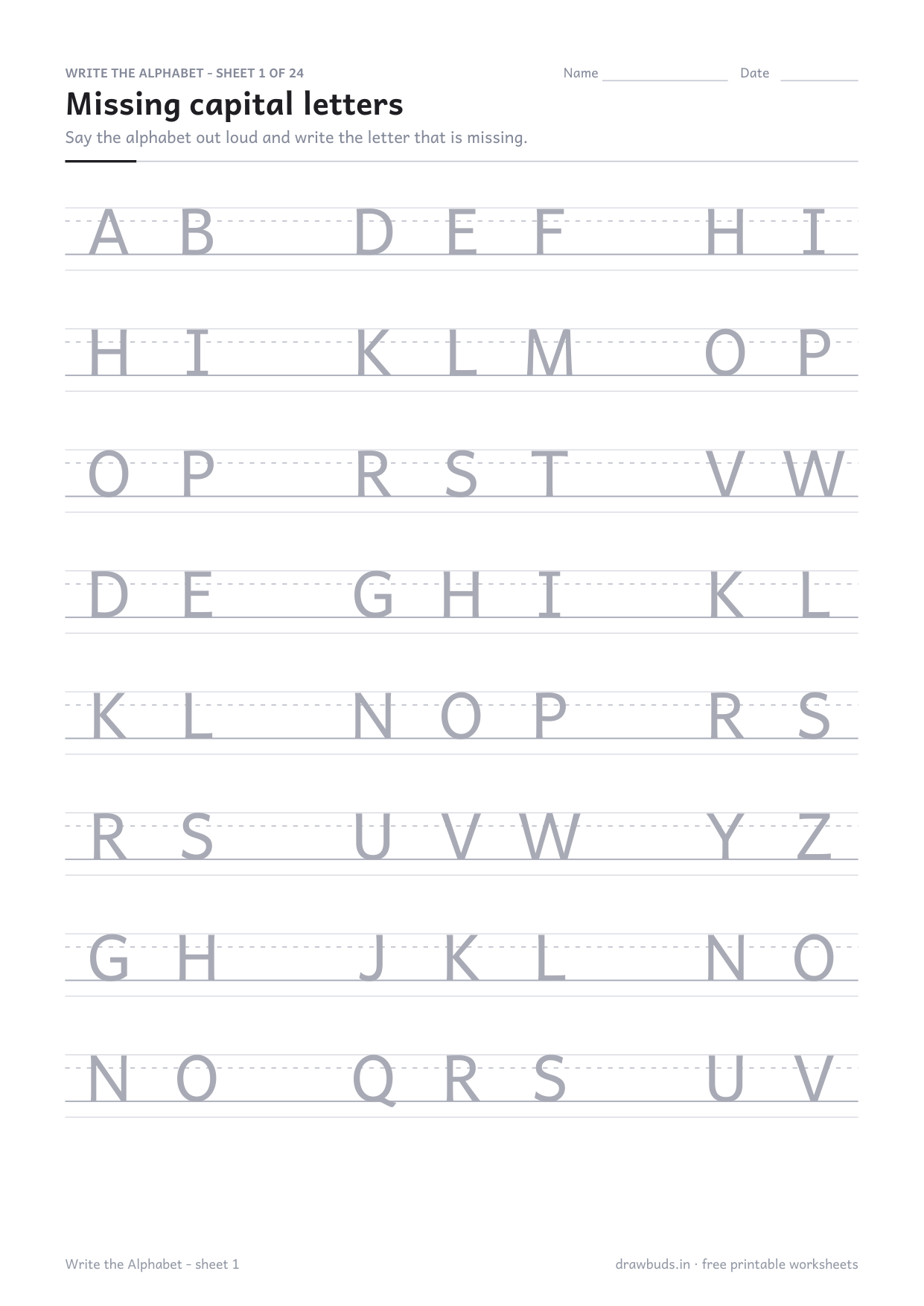
- Sheets 1-3: missing capital letters in a row.
- Sheets 4-6: missing small letters.
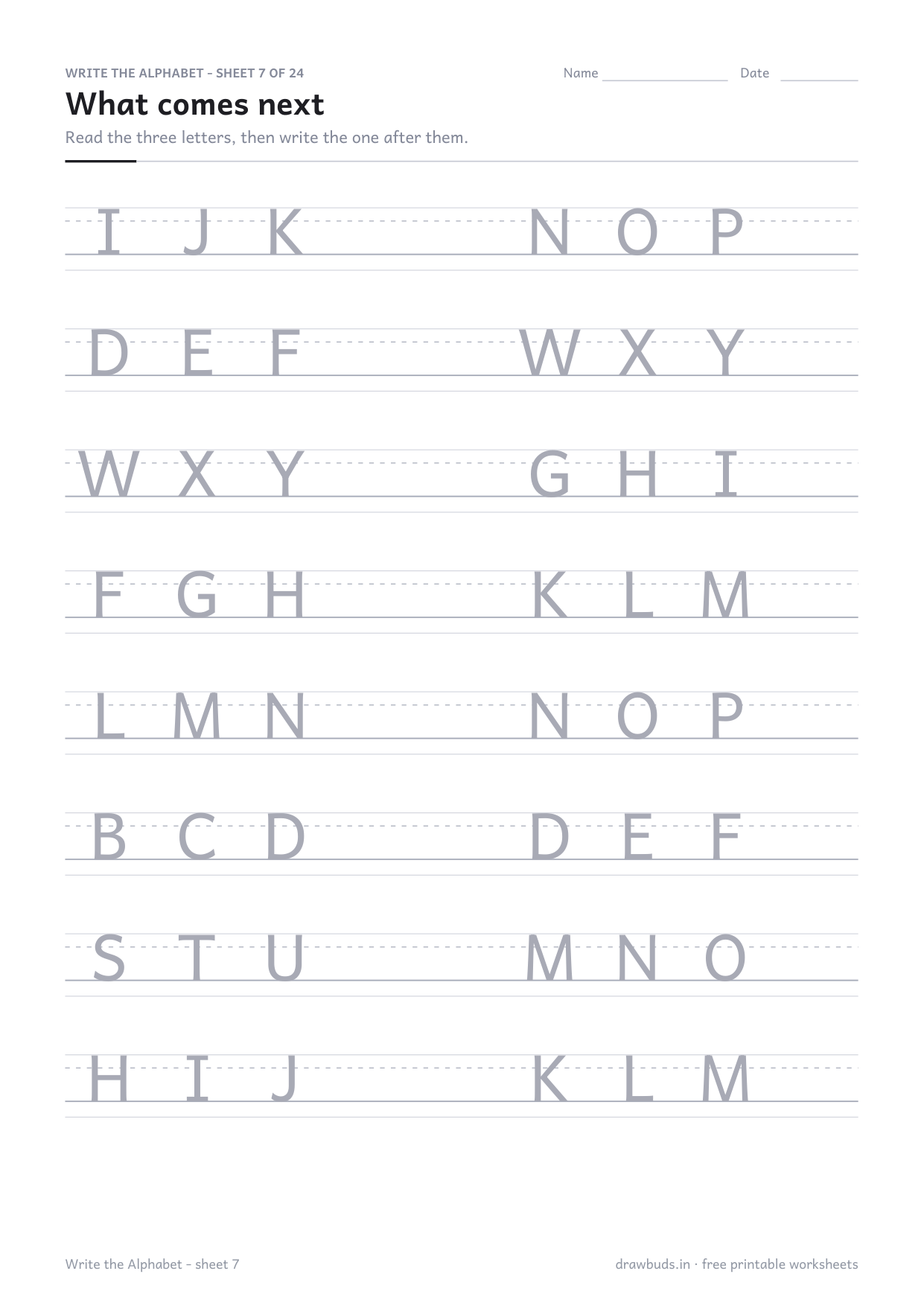
- Sheets 7-8: what comes next.
- Sheets 9-10: what comes before.
- Sheets 11-16: copy a letter from a model, then write it five times.
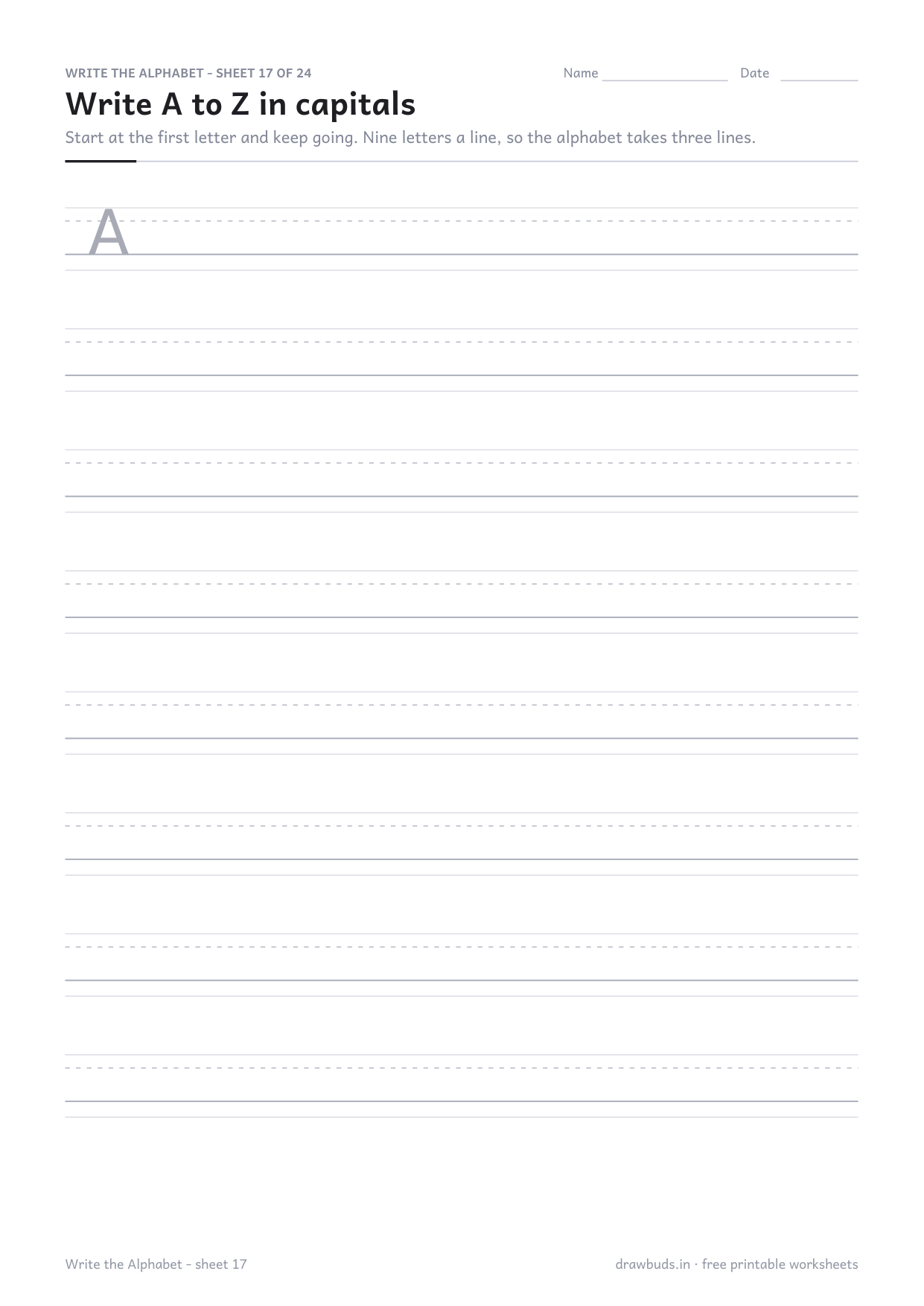
- Sheets 17-18: write A to Z in capitals, first letter given.
- Sheets 19-20: write a to z in small letters.
- Sheets 21-24: letter partners, matching each case to the other.
- Last two pages: every answer.
What comes before is much harder than what comes next
Sheets 7 and 8 ask for the next letter, sheets 9 and 10 for the one before. Children find the second far harder, and the reason is worth knowing: most have learned the alphabet as a song, and a song only runs forwards. A child who has to sing from A every time to answer what comes before M has memorised a tune, not an order. Those two sheets are where that shows up, and they are the ones to repeat.
Letter partners, both ways round
Sheets 21-24 match small letters to capitals and then capitals to small. Doing it in both directions matters for the pairs that look nothing alike, a and A, g and G, r and R. A child can be fluent going one way and stuck the other, and only asking both ways finds it.
A to Z from memory, with one letter given
Sheets 17-20 give the first letter and leave the rest of the line empty. It is the plainest test in the book and the one worth keeping. Where a child stalls on that line is exactly where the alphabet is thin, and that tells you which earlier sheet to print again.
Before this book
This one assumes the letters can already be formed. If they are still being drawn rather than written, alphabet tracing worksheets a-z and lowercase letter tracing a-z come first, and capital and small letter matching covers the pairs in picture form for a younger child.
Printing this one correctly
In your printer dialog set Scale to 100% or Actual size, not Fit to page. Fit to page shrinks the tracing letters and they stop matching the size a child's hand is learning.
Plain paper is fine for crayons and pencils. If your child uses felt pens, 100 gsm paper stops the ink bleeding to the next sheet.